Why Do Goldfish Jump Out of the Tank? Causes and Lids
The sound gives it away: a wet slap behind the tank stand at midnight, or silence, and then a goldfish on the carpet in the morning. Few keeper experiences are worse, and few are more preventable.
Goldfish are carp, and carp are natural jumpers with strong tails and every muscle needed to leave the water. A goldfish does not jump because it is suicidal or stupid; it jumps because something in its tank told it to, or because one startled flick of the tail happened to point at the sky.
This guide works through the causes in the order to check them, the lid that actually solves the problem, and what to do in the first minutes if you ever find a fish on the floor.
First suspect is always the water
When a normally settled goldfish starts leaping, treat it as a water alarm until you have proved otherwise. Fish jump out of water that burns, starves them of oxygen, or has turned against them, the same way an animal flees a smoky room.
Ammonia is the classic trigger. A spike from a dead filter, an overfed weekend or a decaying plant can irritate gills within hours, and jumping is one of the earliest visible responses, often before gasping or redness appears.
Test before you theorise: ammonia and nitrite should both read zero, and nitrate should sit low. The target table in our goldfish water parameters guide gives the full picture, and a liquid test kit gives a truer answer than a strip in a hurry.
Low oxygen pushes fish the same way, especially in warm weather when water holds less of it. A fish that leaps after a hot day, in a still tank with little surface movement, is often a fish that was struggling to breathe at the surface film.
A jumping fish is a test result you can see, and the correct first response is a test kit and a partial water change, not a heavier book on the lid. Fix the water and most escape attempts stop the same day.
Skin parasites and irritants belong on this list too. A fish flicking against decor and occasionally launching itself may be trying to escape something on its own body, which is a health problem wearing a behaviour costume.
The startle jump is the other half of cases
Water accounts for planned escapes. The rest are pure reflex: a goldfish startled hard enough bolts in a straight line, and sometimes that line goes up.
The classic triggers are household ones. A tank light snapping on in a dark room, a shadow falling suddenly across the glass, a door slamming against the same wall, a cat landing on the hood.
Placement decides how often these happen. A tank in a quiet corner with a timer-driven light and no foot traffic thumping past it produces far fewer startle jumps than one beside a hallway door.
Our guide to how goldfish rest and sleep covers the dark hours in detail, and it matters here: a resting fish shocked awake by a sudden light is the single most likely leaper in the average home.
New fish jump more than settled ones, and so do fish in bare tanks with nowhere to bolt to except up. Cover a new arrival’s tank for its first fortnight even if you cover nothing else, ever.
Jumping is the loud end of glass surfing
Jumping rarely arrives without a quieter warning first. The warning is usually glass surfing, the restless pacing along the glass that shows a fish is unsettled in its tank.
A fish that surfs for days and then jumps has been signalling the same stress all along, only in a form that is easy to miss. Our guide to goldfish glass surfing describes that lower level signal in detail, and it is worth reading alongside this post.
Treat surfing and jumping as one problem with two volumes. Both point first to water, then to the surroundings, and both ease when the cause is found.
If you see surfing, test the water the same day, check the light and the traffic past the tank, and fit the lid before the behaviour gets louder. Waiting for a fish on the floor is the expensive version of the same lesson.
For background on how water quality and stress affect aquarium fish, the Merck Veterinary Manual aquarium fish section is a useful reference. It frames the same order used here: check the environment first, then look for disease, and only then reach for treatment.
Feeding time leaps and spring energy
Not every airborne goldfish is unhappy. Excitement launches fish too, and the two excitement peaks are feeding time and the breeding season.
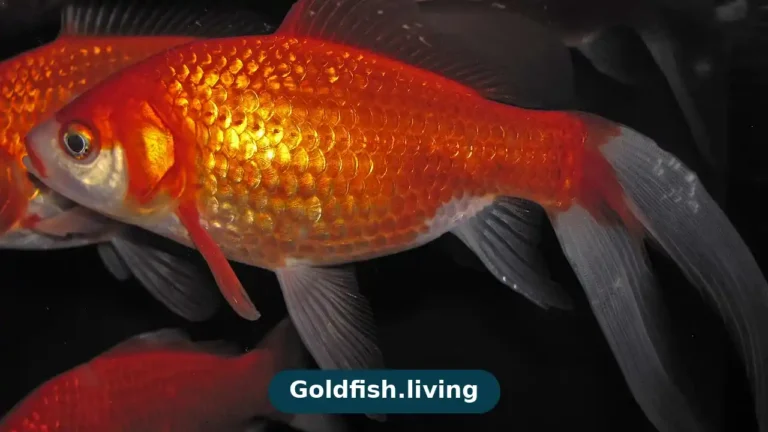
Goldfish learn the sound of the food tub within days. A whole tank surging upward at once, mouths open, will throw the odd fish clear of the surface, and single-tailed varieties with real speed are the usual casualties.
Spring brings the second peak. The spawning chase, all that nudging and sprinting described in our guide to why goldfish chase each other, regularly ends with a fish hitting the surface at speed, and an open tank gives it somewhere to land badly.
Neither cause is fixed by water changes. They are fixed by the lid in the next section, plus one small habit: lower the water level a few inches during the liveliest weeks, which turns an escape into a splash.
Lids that actually work
The solution is boring and total: a full cover, fitted, with no gap a fish-width wide. Most goldfish that reach the carpet left through a gap the keeper knew about, around a filter pipe, a cable run or a feeding hatch left open.
Glass and polycarbonate lids are the standard answer and also cut evaporation and keep dust and cleaning sprays out of the water. Mesh covers and DIY netting frames suit tanks that run warm and need the airflow, provided the mesh is fine and the frame cannot be lifted by a determined fish or a curious cat.
Check the corners around equipment with your fingers, not your eyes. Filter cutouts are the escape hatch in most tanks, and a strip of craft mesh or a cut sponge closes them in minutes.
Lid sizing is a measuring job, not a guessing job. Measure the inside of the tank rim, length and width, before you buy, and check the shape of the rim itself, since braced rims, curved glass and centre bars all change what fits. A lid that sits flat on the rim, with no rocking corner and no gap wider than a goldfish, is the standard to aim for.
Plan the cutouts before you fit the lid, not after. Mark where the filter pipes, heater cable and airline enter, then cut or choose a lid with openings in those places, and close any spare gap with fine mesh or a cut sponge.
A feeding hatch is useful only if it closes properly after feeding, and a hatch left open for convenience is the same as a hole in the roof. Glass, polycarbonate and fine mesh all work, provided the cover is complete and the frame cannot be lifted by a fish or a cat.
Weight is not a substitute for coverage. A light acrylic sheet resting loose can be flipped by a large common goldfish hitting it at speed, and the fish lands on the lid and dries there instead, which is no rescue at all.
The RSPCA fish care pages treat a secure cover as basic equipment for fish housing, not an accessory. For a family of committed jumpers like goldfish, it is the single purchase that matters most after the filter.
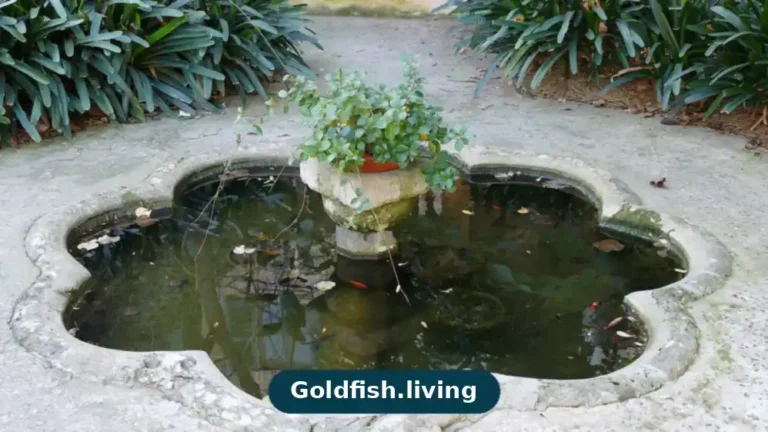
Ponds ask for the same thinking at larger scale. A net or a raised edge does for pond fish what a lid does indoors, and it doubles as heron defence, which is the outdoor version of the same bad morning.
You found one on the floor: the next ten minutes
Act first, investigate later. Wet your hands, pick the fish up gently with both hands supporting its body, and put it straight back into its tank. Seconds count more than technique, and a dry-handed grip strips the slime coat the fish now needs most.
Do not be surprised by what you find. Goldfish are tougher out of water than most fish, and one found cool, damp and dusty after an unknown time on the floor still has a genuine chance; keepers regularly revive fish that looked finished.
Once it is back in, dim the lights and watch. A revived fish often rests on the bottom, breathing hard, for an hour or more, and that stillness is recovery, not decline.
Over the next two days, watch the skin. The slime coat and any carpet abrasion leave the fish open to bacterial and fungal infection, and pristine water is its best protection while it heals.
A fish that cannot stay upright, shows torn fins down to the base, or develops fuzzy patches or red sores needs an aquatic vet. The PetMD fish section outlines the injury and infection signs that justify that call in recovering fish generally, and a hard fall earns a low threshold.
Then close the gap it used. A fish that has jumped once has mapped the exit, and the second attempt usually comes within the week.
Keep a short jump log for a week
A jump is a single event, but a pattern is a diagnosis. For one week after the first jump, note the date and time, the latest water test, whether the light had just switched on, and whether feeding or a chase had just happened. Four or five short lines are enough, and they take less than a minute each.
The log usually answers the question the memory cannot. Jumps at the same hour point to light or feeding, jumps after water changes point to the tap routine, and jumps with no pattern at all point back to the water test. Bring the log with you if you ask a shop or a vet for help, since a dated pattern is far more useful than a general description of a fish that jumps sometimes.
Questions about goldfish jumping out
Can a goldfish survive out of water, and for how long?
Often, yes. Survival depends on how long it was out, how cool and damp it stayed, and how it landed. Fish have been revived after surprisingly long spells on the floor, so always put one back and give it hours before concluding anything.
Why did my goldfish jump when the water tests fine?
Then think reflex, not escape: a startle from light, shadow, vibration or a household pet, or simple feeding and breeding excitement. Settled fish in covered, quiet tanks rarely jump without a trigger you can identify in hindsight.
Will lowering the water level stop jumping?
It reduces escapes, because a fish needs runway to clear the rim, and a few inches of drop defeats most attempts. It is a useful extra during breeding season, but it is a supplement to a fitted lid, never a replacement.
Do only common goldfish jump, or fancies too?
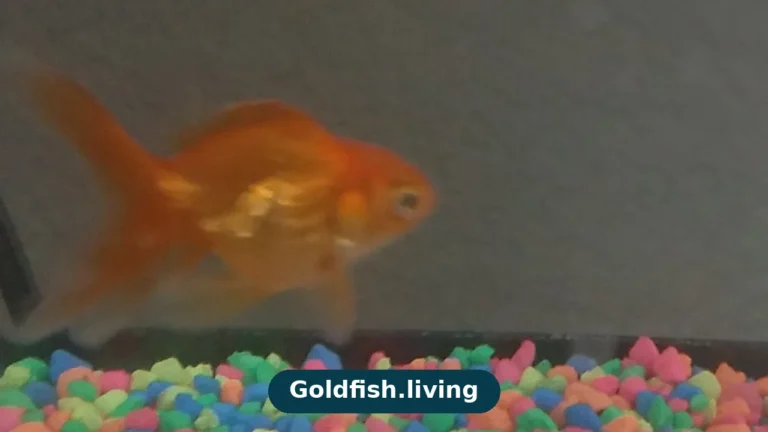
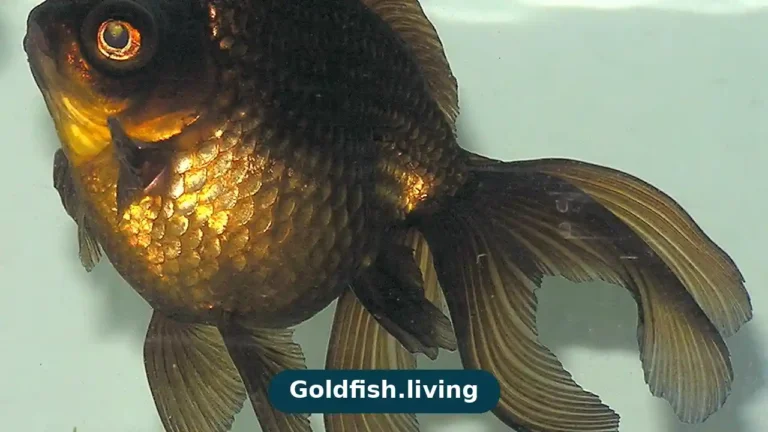
Single-tails jump highest and most often, because they have the speed. Fancies jump less but still clear open water when startled, and a slow fancy on the floor has the same problem as a fast one.
My fish jumped once and seems fine. Should I still worry?
Worry about the gap, not the fish. Check its skin over the next two days for abrasion or fuzzy patches, keep the water clean, and fit the lid it has just told you the tank needs.
Cover the tank, then forget the carpet
Jumping is one of the few goldfish problems with a complete solution. Test the water when it starts, calm the tank’s surroundings where you can, and fit a cover with no fish-sized gaps.
Do those three things and the drama ends. You will still hear the odd splash on a spring morning, and it will stay exactly where it belongs: inside the glass.