
Ryukin Goldfish Care: The Hump, the Depth, the Diet
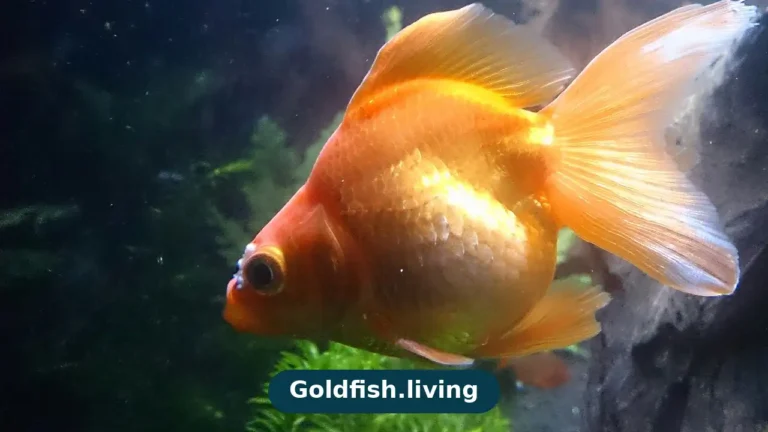
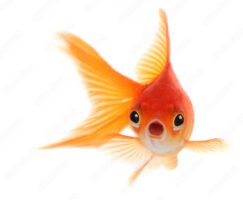
A ryukin announces itself in silhouette: a high, sharp hump rising behind the head, a deep egg-shaped body, and long flowing fins that trail like a gown. It is one of the oldest fancy varieties, developed in Japan from fish that arrived from the Ryukyu Islands, which gave it its name.
That dramatic profile is also the whole care sheet in outline. The hump and the deep body behind it decide how this fish swims, how it should be fed, and what kind of tank keeps it upright.
The hump is architecture, not decoration
The ryukin’s hump is a genuine structural feature, a raised shoulder of muscle and shortened spine that breeders have selected for centuries. In a good fish the hump starts almost immediately behind the head and rises steeply, giving the variety its proud, upright posture.
Below the hump, the body is the deepest of any common fancy variety relative to its length. Adults reach 6 to 8 inches, and exceptional fish grow larger, but they look bigger than the tape says because so much of them is height.
Everything is packed into that deep frame, including the swim bladder and the gut. There is very little spare room, which is why the ryukin’s troubles are almost always troubles of pressure and digestion.
The fins deserve a mention of their own: long, flowing, and double at the tail, they trail well behind the body and catch the light as the fish turns. They are also the first place stress shows, in splits, fraying, and blood-streaked edges after a fright or a water problem.
Tall water for a tall fish
Most goldfish advice talks about gallons and length. Ryukins add a third dimension: depth. A tall-bodied fish in a shallow tank spends its life near the bottom third of its own home.
Give one adult ryukin at least 20 to 30 gallons in a tank with real depth, and add around 10 gallons per extra fish, following the same pattern as the other fancies in our goldfish tank size guide. Length still matters, but check the height before you buy.
Flow should be gentle to moderate, and decor smooth. Those long fins tear on sharp ornaments and rough rock, and a torn fin on a deep-bodied fish heals slowly.
Substrate choice matters for the same reason: fine sand or smooth, rounded gravel, never sharp crushed rock. Ryukins forage along the bottom like all goldfish, and a deep-bodied fish presses its belly where a slim fish would not touch.
Choosing a ryukin: what to look for in the shop
Judge a young ryukin by posture before pattern. A good fish swims level and upright, holds its hump high without wobbling, and rests without tipping forward onto its nose.
Watch it feed if you can. A ryukin that already struggles to stay down while eating in the shop tank is showing you its future, and no diet fully rewrites a badly crowded body.
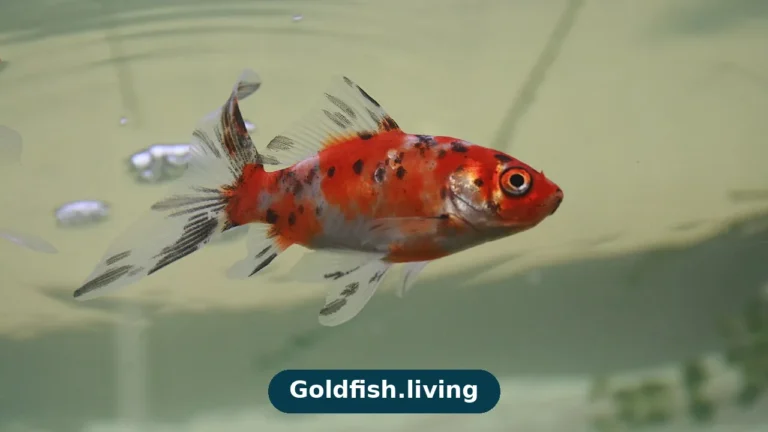
Colours run from solid red and red-and-white to calico, chocolate, and rare black. Colour is the last thing to choose by, because it changes least about the fish’s life. Shape and swimming are the purchase.
Young ryukins show a modest hump that strengthens with growth. A two-inch fish with a dramatic adult hump is unusual; expect the profile to develop over the first two years.
Tubs, ponds, and the Japanese tradition
The ryukin was refined in Japan, where keepers traditionally raised fancy goldfish in wide, shallow tubs and viewed them from above. That heritage explains the variety’s shape: the hump and tall fins are ornaments designed for a top-down audience.
Modern keepers can borrow the tub idea without copying it exactly. A wide, deep tub or a sheltered pond corner gives a ryukin room to display and gentle water to display in, and top-down viewing shows off the fish at its best.
What the tradition also teaches is restraint with numbers. Japanese tub keeping was always lightly stocked, and a ryukin in uncrowded water grows straighter, swims better, and floats less.
Buoyancy: the ryukin weak point
Ask a room of ryukin keepers what goes wrong and most will say the same word: floating. The shortened, deep body crowds the swim bladder, so gas and gut contents press on the organ that keeps the fish level.
The classic pattern is a fish that floats up after meals, struggles down, then recovers by morning. That is usually digestion pressing where it should not, not yet disease, and it is managed at the feeding tray rather than the medicine shelf.
A buoyancy decision aid
Use three questions to sort a floating ryukin. First, when does it float. A fish that floats only after meals and swims normally between them is usually dealing with food and swallowed air, and the fix is at the feeding tray: soaked sinking pellets, smaller meals, and a pea day each week.
Second, does it float between meals as well. A fish that floats, sinks or rolls all day, even before feeding, needs more than a menu change. Check the water, keep the temperature steady, and read the full workup in our guide to goldfish swim bladder disease, which this post already links to in the section above.
Third, can it right itself at all. A ryukin that cannot stay upright, rolls onto its side, or cannot reach food is a vet case, not a feeding case.
Contact an aquatic vet, bring the feeding notes and the water test results, and do not try another remedy from the cupboard while you wait. A decision aid can sort the common cases, but it cannot replace a vet for the fish that cannot swim straight.
Persistent floating, sinking, or rolling is different and deserves the full workup in our guide to goldfish swim bladder disease. If a ryukin cannot right itself at all, an aquatic vet is the next step, not another remedy from the cupboard.
Temperature plays a quiet role here too: cold water slows a ryukin’s digestion, and a sluggish gut in a deep body means more post-meal floating. Keeping the tank in the upper half of the comfort range during a floating spell often helps while you fix the diet.
Feeding against the float
Feeding is where ryukin care is won or lost. Use a sinking pellet as the staple, soaked for a few minutes before serving, so it arrives soft and full of water instead of expanding inside the fish.
Floating foods are this variety’s enemy. A ryukin gulping at the surface takes in air with every mouthful, and that air goes straight to the crowded gut and bladder area.
Feed little and often: two small meals a day, each cleared in about two minutes, with a weekly day built around a skinned pea or other soft vegetable. The pea is not magic. It is fibre and water in a fish whose whole problem is a packed digestive tract.
Portion discipline matters more than any single food, and our guide to how often to feed goldfish covers the amounts in detail.
One line is worth keeping on the fridge: most ryukin buoyancy trouble is feeding trouble wearing a disguise. Fix the menu first, every time.
The keeper’s routine, week by week
Ryukins ask for consistency more than effort. The same foods, the same meal sizes, the same water change on the same day builds the stable gut routine this variety depends on.
Weigh the fish with your eyes weekly: a ryukin gaining steadily along the back, neither pinched nor ballooning, is being fed about right. Sudden roundness is usually food and air, not growth, and a lighter day or two answers it.
Keep the filter flow steady and the temperature even, because ryukins react to change itself. Big swings in either direction, even between two acceptable values, are what trigger the floating episodes keepers blame on the fish.
A simple notebook earns its place with this variety: meal sizes, pea days, floating episodes, and water changes on one page per month. Patterns that look like random bad luck usually turn out to be last Tuesday’s double dinner.
Sturdier than most fancies
For all its digestive drama, the ryukin is one of the tougher fancy varieties. It handles the cooler end of the goldfish range, roughly 65 to 75°F, better than orandas or ranchus, and it was historically kept in outdoor tubs and ponds in Japan.
That heritage makes it a reasonable choice outdoors in mild climates, though its long fins and upright body still argue for sheltered, gentle water. Indoors, stable temperature matters more than any exact number.
Expect 8 to 12 years with good care, in line with the other fancies, and well-kept fish in roomy tubs regularly beat that. The usual fancy diseases apply, fin rot and ich after stress, plus this variety’s signature buoyancy trouble. The PetMD fish library and the Merck Veterinary Manual’s aquarium fish pages are the reliable references when something looks off.
The RSPCA fish care advice adds the housing side of the same picture, with tank size, filtration and water quality treated as the foundation that makes the rest of goldfish care possible. A ryukin in a roomy, stable tank with clean water is a fish whose buoyancy trouble stays a feeding problem, while the same fish in a cramped or unstable tank turns the same trouble into a health case.
That is the practical point of the three references together. PetMD and Merck cover the health signs, the RSPCA covers the housing that prevents them, and this guide covers the feeding that decides whether a deep-bodied fish stays upright. No single source carries the whole picture, and a keeper who reads all three will recognise a problem earlier than one who reads only one.
Company at ryukin pace
Ryukins swim mid-pack: quicker than a ranchu, clumsier than any single-tail. Keep them with other mid-speed fancies such as fantails and orandas, and the feeding race stays fair.
The two deep-bodied fancies most often kept alongside a ryukin are the ranchu and the pearlscale, and both share its buoyancy risk. Our guide to ranchu goldfish care covers a fish with a similar crowded body and a different swimming style, slower and lower in the water, while our guide to pearlscale goldfish care covers a round, pearl-scaled fish that floats for the same reason a ryukin does, a gut and swim bladder packed into too little room.
Keeping deep-bodied fancies together works when the feeding is planned for them all. Soaked sinking pellets, small meals, and a pea day each week suit a ranchu and a pearlscale as well as a ryukin, and a tank fed that way gives all three the same fair chance. Mixing them with single-tails, by contrast, gives the fast fish the food and the deep fish the leftovers, and no amount of extra feeding fixes that split.
Never house them with commons, comets, or shubunkins, which will eat everything before a ryukin arrives. At the other extreme, bubble eyes and other very slow varieties lose the same race to the ryukin.
Ryukins can be mildly territorial around food and favourite spots, more than most fancies. Space and a few sight breaks in the tank layout prevent most of the squabbling.
Choose decor with those trailing fins in mind: smooth stones, rounded wood, soft plants. Anything jagged, plastic and sharp-edged, or narrow enough to wedge a deep body into will eventually draw blood, usually overnight and unseen.
Questions about ryukins
Why does my ryukin float after eating?
Food and swallowed air press on the swim bladder inside that deep, crowded body. Switch to soaked sinking pellets, feed smaller meals, and add a pea day each week. Floating that continues between meals needs a closer look.
How big do ryukins get?
Most adults reach 6 to 8 inches in body length, not counting the long fins. They look larger than commons of the same length because so much of the fish is height and depth.
Can ryukins live in a pond?
Yes, in a sheltered pond in a mild climate, and they have centuries of history in outdoor tubs in Japan. Avoid strong currents and very cold winters, and bring them in or deepen the pond if ice is a regular feature.
Do ryukins need a tall tank?
They use depth more than any other common fancy. A standard rectangular tank is fine, but avoid shallow, low-profile setups, because a tall fish needs water above and below it to swim naturally.
Are ryukins good for beginners?
They are among the better fancy choices for a beginner who has done the reading: hardier than ranchus, forgiving of cool water, but unforgiving of sloppy feeding. Start with the menu rules and the rest follows.
Feed the shape, keep the fish
Ryukin care reduces to respecting the body plan: deep water for a deep fish, soaked sinking food for a crowded gut, and mid-speed company. Keepers who learn those three habits early tend to keep their ryukins healthy and upright for a decade.