Goldfish Swim Bladder Disease: Causes and Treatment
Few sights in fish keeping land harder than a goldfish that cannot swim level. Yesterday it cruised the tank; today it bobs at the surface like a cork or lies pinned to the gravel, paddling and getting nowhere. The instinct is to assume the worst, but buoyancy trouble is a symptom with several causes, and the commonest of them is genuinely fixable.
Swim bladder disorder is the umbrella name for these problems. The swim bladder is the gas-filled organ a fish uses to hold its position in the water, and in goldfish it sits close against the gut and kidneys. Anything that swells, presses or infects that neighbourhood can tip a fish over. The direction of the tip is your first real clue, so start there.
Floating or sinking? The direction is your first clue
Rises like a cork
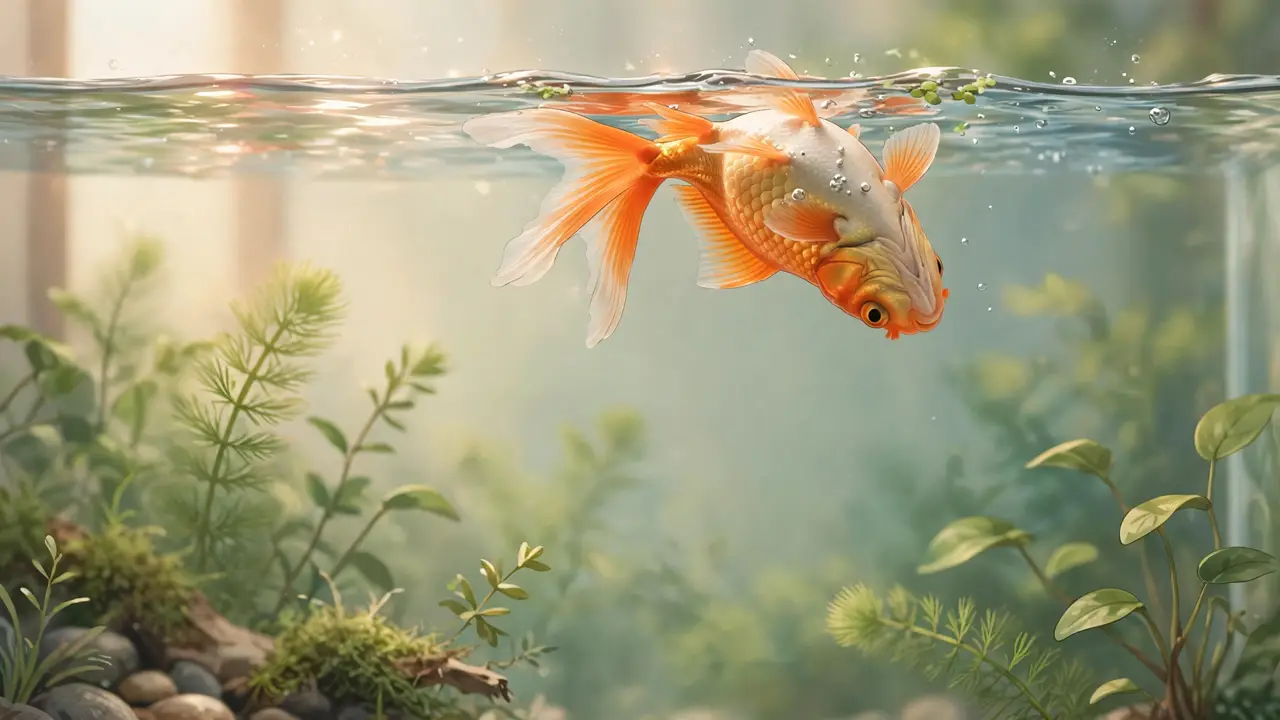
A fish that floats up the moment it stops swimming, or rolls at the surface on its side, usually has too much gas in the picture. Air swallowed at the surface during feeding is a frequent contributor, especially in fish fed floating food. Gas in the gut and an overinflated front chamber of the bladder both push the same way: up.
Stuck on the gravel
A fish that sinks, rests on the bottom and fights to rise points more often to pressure from below or behind. Constipation is the everyday suspect. Egg binding in females and infection affecting the rear chamber of the bladder sit further down the same list.
These are patterns, not verdicts. The same fish can float one month and sink the next, for different reasons each time. Combine the direction with recent diet, water readings and general behaviour before you settle on a cause.
Rule the water out before you touch the fish
Before any diet change or remedy, test the water. Ammonia and nitrite should read zero, and nitrate should be low. Poisoning stresses every organ system at once, and a fish weakened by bad water can lose buoyancy control as one symptom among several.
The giveaway is company: several fish affected together, or one fish that also gasps, clamps its fins or sits listless. Shared timing means a shared cause, and shared causes live in the water far more often than in one fish’s anatomy. Fix readings with partial water changes first; a surprising number of supposed swim bladder cases improve once the water is clean, because the bladder was never the problem. Target numbers are set out in our goldfish water parameters guide.
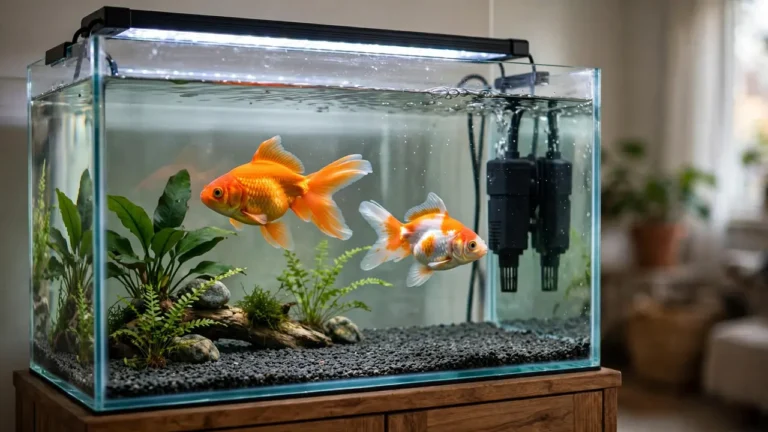
While you investigate, make the tank easier to be sick in. Lower the water level a few inches so a sinking fish can reach food and a floating fish is not stranded far from shelter. Ease off strong filter flow so the fish is not fighting a current on top of everything else.
The gut connection: why a full stomach tips a fish over
Constipation is the most common cause of buoyancy trouble by a wide margin, and the mechanics are simple. Dry food expands in the gut, a diet heavy in flakes or pellets with little fibre slows everything down, and the backed-up digestive tract presses directly on the swim bladder beside it.
The signs line up: a swollen-looking belly, droppings that trail long, pale and stringy, and a fish whose trouble started after generous feeding. Fancy goldfish are built to suffer from this. Orandas, ranchus, fantails and ryukins carry the same organs as a common goldfish packed into a short, round frame, so even mild digestive swelling has somewhere important to press.
Air gulping adds to it. Fish fed at the surface take mouthfuls of air along with floating food, and some of that air ends up in the gut, adding lift the fish cannot vent. It is one reason experienced keepers feed fancies sinking food. Our guide to how often to feed goldfish covers the portions and rhythm that keep fancy digestion out of trouble.
The pea routine, step by step
For a suspected digestive cause, the standard home care is plain: empty the gut, then restart it with soft fibre. Work through it in order rather than improvising.
- Stop feeding for two to three days. Healthy adult goldfish handle a short fast without difficulty, and the pause gives the gut time to clear on its own.
- Prepare a pea. Boil or microwave a frozen green pea for about a minute, let it cool, slip the skin off, and chop the soft inside into pieces the fish can manage.
- Offer roughly one pea’s worth. Remove anything uneaten after a few minutes so it does not foul the water.
- Continue with peas or other soft vegetables for several days while the fish steadies. If it improves, bring the normal diet back gradually, in smaller portions than before.
- If the tank runs cool, warm it slowly into the low 70s Fahrenheit, a couple of degrees a day at most. Digestion moves faster in slightly warmer water, and stable warmth beats a sudden jump.
Watch the droppings as much as the swimming. Waste moving again, in normal form, usually arrives just before buoyancy does. That sequence is your evidence the diagnosis was right.
A quiet tank while it recovers
A small, bare hospital container makes the recovery days easier to manage. Fill it with water from the main tank, keep it shallow, and add a gentle air stone. A bare bottom lets you monitor droppings, which tell you whether the gut is working before the swimming does.
Keep it calm and dim, matched to the main tank’s temperature and pH so the move itself adds no shock. A fish recovering in quiet water, away from tankmates and current, spends its energy on healing instead of coping.
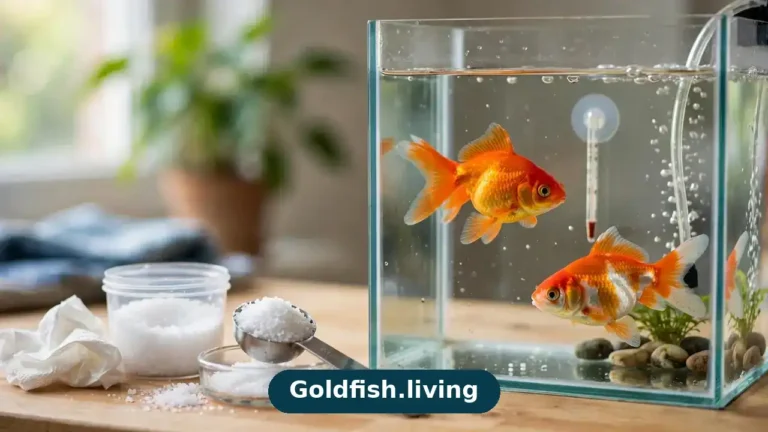
Aquarium salt is often used as supportive care during this period. It can ease osmotic stress and has mild antiseptic value, though it cures nothing about buoyancy itself. Use only aquarium salt, follow the product label, and remember that many live plants dislike it, which is another argument for the hospital container. Our guide to aquarium salt for goldfish covers safe use in full.
The causes peas cannot fix
Fasting and fibre answer one cause. Three others need different thinking, and recognising them early saves a fish from weeks of the wrong remedy.
Bacterial infection of the swim bladder usually announces itself beyond buoyancy: lethargy, lost appetite, reddening around the vent, a generally sick look. Antibiotics for fish are prescription matters in many places, and guessing the drug wastes the window in which the right one works. The Merck Veterinary Manual’s aquarium fish section is blunt that bacterial fish disease often needs professional diagnosis first.
Egg binding traps females full of eggs they cannot release, most often in spring as warming water triggers breeding condition. The egg mass presses on the bladder from below and the fish sinks. A plump female being chased by males, in season, fits the picture, but confirming it is a vet’s job.
Injury and birth defects close the list. A hard knock, rough netting, or a malformed bladder in a heavily bred fancy can damage buoyancy permanently. There is no routine for those; care shifts from cure to comfort, which the last section covers.
What a vet can check that you cannot
An aquatic veterinarian brings instruments to a problem you can only watch. X-rays show whether a bladder is compressed, infected or physically damaged. A vet can prescribe antibiotics matched to a confirmed bacterial cause, and can draw excess gas from an overinflated bladder with a fine needle when that is the fault.
Give home care about a week before escalating, provided the fish is eating something and passing waste. Escalate sooner if the fish stops eating entirely, develops sores, redness or pineconing scales, or goes a full week of good care with no improvement at all. Those signs point to infection or organ damage, which peas were never going to reach.
The RSPCA’s fish care guidance lists the warning signs that mark the limit of home treatment, and the PetMD fish care library helps you describe what you are seeing in terms a clinician can use. When you call, bring your water readings and a simple timeline. Both speed up diagnosis more than any photograph.
On cost, be straight with yourself. A vet visit can exceed the price of the fish several times over, and keepers pay it anyway, because the fish is a pet with a name, not an ornament with a price tag. That reasoning needs no defending.
Questions about swim bladder problems
Can a goldfish actually recover from this?
Yes, often, when the cause is digestive. Fish that respond to fasting and peas commonly regain normal buoyancy over one to three weeks. Infection, injury and deformity carry a poorer outlook, but even permanently affected fish can live comfortably with adjusted care, as the final section explains.
Is it contagious to my other goldfish?
No. Buoyancy disorder is a physical and digestive problem, not an infection that travels between fish. If several fish develop it together, look for a shared cause: water quality, a spoiled batch of food, or a feeding routine every fish shares. The U.S. FDA’s animal and veterinary pages are a useful check on what fish medicines can and cannot claim to do before you reach for one.
How long should the fast last?
Two to three days is the standard span for a suspected digestive cause. A healthy adult handles that easily. If the fish is already thin or weak, skip the fast and go straight to tiny amounts of soft vegetable, since a depleted fish needs fuel more than it needs an empty gut.
Do shop-bought swim bladder cures work?
Most are mild antibacterials or tonics with limited evidence behind them. They rarely do harm, but they can delay a real diagnosis while the water or the diet stays wrong. Fix the fundamentals first, give them their week, and let a vet handle anything that remains.
Why does it keep coming back in my fancy goldfish?
Because the anatomy does not change. A round-bodied fancy lives permanently close to the edge where digestion presses on the bladder. Recurrence usually means the long-term diet needs rebuilding: sinking staple food, vegetables a few times a week, modest portions and a weekly fast day.
When to stop treating and start managing
There is a point where the honest goal changes. A fish that has been through clean water, the pea routine and a vet’s opinion, and still cannot hold level, is not waiting for one more product. It is a fish with a permanent condition, and permanent conditions are managed, not cured.
Management is practical kindness: shallow water it can cross without exhausting itself, gentle flow, food delivered where it can reach it, by hand or target feeding if needed. A fish that eats eagerly and knows its keeper is not a failure case, whatever angle it rests at. Stop rotating remedies, keep the water kind, and let the fish get on with the life it has.

One Comment