What Do Goldfish Fry Eat? Baby Goldfish Feeding Guide
A goldfish fry hatches about the size of an eyelash, wearing its first meals as a yolk sac stuck to its belly. For a few days it wants nothing from you at all.
Then the sac runs dry, and a creature the size of a grain of rice needs food within a day or two or it starves. Everything about raising fry runs on those two facts: the food must be tiny, it must arrive often, and the water has to stay clean while it does.
The first days run on yolk
For the first two to four days after hatching, fry live off the yolk sac and hang nearly motionless on the glass and plants. They are not ill and they are not hungry. Food offered in this window only rots in the water, so resist the urge to help.
The feeding clock starts when the fry turn horizontal and swim freely, darting and hunting instead of hanging. From that moment they need small meals several times a day, every day, with no days off.
Food smaller than the gap between the eyes
Growth in the first month is built from protein, so aim at foods in the 40 to 50 percent protein range, with the fats and micronutrients that a mix of live and prepared foods supplies better than any single item can.
Size is the harder constraint, because a new fry’s mouth is microscopic and even powdered adult food is often too coarse. The working rule is that any particle must be smaller than the gap between the fry’s eyes. When in doubt, go smaller and feed more often.
The protein target is at least checkable: it is printed on prepared fry foods, so the 40 to 50 percent range can be verified at the shelf instead of guessed at the tank.
Infusoria: the bridge food
Infusoria are microscopic organisms, paramecium and their tiny kin, small enough for the weakest fry in the whole batch. Culture them by steeping a banana peel or a lettuce leaf in a jar of tank water for a few days, until the water clouds with life.
Treat infusoria as a bridge across the first days of free swimming, not as a diet. They are not nutritious enough to grow fry on for long, so move up to bigger live food the moment the fry can handle it.
Baby brine shrimp, the growth engine
Newly hatched brine shrimp, Artemia nauplii, are the gold standard of fry food: the right size, rich in protein, and moving with a jerky swim that switches on the hunting instinct. Fry raised on them grow visibly faster than fry raised on dry food alone.
Hatch them yourself in a bottle or simple hatchery with an air stone and salt water, and feed them within a few hours of hatching, when their nutritional value peaks. Nauplii grow and lose value as they sit, so hatching fresh batches daily is the routine that pays.
Microworms and the no-hatch backups
Microworms are tiny nematodes cultured at home on an oatmeal-based medium, endlessly renewable and the right size for even small fry. They sink slowly, which gives fry time to find them, and a working culture costs almost nothing to start and produces for weeks. Many keepers alternate microworms and brine shrimp through the day.
If cultures are not possible, prepared help exists. Powdered and liquid fry foods are made for egg-laying fish, and decapsulated brine shrimp eggs are shell-free eggs that fry eat directly, with most of the nutrition of live nauplii and none of the hatching work. Store decapsulated eggs in the fridge once opened.
Hard-boiled egg yolk pushed through a fine mesh is the emergency stand-in: rich, eagerly eaten, and a faster water-fouler than anything else on this page. Use a pinch only when nothing better exists, and follow it with a partial water change a few hours later.
Watch week-old fry take live baby brine shrimp in the video below. The feeding response, and the setup around it, say more than any description.
The feeding clock, month one and after
Feed three to four small meals a day through the first month, each ration sized so the water clears within an hour or two. A light dusting that disappears is right. A visible cloud that lingers is too much.
Past the one-month mark, drop to two or three meals a day and start folding in finely crushed quality pellet or flake beside the live food. By two to three months most juveniles are eating the adult diet in smaller pieces, the menu set out in our guide to what goldfish eat. PetMD’s goldfish care guide makes the same general point, that younger goldfish need feeding more frequently as they grow.
Sexing the youngsters is a job for much later, as our guide to male vs female goldfish explains. For now, every mouth in the tank gets the same menu.
Every meal is a water change waiting to happen
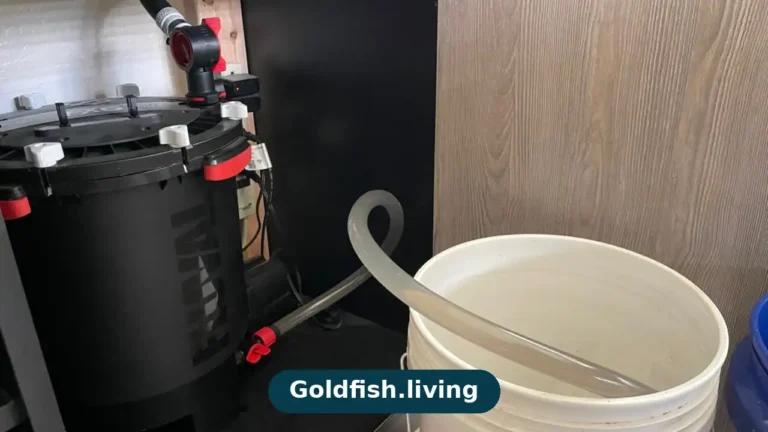
Heavy feeding means heavy waste, and fry tolerate ammonia far worse than adults do. Change 10 to 20 percent of the water daily or every other day, using dechlorinated water matched to the tank temperature, and run a gentle sponge filter that cannot swallow a fry.
Test ammonia and nitrite regularly through the fry stage, because a spike an adult would shrug off can empty a fry tank overnight. The RSPCA’s goldfish guidance counts stable, clean water among the non-negotiable basics, and fry are where that stops being a slogan.
Fry also grow faster in warm, steady water around 70 to 75°F, which speeds the metabolism doing the growing. Steady beats ambitious here: a constant temperature a degree lower does less harm than daily swings chasing the top of the range.
What growth should look like
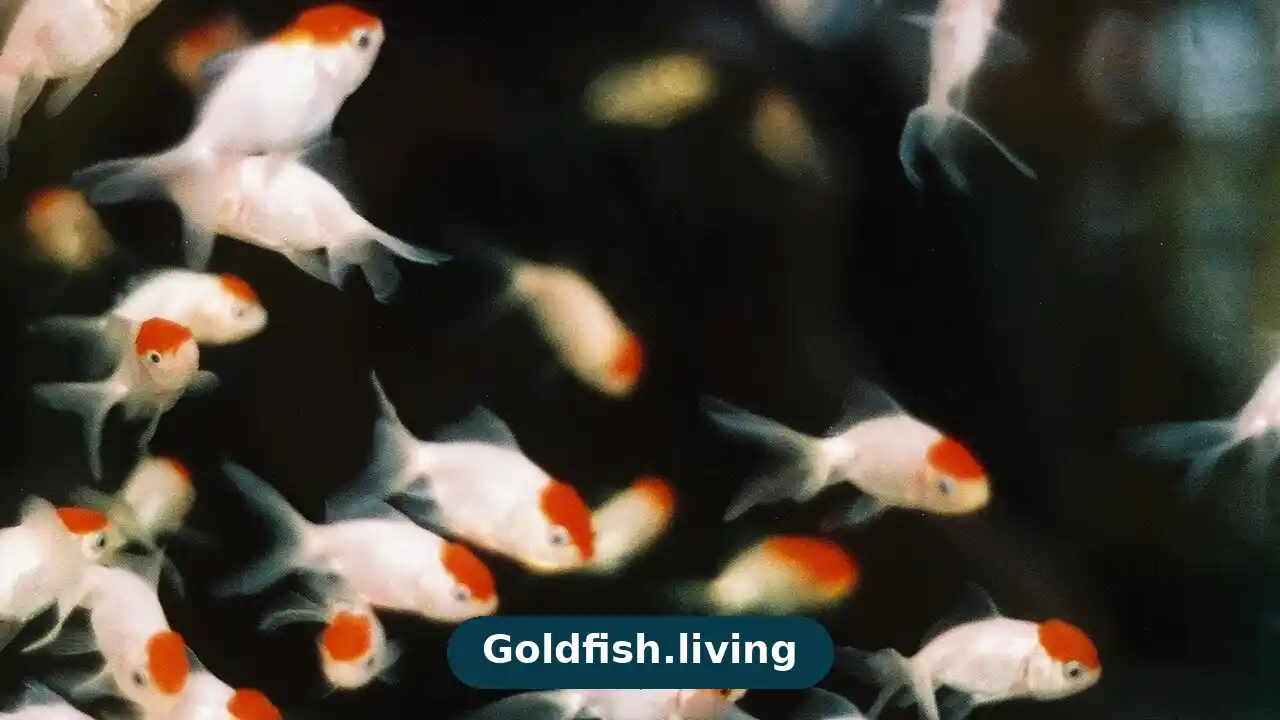
At one week, fry are still translucent slivers, barely more than eyes and a tail. By three to four weeks they start showing real body shape and the first hints of color, and the differences between individuals become easy to read.
Expect those differences to be wide, even within one batch raised in one tank. The biggest fry are not necessarily the healthiest long term, and the runts often catch up once they are moved to a less crowded grow-out tank with food they can reach first.
This is also where month one feeding shows its results. Batches raised on live food reach the shape and color stage together, while batches raised on dry food alone straggle into it over weeks, at sizes that make the gap plain. Size differences at this age are information, not a verdict on any individual fish.
Three mistakes that empty a fry tank
Starting food too late is the classic killer, because fry carry almost no reserves once the yolk is gone. If you cannot tell whether they are free-swimming yet, offer a tiny amount of infusoria anyway.
Slightly uneaten food is a minor problem. Starved fry do not recover.
Overfeeding without the water changes to match is the second killer. Fouled water kills faster than hunger at this age, and there is no version of the formula without the buckets.
The third mistake is leaving fry with their parents, who eat eggs and fry enthusiastically, including their own. Move eggs or newly hatched fry into their own tank early, using the same setup principles as any goldfish home, covered in our guide to how to take care of a goldfish.
Questions about feeding fry
When exactly do fry start eating?
Once the yolk sac is fully absorbed and they swim horizontally on their own, usually two to four days after hatching. Before that point they are living off the yolk, and food only pollutes their water.
If I can only manage one food, which should it be?
Newly hatched brine shrimp, if you can hatch them, and microworms if you cannot. Infusoria cover the first fragile days and prepared fry foods fill the gaps, but live food drives the growth that carries fry through the risky first month.
How often do fry need feeding, honestly?
Three to four small meals a day for the first month, then two to three as they grow, with each meal small enough to clear within an hour or two. Miss the frequency and the batch thins out. Overdo the portions and the water does the thinning instead.
Why are my fry dying?
Work through the usual order: food started too late, ammonia or nitrite from heavy feeding without water changes, or adults still sharing the tank. Test the water first, because it is the fastest killer and the fastest fix.
Can fry just eat crushed adult food?
Finely crushed flake or micro pellet can supplement the diet, and becomes the main food as mouths grow. For very young fry the particles are often still too big, and growth on dry food alone is visibly slower, so treat it as a supporting food in month one.
The routine is the whole secret
Expect real losses in the first two weeks even with everything done right. A single spawning can produce hundreds or thousands of eggs, and nature budgets for most of them not to make it. Put the effort into the survivors: food on time, water changed, temperature steady.
Do that daily and the eyelash-sized specks turn into recognizable goldfish within a couple of months, showing body shape by three to four weeks and the first hints of color close behind. Fry raising rewards the keeper who shows up every day, not the one with the fanciest shelf of equipment.

2 Comments