Can Goldfish Eat Vegetables? Safe Foods & Treats
Goldfish can eat vegetables, and a diet without them is only half a diet. In the wild, plant matter makes up the bulk of what a goldfish eats: algae scraped off rocks, soft aquatic plants, fallen bits of green worked over all day long.
Vegetables are how that side of the diet survives in a glass box. Served right, they keep digestion moving, support color and give the fish something to work at. Served carelessly, they rot quietly in a corner and foul the water they were meant to improve.
A gut built for greens
Goldfish have no true stomach and a long intestinal tract, plumbing designed for processing fibrous plant material in small, constant amounts. Dry food is convenient, but it runs low in fiber next to the wild diet.
Fiber keeps food moving through that long gut, and a gut that keeps moving is the main defense against the constipation that ends in the buoyancy trouble covered by our goldfish swim bladder guide. Fresh greens also bring vitamins A, C and E plus minerals that support immunity and color.
The difference shows on the fish. Goldfish that get regular greens tend to look brighter and more active, with less of the sluggish, bloated posture that a dry-only diet produces in fancy varieties over time.
There is a quieter benefit too: occupation. A fish working at a lettuce leaf or hunting down pea pieces is foraging the way it was built to, and busy fish are calmer fish. The RSPCA’s goldfish care guidance recommends exactly this, supplementing dry food with chopped vegetable matter such as lettuce or spinach.
Leaves first: the easy wins
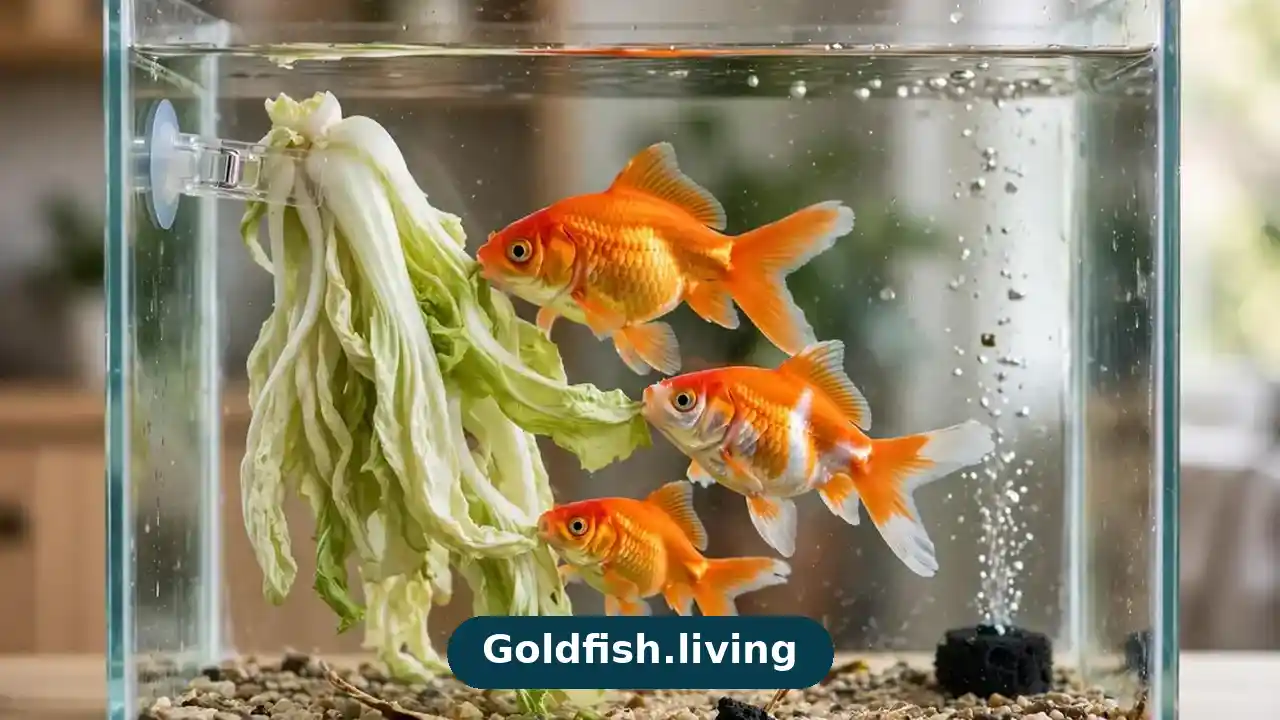
Romaine and green leaf lettuce are the gentlest start. They are mild, they soften quickly, and most goldfish take to them on the first try. Clip a leaf to the glass with a vegetable clip and let the fish graze at it.
Spinach and kale carry more nutrition and a little more caution. Spinach contains oxalates that can interfere with calcium absorption when it dominates the menu, so feed both in rotation rather than daily, and blanch them first. Skip iceberg lettuce altogether, since it is mostly water and offers almost nothing.
Peas, the weekly reset
The shelled, blanched pea is the classic goldfish vegetable for good reason. Its fiber gets a sluggish gut moving again, which is why keepers reach for it as the gentle first response to mild constipation.
The skin has to come off, because goldfish digest it poorly. Blanch the peas, then squeeze each one gently and the two inner halves pop free. One pea per fish, once a week, is a sensible preventive rhythm, and plenty of keepers run a full pea day in place of dry food.
Think of that pea day as a light day for the whole digestive system rather than a medicine dose. A weekly break from dense dry food, replaced by fiber that sweeps through, prevents many of the blockages that peas would otherwise be called in to treat.
The firmer stuff: zucchini, cucumber and broccoli
Thin slices of zucchini or cucumber, blanched until soft, are accepted by almost every goldfish. Peel waxed skins, take out large cucumber seeds, and anchor the slices with a clip or a clean stainless fork so they do not drift into the filter intake.
Blanched broccoli florets, deshelled edamame and small pieces of bell pepper are all safe in rotation, and duckweed belongs on the list too, a live floating plant that turns the surface into a self-serve salad bar. Fruit is a rarer thing: a small piece of melon or peeled orange now and then is safe, but its sugars are foreign to the diet, so keep it a monthly novelty.
See how goldfish handle fresh greens, and how keepers serve them, in the video below.
Two minutes in boiling water
Wash everything first, thoroughly, to shift pesticides and residues. If you cannot be sure a skin is clean, peel it, or buy organic for the fish’s share. This minute of prep matters more than any other step on the page.
Blanch most vegetables for one to two minutes, then cool them in cold water. Blanching softens cell walls so the fish can actually digest the food, and it makes pieces sink instead of skating across the surface. Tough pieces like broccoli want the full two minutes.
Cut pieces to roughly the size of the fish’s eye. Bigger chunks get dragged around, torn apart and scattered, which feeds the filter instead of the fish.
Out again within four hours
Whatever goes in uneaten must come out again within two to four hours. Rotting vegetables release ammonia fast, and a forgotten lettuce leaf can push a small tank into trouble overnight.
Set a phone timer when the vegetables go in if your memory is anything like most keepers’. Clean removal matters as much as clean preparation, and it is the step that separates a health food from a water quality accident.
What never goes in the tank
Onions and garlic in quantity do not belong in a goldfish tank, and raw potatoes and dried beans carry starches and compounds goldfish cannot handle. Bread, crackers and pasta swell in the digestive tract and deliver nothing useful in return.
The working rule is plain food only: nothing seasoned, salted, buttered or cooked in oil. If it came off a dinner plate with sauce on it, it stays off the menu.
Fitting vegetables into the week
Two or three vegetable servings a week is the rhythm that works, with one of them optionally a full vegetable day and no dry food at all. The staple pellet covers the base nutrition on the other days, in the portions set out in our guide to how often to feed goldfish.
Introduce each new vegetable one at a time and in a small amount. Some fish eye a strange green object with suspicion for a day or two, then commit completely. If a fish still ignores one vegetable after several honest tries, drop it and move on, because the list of options is long.
Our overview of what goldfish eat shows where vegetables sit in the complete weekly menu, and PetMD’s goldfish care guide takes the same line, listing romaine lettuce among safe enrichment foods alongside brine shrimp and daphnia.
Portions still count, even with food this light. Vegetables run lower in calories than pellets, but a few bites per fish is plenty per serving, and excess rotting in the gravel pollutes the tank exactly like excess pellets do.
Questions about vegetables for goldfish
Can I feed vegetables every day?
You can, but a mix serves the fish better. Vegetables two or three times a week beside a quality staple gives the best balance of fiber, protein and micronutrients. Greens alone run too low in protein to carry the diet long term.
Do vegetables really need cooking first?
Blanching for one to two minutes is the sensible default. It softens the food for digestion and helps it sink. Leafy greens can go in raw in a clip, though blanching still improves how readily fish take them.
Will peas fix a constipated goldfish?
Shelled, blanched peas are the standard gentle remedy, and their fiber clears most mild cases. If buoyancy problems keep returning, the whole diet needs review, because peas treat the symptom while the menu causes it.
My goldfish ignores every vegetable. What now?
Offer a small amount where the fish normally feed, before the day’s pellets, and leave it a couple of hours. Repeat over several days, since hunger and familiarity do the persuading. A clip at feeding height usually works better than pieces scattered on the gravel.
Is fruit safe as a treat?
Small pieces of melon or peeled orange are safe occasionally. Sugars are not part of a goldfish’s natural diet, so keep fruit to a rare novelty rather than a rotation food.
Start with one leaf
Do not rebuild the menu in a day. Clip one blanched romaine leaf in this week, run a pea day the next, and watch what the fish do with both. Vegetables earn their place in the routine one accepted leaf at a time.
The first leaf teaches the second half of the skill, too: putting food in on a timer and taking the remains out on one. That removal habit is what lets vegetables help the water instead of hurting it.

3 Comments