What Do Goldfish Eat? Complete Diet Guide
Wild goldfish descend from wild carp, and those carp spend their days rooting through ponds and slow rivers. They graze algae, nibble soft plants, and snap up insect larvae, tiny crustaceans, and worms. That foraging life is the blueprint for feeding your pet, and it explains nearly every rule in this guide.
A diet of plain flakes alone leads to dull colors, constipation, and weak immunity over time. Goldfish need a menu, not a single food.
Built to eat plants first, animals second
Goldfish are omnivores, which means they eat both plant and animal matter. The important twist is the ratio: their digestion leans heavily toward plants, and feeding them like tiny carnivores causes most of the diet problems keepers run into.
Their anatomy tells the same story. Goldfish have a relatively long intestinal tract and no true stomach, the digestive setup of an animal designed to extract nutrients from fibrous plant material. They even carry pharyngeal teeth in their throats for crushing snail shells and tough morsels.
PetMD describes goldfish as predominantly omnivores, and the wild diet backs that up. Plants make up the bulk of the intake while animal protein is the supplement, found opportunistically rather than gorged on. A captive diet that flips this ratio, heavy on protein and light on plants, is the root cause of a great deal of constipation and swim bladder trouble.
The wild menu your tank should copy
In nature, no single food makes up more than a small part of the diet. Variety covers nutritional gaps that any single food leaves behind. That is the first lesson the wild menu teaches.
Algae is the single biggest item: wild goldfish scrape it off rocks, wood, and plant leaves all day. Duckweed, soft pondweeds, and decaying plant matter supply the fiber that keeps their long gut moving. A goldfish grazing the tank glass is following an old instruction.
Animal foods round out the picture. Mosquito larvae, bloodworms, daphnia, tiny snails, and small crustaceans supply amino acids and fats that plants alone cannot provide. This constant grazing is why captive goldfish do best with varied, frequent small meals rather than one big daily dump of flakes.
The staple that carries the week
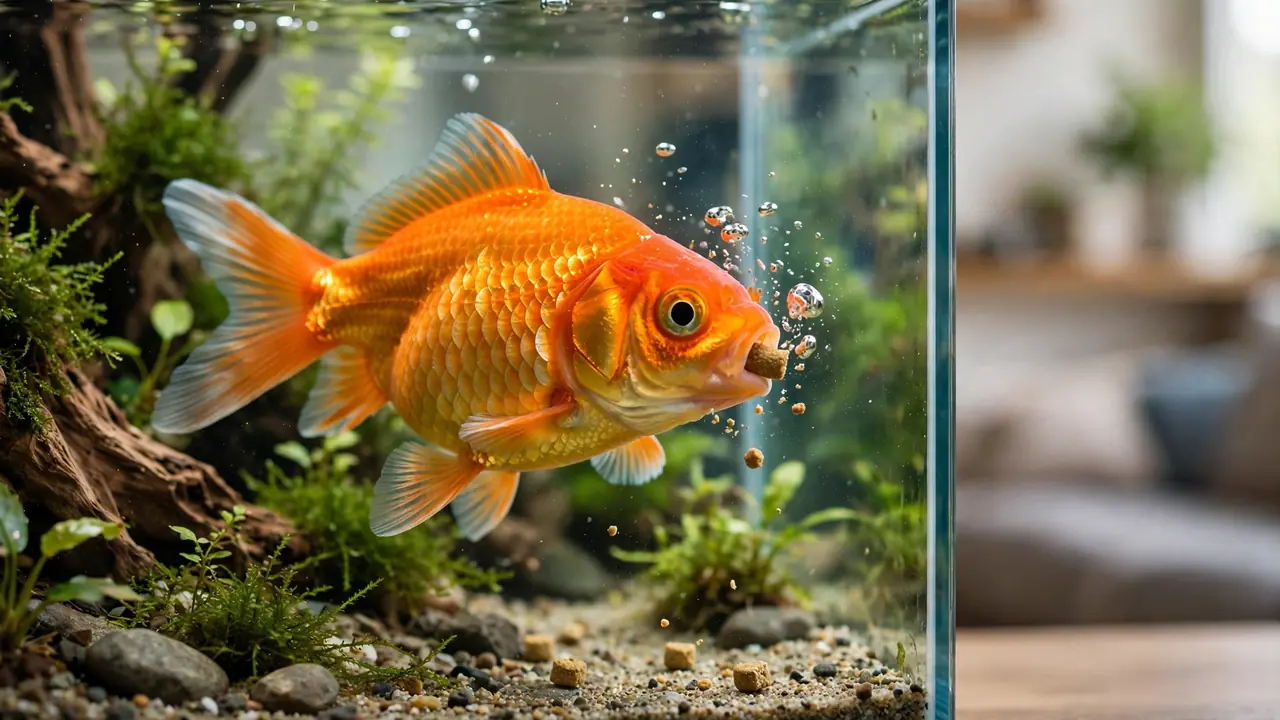
A high-quality food made specifically for goldfish should form the base of the diet. Sinking pellets are the better choice for fancy goldfish, since gulping air at the surface can worsen swim bladder problems. The pellets versus flakes comparison breaks down when each format makes sense.
Adult goldfish do well on food with around 30 percent protein. Young, fast-growing fish benefit from closer to 40 percent protein until they mature. More protein is not always better for adults: protein the fish cannot use becomes extra waste, which fouls the water faster.
Pellets carry one more practical advantage. They are easier to portion than flakes, so the meal size stays honest from day to day. Consistent portions keep both the fish and the filter on a predictable load.
Vegetables are not a treat
Plant matter should be a regular part of the menu, two or three times a week. A goldfish nibbling blanched lettuce or grazing on duckweed is not getting a snack. It is eating the way it evolved to eat, and the fiber keeps food moving through that long intestinal tract.
Shelled peas are the classic choice: blanch them for a minute, pop off the skins, and chop them small. Blanched zucchini slices, spinach, kale, and romaine lettuce all work well. See the full list of vegetables goldfish can eat for safe options and prep methods.
Duckweed is a perfect living snack if you grow it in a separate container. Goldfish devour it, and it is packed with nutrients. Between the peas, the greens, and the duckweed, the plant side of the omnivore is easy to cover.
Prep work: blanching and portioning
Blanching is the main technique: boil vegetables for about one minute, then cool them in cold water. This softens the cell walls so goldfish can tear off bite-size pieces instead of struggling with raw greens.
For peas, pop the soft skins off after blanching and chop or mash the insides. For zucchini or cucumber, slice thin rounds, blanch them, and weigh the slice down with a plant weight or veggie clip.
Leafy greens like spinach and romaine can go in raw on a clip, but blanching makes them disappear faster. Whatever you offer, pull leftovers after three to four hours. Fresh food left longer decays in the water and spikes ammonia.
Protein in its proper place
Frozen bloodworms, brine shrimp, and daphnia make excellent weekly treats. Daphnia doubles as a mild natural laxative, which helps keep fancy goldfish digestion moving. Thaw frozen foods in a little tank water before feeding, and offer only what the fish finish in a couple of minutes.
Live foods from bait shops carry disease risk, so frozen is the safer default. Keep treats to a supporting role, once or twice a week. Wild goldfish encounter animal food occasionally, not constantly, and the tank menu should keep that proportion.
If you want live food on demand, daphnia are easy to culture in a bucket of green water on a balcony. Seed the bucket with a starter culture, feed it a pinch of yeast every few days, and harvest with a fine brine shrimp net. The culture costs almost nothing and gives you disease-free live food.
Feed the harvest within a day so the daphnia stay nutritious. Keep a backup culture running in case one crashes. Two buckets of green water are a small price for a permanent supply of the perfect treat.
Feeding by age
Fry need three to four tiny feedings a day of powdered fry food or newly hatched brine shrimp. Their stomachs are microscopic, so frequency matters more than volume at that stage. Juveniles under a year old do well on two to three small meals daily with protein near 40 percent, and consistent nutrition here builds the body shape the fish keeps for life.
Adults settle into one or two meals a day at around 30 percent protein, following the schedule in the guide to how often to feed goldfish. Older goldfish past eight to ten years benefit from slightly lighter portions and extra vegetable matter for easy digestion. Age changes the menu gradually, never suddenly.
Reading the label before you buy
Flip the package over before buying. The first ingredients should name actual protein sources like whole fish meal, shrimp meal, krill, or spirulina, not vague filler buried behind wheat and soy. Check the protein percentage against the fish’s age: near 40 percent for fry and juveniles, around 30 percent for adults.
Also check the date, since vitamins in dry food degrade within about six months of opening. Store dry food sealed, cool, and dark, and buy containers you will finish in two to three months. Stale food loses nutrition long before it looks or smells off.
Foods that never go in the tank
Never feed bread, crackers, or processed human snacks. They swell in the gut, offer almost no nutrition, and cloud the water quickly. Raw potatoes and beans contain starches goldfish cannot digest well, and high-fat mammalian meats and cheese are completely inappropriate for a fish digestive system.
Skip citrus fruits and anything seasoned, salted, or cooked in oil. Feeder goldfish from pet stores are also a bad idea as food, since they commonly carry parasites and diseases.
Cheap generic flakes with heavy grain fillers as the first ingredients are barely better than junk food. When in doubt about a kitchen scrap, leave it out. The staple plus known-safe vegetables covers everything the fish needs, so there is no reason to gamble on mystery foods.
When the balance is off
Too much protein and too little fiber shows up as stringy or pale feces, constipation, and a fish that floats or sinks oddly after meals. The fix is straightforward: cut back the protein treats, add vegetable days, and make sure the staple is a quality goldfish formula rather than generic tropical food. Fancy goldfish show these problems first, because their compressed bodies leave less room for digestive error.
Too little variety is the quieter failure. A goldfish fed one flake every day for years is surviving on the nutritional equivalent of eating only cereal. It may look fine for a while, but color fades, growth stalls, and immunity drops.
Rotating staples, vegetables, and treats across the week prevents the slow deficiencies a single food creates. The fish also tell you when the balance is right. Bright colors, steady growth, and clean water between changes are the report card of a working diet.
Putting the week together
A simple rotation covers everything the omnivore needs. Quality pellets form the staple most days, vegetables arrive two or three times a week, and a frozen protein treat lands once a week. Add one fast day for adults and the plan is complete.
None of the parts is exotic, and that is the point. The wild diet is ordinary foods in the right proportions, repeated patiently. Your tank version just needs the same proportions on a schedule you can keep.
Questions about the goldfish diet
Are goldfish omnivores or herbivores?
Goldfish are omnivores that lean strongly toward plants. They eat algae, aquatic plants, insect larvae, and small crustaceans in the wild. Their long intestinal tract is built for digesting plant fiber, with animal protein as a smaller part of the mix.
What is the best staple food for goldfish?
A sinking pellet formulated for goldfish, with whole fish or shrimp among the first ingredients. Pellets are easier to portion than flakes and pollute the water less. Aquarium Co-Op’s goldfish food guidance reviews proven options from decades of goldfish keeping.
Can goldfish eat peas every day?
They can, but they should not. Peas are a great fiber supplement two or three times a week, especially for constipated fancy goldfish. Every day, they would unbalance the diet by displacing protein the fish needs.
Do goldfish need meat in their diet?
They need some animal protein, but not much. A quality commercial staple already contains fish meal or similar ingredients, and a weekly treat of brine shrimp, daphnia, or bloodworms covers the rest. They do not need large meaty meals.
Can goldfish eat tropical fish flakes?
In a pinch, but not as a staple. Tropical flakes are formulated for warm-water fish with different protein and fat needs. The RSPCA’s fish feeding guidance advises buying food made for the species and supplementing with fresh foods for balanced nutrition.
PetMD’s fish care section describes goldfish as predominantly plant-leaning omnivores, which matches what keepers observe at feeding time.
Build the week, not the meal. Pellets most days, vegetables two or three times, a protein treat once, and one fast day for adults: that rotation covers the whole omnivore. Judge the result on the fish, bright color, steady growth, and clean water between changes.

7 Comments