Which Algae Eater Is Safe with Goldfish?
Algae in a goldfish tank is not a livestock problem. It is a management problem, growing because there is too much light, too many nutrients from overfeeding, or water changes that happen too rarely.
No snail or fish fixes those causes, and in a goldfish tank most famous algae eaters are a bad idea anyway. The few that genuinely work are worth knowing, once the basics are under control.
Why the famous names fail here
Goldfish are big, curious, and constantly hungry. Anything under 2 inches is a potential snack, anything slow gets rammed into the glass, and anything tropical suffers in cool goldfish water.
That rules out otocinclus catfish and cherry or amano shrimp immediately. Common plecos fail in the opposite direction, surviving the goldfish easily and then growing to two feet while producing staggering amounts of waste.
Chinese algae eaters are worse than either. Adults stop eating algae and latch onto goldfish to rasp their slime coats, turning your cleanup crew into the problem.
Snails do the heavy lifting
Nerite snails
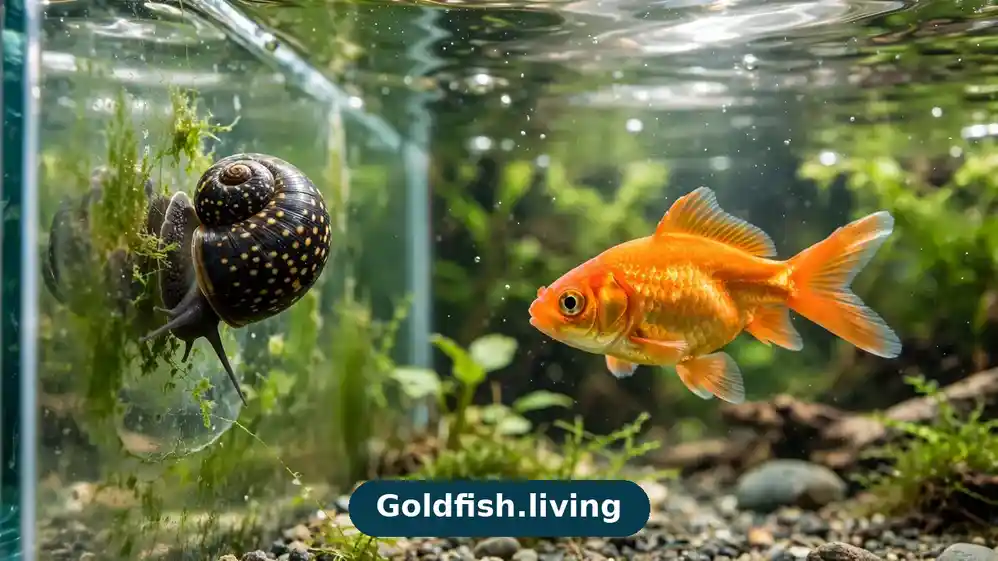
Nerites are the strongest pick on this page. They eat film algae, diatoms, and green spot algae relentlessly, they cannot reproduce in freshwater so the population never explodes, and their hard shells stand up to curious goldfish better than any other small snail.
Buy adults at least half an inch across, since smaller nerites can still be harassed. They need mineral-rich, slightly alkaline water for healthy shells, which matches goldfish preferences nicely.
The one downside is cosmetic. Females lay tiny white eggs on glass and decor that never hatch in freshwater but take real effort to scrape off.
Mystery snails
Mystery snails grow to 2 inches, eat soft algae and leftover food, and come in striking colors. Their size keeps them safe from all but the largest goldfish.
They do add meaningful waste of their own, and their long antennae can get nipped by bored goldfish. Keep the tank well fed so the snails are never the most interesting thing moving in it.
Japanese trapdoor snails
Trapdoor snails are large, livebearing snails that handle cool water well and mostly mind their own business on the glass and substrate. The operculum, the little door they close when threatened, gives them real protection against pecking goldfish.
They reproduce slowly, so you will not wake up to hundreds of them. They prefer established tanks with some biofilm to graze on, so add them once the tank has matured a little.
The pleco question, answered honestly
A bristlenose pleco stays under 6 inches and eats algae well, which is why keepers keep asking about it. Treat it as conditional rather than safe, and be clear about why.
It prefers water slightly warmer than a goldfish tank and it adds significant waste of its own. The serious risk is this: a hungry pleco may rasp the slime coat off a slow fancy goldfish, and that slime coat is the fish’s first defense against infection, with the slowest fancies least able to swim away.
If you try one anyway, feed it algae wafers and blanched vegetables on a schedule so it never goes hungry at night. Never choose a common pleco as a substitute, because that fish outgrows the tank along with the problem.
Where a bristlenose fits in a wider community is covered in our goldfish tank mate guide. It runs every candidate through the same temperature, size, and temperament tests used here.
Names to leave at the shop
True Siamese algae eaters are excellent grazers in tropical tanks, but they prefer water warmer than a goldfish tank and grow restless in cool conditions. As they age they also turn toward protein and may harass slow tank mates.
They are frequently confused with the Chinese algae eater at the shop, which makes buying one a gamble. Skip both for goldfish, and let shrimp keep their reputation in the nano tanks where they belong.
Labels are the weak point in this whole category, because the fish that arrives home is not always the fish on the tank glass. With goldfish in the tank, a mislabeled algae eater is not a small mistake, it is a slime-coat problem waiting for its first hungry night.
Fix the cause before you buy the crew
Keep the tank light on for 8 to 10 hours a day, on a timer. Any more feeds algae faster than any cleanup crew can graze it, and direct sunlight on the glass is the single biggest algae trigger in home aquariums.
Overfeeding is the other great algae fertilizer. Feed only what the fish finish in two minutes, twice a day, and skip one day a week, because hungry goldfish graze soft algae themselves, which is free labor.
Change 25 to 50 percent of the water weekly and vacuum the substrate while you do it. Every water change exports the nitrates and phosphates that algae feed on, and our water change routine sets out the full schedule.
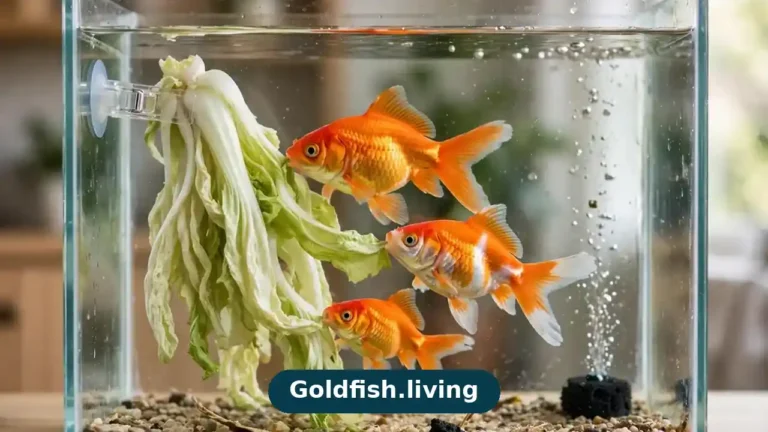
Blanched vegetables do double duty here, feeding both your goldfish and your snails while keeping hungry mouths off your plants. Our guide to vegetables goldfish can eat lists the safe options, and Aquarium Co-Op’s algae and snail guidance reaches the same verdict as this page: husbandry beats livestock for algae control.
Greens change goldfish behavior as well as snail rations. Goldfish that get their vegetables graze far less destructively on tank plants, which removes one more reason algae takes hold in a planted tank.
What the crew will not do
Even the right crew has limits worth stating plainly. Snails graze film and soft algae from surfaces, but they do not scrub a neglected tank clean, and no crew member eats the nutrients dissolved in the water itself.
You will still scrape glass, still vacuum substrate, and still change water on schedule. The crew buys you margin between those jobs, nothing more, and keepers who buy snails expecting to retire the bucket are the ones whose tanks crash.
Adding snails without losing them
Add snails only to a cycled, stable tank, because they are sensitive to ammonia and nitrite just like fish. Acclimate them slowly by floating the bag and dripping tank water in over 30 minutes.
One nerite per 5 to 10 gallons is plenty. More snails just means more competition for the same thin film of algae, and hungry snails start rasping plant leaves instead, so supplement with algae wafers if the glass stays spotless.
Count snails in the tank’s waste budget, too, especially the big mystery snails. A cleanup crew still produces waste, and an overstocked crew quietly raises the same nitrate you bought it to fight.
Avoid copper-based medications entirely in a tank with snails, because copper is lethal to invertebrates. Treat sick goldfish in a separate hospital tank whenever possible, and PetMD’s fish care library is a good background read on medicines and invertebrate safety.
The hospital tank habit protects the crew twice over. The snails avoid the medication, and the main tank avoids the ammonia spike that follows when a treatment knocks back the filter bacteria they depend on.
Snail and pleco questions
Will my goldfish eat the snails?
They will try with small ones. Adult nerites and mystery snails are usually safe because of their size and hard shells, but tiny pest snails and baby snails get eaten, so buy the largest healthy snails you can find.
How many nerite snails does a tank need?
One per 5 to 10 gallons handles film algae in a balanced tank. Start with two or three, and add more only if algae still outpaces them after you have fixed lighting and feeding.
Do snails mean fewer water changes?
No. Snails convert algae into snail waste, which still ends up as nitrate in your water, so they supplement water changes and never replace them.
What are the white dots on my glass?
Those are nerite snail eggs, and they only hatch in brackish water, so they will never become baby snails in your tank. Removing them takes a razor blade or an algae scraper and a little patience.
Is any pleco safe with fancy goldfish?
A well-fed bristlenose can work, but watch for slime-coat rasping on slow fancies. Common plecos and Chinese algae eaters should never go in a goldfish tank.
Crew second, habits first
Start with nerite snails, add a mystery snail or two if you want variety, and consider a bristlenose only once you are comfortable managing the extra waste. Then do the unglamorous work: a timer on the light, measured feeding, and weekly water changes.
That combination keeps a goldfish tank cleaner than any miracle algae eater ever will. The crew grazes the edges, but the routine does the real cleaning.


One Comment