Goldfish Tank Mates: Safe Fish to Choose
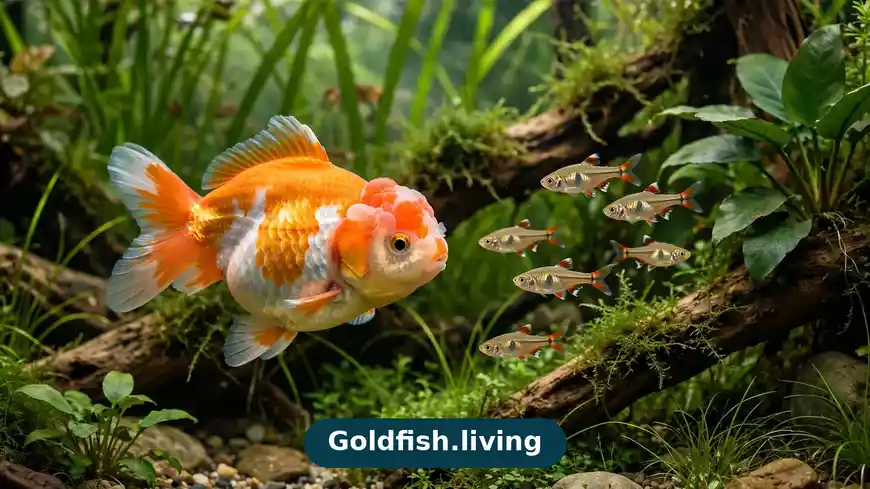
The best tank mate for a goldfish is usually another goldfish. They want the same cool water, eat the same food, and swim at the same unhurried pace, so nobody in the tank is living in conditions built for a different animal.
That does not make a goldfish tank a goldfish-only tank. A short list of other cool-water species can share the space safely, provided each one passes the same three tests of temperature, size, and temperament.
Three tests every candidate has to pass
Any tank mate must be comfortable in water between 65 and 75°F, because that is where goldfish live. A fish that needs 78°F will be chronically stressed in a goldfish tank, and warming the tank for its sake punishes the goldfish instead.
There is no compromise setting that rescues a mismatched pairing. Water warm enough for a tropical fish slows a goldfish down and shortens its life, while water cool enough for the goldfish leaves the tropical fish sluggish and open to disease.
Size cuts in both directions. Anything small enough to fit in a goldfish’s mouth eventually ends up there, while anything big and boisterous will shoulder slow fancy varieties away from their food.
Aim for calm, mid-sized, cool-water fish and most problems never start. Match the temperature, match the size, and match the temperament, and the tank mostly takes care of itself.
Company from their own kind
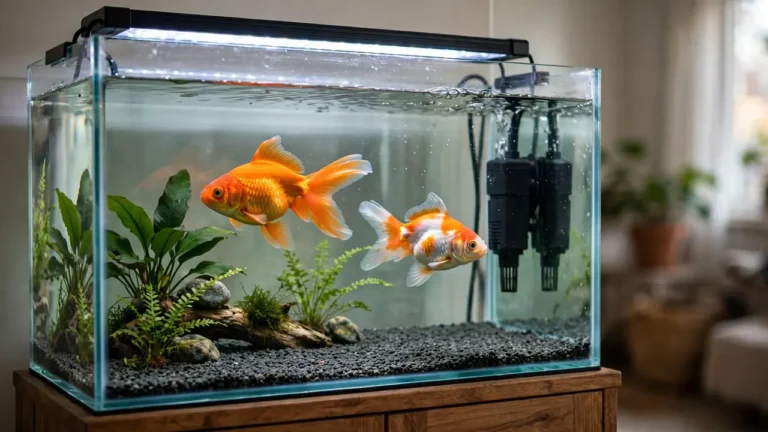
Other goldfish are the safest option by a wide margin, and goldfish are social animals that genuinely do better in groups. The one rule is to keep similar body types together, with single-tails alongside single-tails and fancies alongside fancies.
A fast common will reach every meal before a slow oranda does, and the fancy ends up thin and stressed while its tank mate thrives. Keep swimmers of similar speed together and feeding stays fair for everyone.
Space sets the ceiling on all of it. Allow 20 gallons for the first fancy goldfish plus 10 gallons for each extra fish, or a 40 gallon minimum for the first common with more room per additional fish, and our goldfish tank size guide walks through the math for both body types.
Company is not free, even when the company is another goldfish. Every added fish eats, grows, and produces waste in the same water, so the group a goldfish enjoys has to be planned into the tank size and the filter from the start.
The short list that actually works
White cloud mountain minnows
White clouds are the classic goldfish companions, thriving in the same cool water and staying small at around 1.5 inches. Their constant activity adds life to the upper water without bothering anyone.
The risk is their size, because a large adult goldfish may eventually snack on them. Keep minnows in schools of at least six, and accept that they work best alongside smaller or younger goldfish.
The school matters as much as the species. A proper group keeps minnows confident and spread across the upper water, while one or two alone hide, stress, and become easy targets.
Dojo loaches
Dojo loaches, also sold as weather loaches, love cool water and grow to a sturdy 6 inches, so goldfish leave them alone. They are peaceful bottom dwellers that scavenge leftover food, and they are famously hardy.
Give them a soft substrate to burrow in and a tight lid on the tank, since they occasionally launch themselves out of the water. They also do best in groups of three or more, so plan the space for a trio from the start.
Zebra danios
Zebra danios are fast, hardy, and comfortable in the same 64 to 75°F range as goldfish. Their speed keeps them safe from curious mouths, and a school of six adds constant motion to the upper water column.
They are too quick to be caught and too plain to be bullied. Just avoid the long-finned danio varieties in tanks with large goldfish, since trailing fins invite nipping.
Keep the full school of six rather than a token pair. Danios are schooling fish, and a complete group spreads their energy across the top of the tank instead of focusing it on one nervous individual.
Companions for fancies are a shorter list
Body type narrows the shortlist further. Single-tails are fast, streamlined fish, and they can share a tank with quick schoolers like danios and white clouds that hold their own at feeding time.
Fancies swim slowly, see poorly in some varieties, and lose every race to the food. Their safe companions are the calm ones: other fancies first, then unhurried bottom dwellers like dojo loaches that compete for nothing at the surface.
That is why the same species can be a good mate in one goldfish tank and a poor one in another. Judge the pairing against the slowest fish you own, not the fastest.
Conditional picks, eyes open
Bristlenose plecos
A bristlenose can work in a goldfish tank, but treat it as a conditional pick rather than a default. They prefer the water a little warmer than goldfish do, and they add a lot of waste of their own to the bioload.
Hungry bristlenoses have been known to rasp the slime coat off slow-moving fancies, and that is the risk that matters. If you try one, keep it well fed with algae wafers and vegetables so it never goes looking for a slime coat, and our guide to algae eaters that are safe with goldfish covers the choice in full.
Skip the common pleco entirely, whatever the shop suggests. It grows to two feet and will outgrow any home tank.
Rosy barbs
Rosy barbs handle cool water well and look great doing it, but they can turn nippy in small numbers. Keep a school of six or more in a tank of at least 30 gallons, so their energy stays directed at each other.
Long-finned goldfish varieties are the most likely victims of that nipping. With short-finned commons, rosy barbs are usually fine.
Numbers and space are the whole trick with this species. Give barbs both and their energy stays inside the school, but take either away and the slowest fins in the tank pay for it.
The fish that cause the heartbreak
Almost every failed goldfish community fails one of the three tests from the top of this page. The fish below are not bad fish, they are simply fish built for different water, different sizes, or different tempers.
Bettas, guppies, neon tetras, and angelfish need warm water that goldfish should never live in. Keeping either side in the wrong temperature range is slow cruelty, not a compromise.
Tiger barbs, serpae tetras, and most cichlids will shred the flowing fins of fancy goldfish. Even small nippers cause constant stress, which shows up as clamped fins and fading color.
Small tetras, guppy fry, cherry shrimp, and tiny snails are snacks, whatever the shop label says. A goldfish will hunt them relentlessly once it realizes they fit in its mouth.
Chinese algae eaters are the worst name on this list, despite what their name promises. As adults they stop eating algae and start latching onto slow fish to feed on slime coats, so never put one with goldfish.
Setting up so nobody has to fight
Space prevents most aggression before it starts. A cramped tank makes even peaceful fish snappy, so size up generously and add visual breaks with plants and decor, and if you are starting from scratch, our guide to whether goldfish can live in a bowl explains why the tank comes before any tank mates.
Quarantine every new fish for two to four weeks in a separate tank before it joins the main display. This single habit prevents more disasters than any medication, because most disease outbreaks trace back to an unquarantined newcomer.
Feed a varied diet that reaches every level of the tank. Sinking food for the bottom dwellers alongside food for the goldfish stops the fast eaters from hogging everything at the surface while the slow ones go hungry.
Watch the slowest fish eat for the first few days after any new addition. If the fancy or the loach is consistently beaten to every mouthful, the pairing is failing at mealtime however peaceful the tank looks between feedings.
Questions every keeper asks first
How many tank mates can a goldfish tank hold?
Fewer than you think, because goldfish are heavy waste producers and every addition raises the bioload. In a 40 gallon tank with two fancy goldfish, a school of six white clouds is a comfortable maximum.
Can a betta share a tank with goldfish?
No, and temperature is the deal-breaker. Bettas need 76 to 80°F water and will attack flowing fins, while goldfish need it cool, so there is no setting that suits both fish.
Will my goldfish eat the other fish?
It will eat anything that fits in its mouth, including small tetras, guppy fry, and shrimp. If a tank mate is under 2 inches and the goldfish is over 4 inches, assume it is eventually food.
Does a goldfish get lonely on its own?
Goldfish are social and more active with company, but another goldfish is the ideal companion. A lone goldfish in a well-kept tank still lives a full and healthy life.
Can fancy and common goldfish live together?
It is not recommended, because fast single-tails outcompete slow fancies for food and may harass them. Keep similar swimming abilities together and both groups stay calmer.
Start with one more goldfish
When in doubt, add another goldfish and skip the compatibility gamble entirely. If you want variety, white cloud minnows and dojo loaches are the proven cool-water companions, with bristlenoses and rosy barbs held as conditional options for keepers who will watch them closely.
The RSPCA notes that goldfish do best with company of their own kind and plenty of space, and PetMD’s goldfish care guidance reinforces the same space and water quality basics. Build the community on those two ideas and the shortlist above is all you need.
Run the three questions at the shop counter before any bag is tied: does it live at 65 to 75 degrees, will it stay a safe size in both directions, and is it calm at mealtime? A fish that fails any one of them stays at the shop, however good it looks under the lights.

5 Comments