Best Plants for Goldfish Tanks: 8 Hardy Species That Survive
Every goldfish keeper eventually learns the same hard lesson: goldfish regard aquarium plants as a salad bar. You plant a beautiful aquascape on Sunday, and by Wednesday it looks like a lawn mower drove through it. Stems float at the surface, leaves are shredded, and the fish looks extremely pleased with itself.
It is tempting to give up and go plastic. But live plants are worth fighting for: they absorb nitrates, oxygenate the water, give shy fish shelter, and make the tank look alive in a way plastic never manages. The trick is choosing plants that can survive a goldfish, and planting them in ways that respect how goldfish behave.
Why Plants Are Worth the Trouble
Goldfish produce a lot of waste, and waste becomes nitrate. Plants consume nitrate as fertilizer, which means a planted tank stays cleaner between water changes. In a heavily stocked goldfish tank, that extra nitrate absorption is genuinely useful, not just decorative.
Plants also change how the tank feels to the fish. Tall background plants break up sight lines and give bullied or shy fish somewhere to retreat. Floating plants dim harsh overhead light, which goldfish seem to prefer. A bare tank is stressful in a way that is hard to measure but easy to observe.
There is an honesty point here too: goldfish will damage plants, and some plants will die. Budget for replacements, start with cheap hardy species, and treat the first planting as an experiment. The keepers with gorgeous planted goldfish tanks all started with shredded leaves and floating stems.
The Best Plants That Survive Goldfish
Anubias
Anubias is the number one recommendation for goldfish tanks, and it earns it. The leaves are thick, tough, and leathery, with a texture goldfish find unappealing after one exploratory nibble. It grows slowly, tolerates low light, and thrives in the cool water goldfish prefer.
The key rule: do not bury the rhizome. Anubias grows from a horizontal rhizome that rots if buried in substrate. Tie it to driftwood or rocks with thread or super glue gel, and let the roots grip the hardscape naturally. Glass Grown Aquatics’ goldfish plant guide highlights Anubias Coffeefolia as one of the toughest options available.
Java Fern
Java fern is Anubias’s partner in crime: same tough leaves, same attach-to-hardscape rule, same indifference to low light and cool water. Many keepers report that goldfish taste it once and never bother it again, possibly because of mildly bitter compounds in the leaves.
Like Anubias, the rhizome must stay above the substrate. Wedge it into driftwood crevices or tie it to stones. It propagates by growing tiny plantlets on old leaves, which you can pluck off and attach elsewhere, so one purchase can eventually fill a tank for free.
Java Moss
Java moss is nearly indestructible and useful everywhere: tied to wood, stuffed into crevices, or left as floating clumps. Goldfish may pick at it, but it grows fast enough in decent light to outpace casual nibbling, and it provides grazing surfaces for biofilm.
Keep it out of filter intakes, where it loves to migrate. A coarse pre-filter sponge on the intake solves that. Moss also makes excellent cover for fry if your goldfish ever surprise you with eggs, giving the babies somewhere to hide.
Hornwort
Hornwort is the weed that works in your favor. It grows astonishingly fast, floats freely or can be loosely anchored, and absorbs nitrates like a sponge. Goldfish will nibble it, but hornwort grows faster than they can eat, which is the whole strategy.
It sheds needles when stressed by shipping or sudden changes, so do not panic if it looks messy the first week. Once settled, it is one of the most effective natural filters you can put in a goldfish tank. Just thin it regularly, because it can take over.
Vallisneria
Vallisneria, especially jungle val, is the background plant that keeps coming back. It spreads by runners, grows tall ribbon leaves that sway in the current, and recovers from nibbling by simply outgrowing the damage. A vallisneria background in a goldfish tank looks spectacular once established.
Plant it in the substrate with roots buried but the crown exposed. It appreciates root tabs in plain gravel or sand. Newly planted val sometimes melts back before regrowing adapted leaves, so give it a few weeks before judging.
Amazon Sword
Amazon swords bring big, bold leaves that established goldfish usually respect. They are heavy root feeders, so they want nutrient-rich substrate or regular root tabs. A large sword makes a stunning centerpiece that anchors the whole aquascape.
Buy the largest specimen you can afford. Small swords get shredded before they can establish, while big ones have the leaf mass to shrug off nibbling. Plant deeply so digging goldfish cannot easily uproot them.
Duckweed and Other Floaters
Duckweed is the plant goldfish love to hate, or rather love to eat. It multiplies so fast that it functions as a self-replenishing snack and a nitrate sponge at the same time. Many keepers grow it in a separate container and toss handfuls into the goldfish tank as treats.
Our guide to feeding duckweed to goldfish covers this in detail. If duckweed feels too invasive, larger floaters like water lettuce or frogbit are easier to corral with airline tubing rings and harder for fish to demolish overnight.
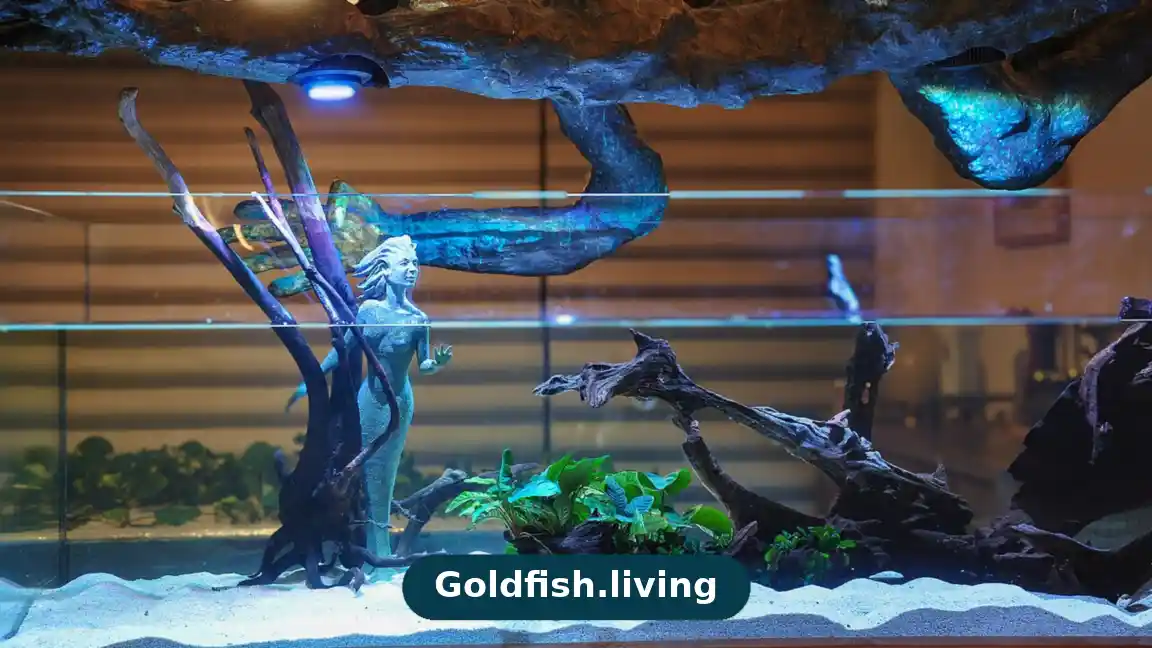
Cryptocoryne
Crypts are the slow-and-steady midground option. They dislike being moved and may melt dramatically after planting, then regrow from the roots once settled. Goldfish generally ignore their tougher leaves, making them a reliable choice once established.
Plant crypts and then leave them completely alone. Every relocation restarts the melting cycle. In a stable goldfish tank with moderate light, a crypt cluster becomes a permanent, low-drama fixture.
How to Plant So They Stay Planted
Goldfish dig. It is natural foraging behavior, not mischief, and your planting strategy has to account for it. Rhizome plants like Anubias and java fern sidestep the problem entirely by attaching to wood and rock instead of substrate.
For rooted plants, plant deeply and anchor well. Plant weights, small stones around the base, or planting through a mesh grid all help. Let plants establish strong roots for several weeks before adding goldfish if you can, since a rooted plant resists digging far better than a fresh one.
Consider the substrate too. Plants root more easily in sand or fine gravel than in chunky pebbles, and digging goldfish dislodge plants less in finer substrates. Our sand versus gravel guide compares substrates with plant growth in mind.
Plants to Avoid or Treat as Snacks
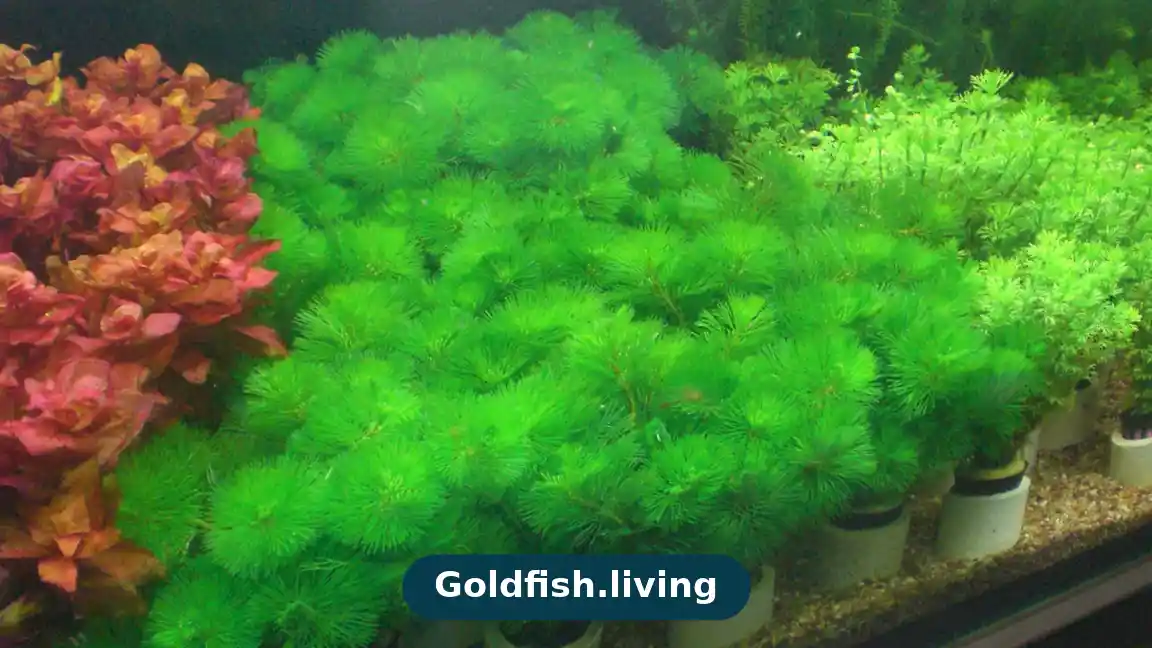
Delicate stem plants with soft leaves, like cabomba and many rotala species, are goldfish candy. They will be eaten within days. Do not waste money on them for a goldfish tank unless you are deliberately growing snacks.
That said, sacrificial plants have their place. Cheap bunches of anacharis or elodea tossed in regularly give goldfish something to shred besides your prized Anubias. Think of them as enrichment and fresh greens in one, and our vegetable guide covers other fresh foods goldfish enjoy.
Carpeting plants are generally a lost cause with goldfish. The fish uproot them faster than they spread, and the high light and CO2 carpets want conflicts with goldfish needs. Accept a natural, slightly wild look instead of an aquascaping-contest lawn.
Live vs Artificial Plants
Silk and plastic plants never get eaten and never need care, which is a real advantage. High-quality silk plants look decent and are perfectly safe. If you have tried live plants repeatedly and lost, there is no shame in going artificial.
But artificial plants do nothing for water quality, and cheap plastic ones can have sharp edges that tear delicate fins. If you go artificial, choose soft silk over stiff plastic, and keep up with water changes since no plants are helping with nitrates.
The best answer for most keepers is a mix: tough live plants like Anubias and java fern where they survive, plus the understanding that the tank will look a little wild. Aquarium Co-Op’s fancy goldfish setup guide recommends goldfish-safe plants for exactly this kind of realistic planted tank.
Common Questions
Will goldfish eat all aquarium plants?
Not all, but they will test everything. Tough-leaved plants like Anubias and java fern are usually tasted once and ignored. Soft, delicate plants get eaten. Choosing from the hardy list above is the difference between a planted tank and an expensive salad.
Do goldfish tanks need special plant lighting?
No. The best goldfish plants are all low-light species that thrive under basic aquarium lighting. Avoid high-intensity setups, which mostly grow algae in a goldfish tank. Our lighting guide covers how much light goldfish actually need.
Can I use fertilizer with goldfish?
Yes, but gently. Root tabs buried deep in the substrate are the safest option since curious goldfish cannot easily dig them up. Go easy on liquid fertilizers in a goldfish tank, because the fish already provide plenty of nitrogen and phosphate through waste.
Why do my plants keep getting uprooted?
Goldfish dig while foraging, and freshly planted stems offer no resistance. Plant deeply, anchor with weights or stones, and prefer rhizome plants tied to hardscape. Letting plants establish for a few weeks before adding the fish helps enormously.
Are floating plants good for goldfish tanks?
Excellent. Floaters like duckweed, frogbit, and water lettuce absorb nitrates fast, shade the tank, and give goldfish something to nibble. Corral them with a ring of airline tubing so they do not clog the filter, and thin them regularly.
Should beginners start with live or fake plants?
Start with two or three bulletproof live plants, like Anubias and java fern tied to a piece of driftwood. They need almost no care and teach you the basics. If the goldfish destroy even those, you will know fake plants are the practical choice for your particular fish.
Plant Boldly, Replace Cheerfully
A planted goldfish tank will never look like a pristine aquascaping photo, and that is fine. It will look alive: nibbled leaves, drifting hornwort, duckweed the fish are slowly winning against. That wildness suits goldfish perfectly.
Start with the tough species, anchor everything like you mean it, and keep a few cheap sacrificial plants in rotation. The goal is not a perfect aquascape; it is a living tank where plants and goldfish thrive together, nibbles and all. Get that balance right and you will wonder why you ever considered plastic.