Black Moor Goldfish Care: Tank Setup, Eyes & Feeding
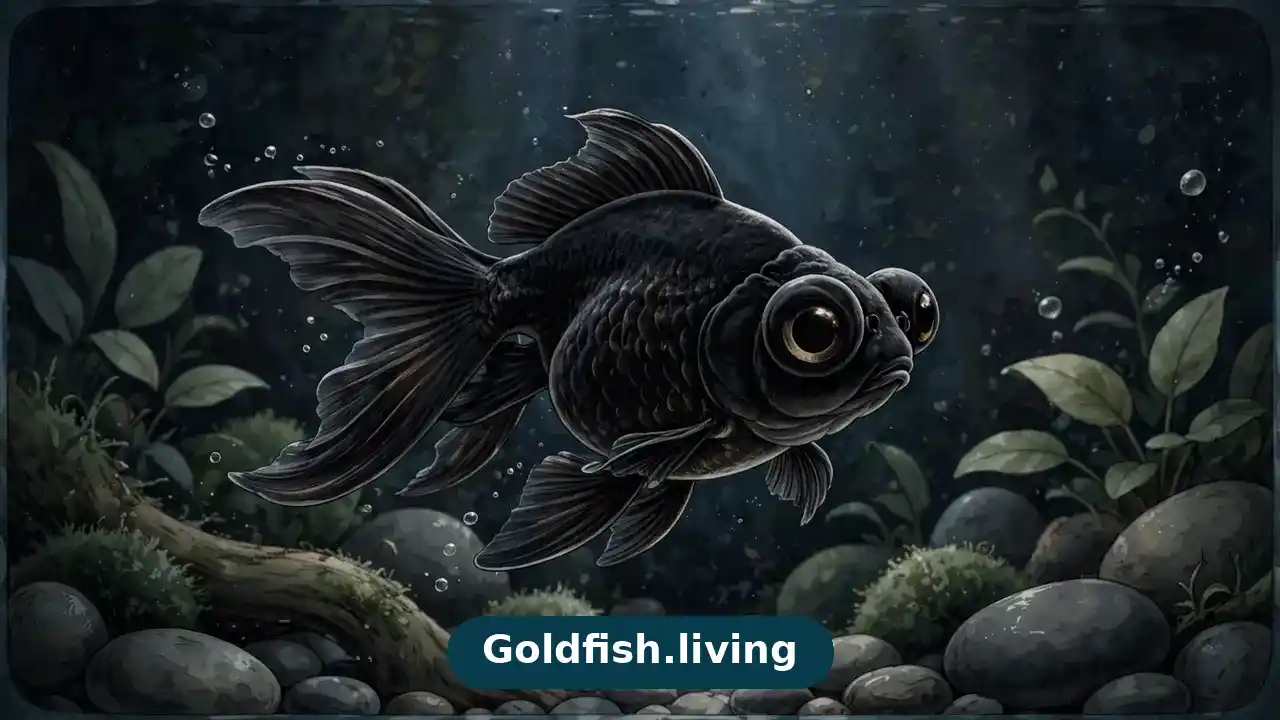
Plenty of goldfish are pretty. Only one looks back at you through a pair of binoculars, and the black moor’s protruding telescope eyes are the reason people stop at its tank.
Those eyes are also the whole care problem. They stick out, they barely work, and they injure easily, so black moor keeping is really a single design brief: build a world that cannot hurt a pair of eyes the fish cannot protect.
Everything else, the size of the tank, the food, the company, gets decided after that brief is satisfied. Keepers who start with the eyes find the rest of this breed easy.
Binoculars that barely work
Telescope eyes develop as the fish grows, pushing outward from the sides of the head until they sit like small domes. Breeders also call them dragon eyes, and the name fits the silhouette better than the function.
Vision through them is poor: a wide field of view with very little detail. A black moor navigates partly by smell and partly by gentle collision, which is why it bumps into things that sharper eyed fish avoid without thinking.
The eye itself never stops being delicate. The surface is exposed, the stalk behind it is exposed, and a knock that another goldfish would not notice can cloud a telescope eye or, in a bad case, cost the fish that eye entirely.
The body behind the eyes is rounded and deep, with long flowing fins, reaching 6 to 8 inches in body length. Young fish often start bronze or grey and darken as they mature, and with good care the breed lives 10 to 15 years.
Juveniles in the shop look almost ordinary, because the telescopes develop gradually over the first months of life. That surprises buyers twice: first when the eyes begin to project, and again when they realise how much the growing fish’s world has narrowed.
Decorate with your palm, not your eyes
Every object in a black moor tank should pass one test before it goes in: run your hand slowly over it. If it scratches your palm, it can scratch an eye, and out it stays.
That rules out rough lava rock, jagged slate, ornaments with points or moulded spikes, and stiff plastic plants. Choose smooth sand or fine rounded gravel, silk plants, or sturdy live plants like anubias and java fern tied to smooth wood.
Layout matters as much as materials. Push decor toward the edges and leave wide open lanes in the middle, so a half blind fish can turn, cruise, and change its mind without squeezing past anything.
Equipment hides two eye risks people miss. Cover every filter intake with a sponge prefilter, because a curious fish pressing an eye against an uncovered intake can injure it badly, and secure ornaments so nothing can tip onto a fish resting below.
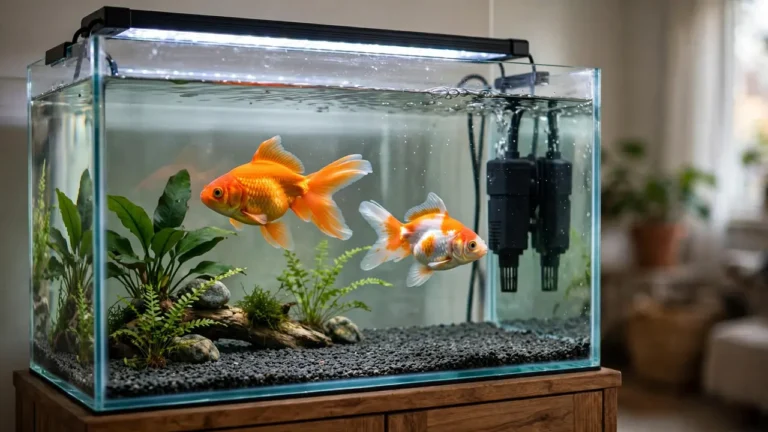
The tank itself starts at 20 gallons for one fish, 30 if you can manage it, plus about 10 gallons per extra fancy goldfish. A long footprint beats a tall one, giving slow fish room to wander without constant collisions.
Handling follows the same rule of gentleness. Net a black moor rarely, with a large soft net, and move slowly during water changes, because most eye injuries happen when a startled fish bolts into the glass or the decor.
Water that lets eyes heal
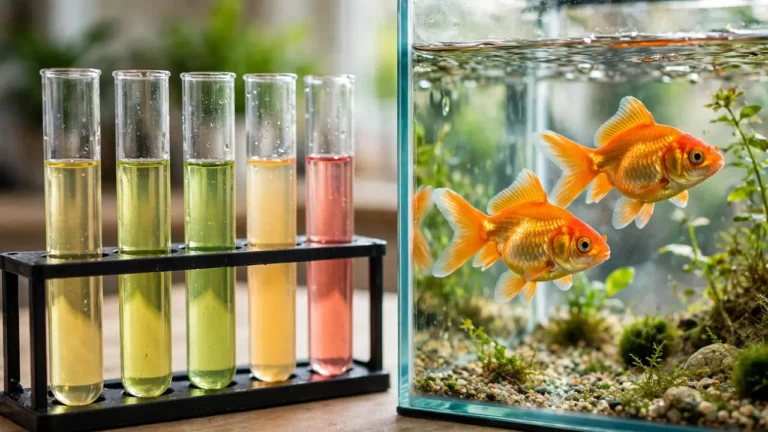
Black moors live in the standard goldfish range: 65 to 75 degrees Fahrenheit, pH 6.5 to 7.5, ammonia and nitrite at zero, and nitrate under 20 parts per million. The full target set lives in the goldfish water parameters reference.
Weekly changes of 25 to 30 percent hold those numbers, and this breed gives you an extra reason to keep the schedule. Eye tissue heals slowly, and it heals worse in dirty water, so the fish with the most fragile eyes is the fish that can least afford a skipped week.
Black moors are messy eaters with poor aim, which loads the water faster than tidier breeds do. More volume and honest filtration, oversized on paper and diffused in practice, keep that load from becoming a water quality problem.
The video below gives a clear look at how far the eyes project, which is worth seeing before you choose a single decoration.
Dinner lands in the same place every day
A black moor does not find food the way other goldfish do. It smells it, drifts toward it, and bumps around the neighbourhood until its mouth arrives, so feeding this breed is about delivery, not menu.
Feed in the same spot every time, and the fish will learn the address. Sinking pellets made for fancy goldfish are the right staple, because food that settles near the bottom waits patiently for a slow fish to find it.
Soak dry food briefly before it goes in so it sinks straight away instead of floating past a fish that cannot chase. Then give the black moor a few unhurried minutes, and watch to confirm it is actually eating rather than assuming.
Blanched vegetables two or three times a week, shelled peas, zucchini, spinach, and frozen bloodworms or daphnia once a week round out the diet. Meals stay small, what the fish finishes in two to three minutes once or twice a day, with uneaten food removed before it rots.
The feeding rhythm for goldfish generally is covered in our notes on how often to feed goldfish. The black moor adjustment is simply this: in a mixed tank, place food directly in front of this fish, or accept that it will be outcompeted.
A black moor losing weight while its tank mates look plump is rarely sick. It is being beaten to every meal by fish that can see, and the fix is a private feeding spot or slower company, not medicine.
The round body carries the usual fancy digestion risk as well. Floating or tipping after meals usually traces to constipation pressing on the swim bladder, and a fast of 24 to 48 hours followed by a blanched, shelled pea settles most cases.
The black will probably not stay black
Here is the breed’s open secret: many black moors fade. The change usually starts on the belly, gold or orange creeping upward and outward over months until the fish wears a patchwork or turns mostly orange.
That fading is genetic and harmless. Warmer water and bright lighting seem to hurry it along, and a varied diet with carotenoid rich foods may preserve the dark colour a little longer, but no product overrides the genes the fish arrived with.
Expect the change to take months rather than days, creeping a little further each time you compare photographs. That slow pace is itself diagnostic: colour that moves at the speed of growth is genetics, while colour that changes within a week is a message about the water.
Buy a black moor for its eyes and its temperament, and treat lasting blackness as a bonus. A faded black moor is not a failed one; it is the same personable fish in a different coat.
Sudden colour loss is a different signal. Rapid paling that arrives with clamped fins, lethargy, or a lost appetite points at stress, poor water, or illness, and the first move is a water test, not acceptance.
The bumped eye: what helps, what harms
Sooner or later a black moor knocks an eye, and the eye clouds over. The good news is that most minor injuries need no treatment at all beyond exceptionally clean water, and the cloudiness clears on its own within a week or two.
Your jobs are limited and specific. Keep the water pristine, remove or pad whatever caused the knock, and watch the eye daily for direction of travel: clearing is healing, spreading is not.
Warning signs are cloudiness reaching the second eye, redness, swelling, or the fish going quiet and off its food. That pattern suggests bacterial infection rather than a bruise, and mild cases sometimes settle with aquarium salt in a separate quarantine container.
Persistent or worsening eye problems belong to an aquatic veterinarian. The Merck Veterinary Manual’s aquarium fish section outlines how eye and gill problems are assessed in fish, and one rule needs no reference at all: never handle or treat the eye directly with your hands.
Prevention is the rest of the treatment. Quarantine new arrivals for two to four weeks, keep the palm test honest, and a black moor can go years without an eye problem worth the name.
Company a slow fish can trust
The best tank mates for a black moor are other black moors and equally slow fancy goldfish: fantails, orandas, and ranchus. Matched speed means matched meals, which matters more for this breed than for almost any other.
Avoid fast single tails that steal every feeding, and avoid anything nippy without exception. Protruding eyes are targets, and fin nippers plus telescope eyes is one of the worst combinations in the hobby.
The broader list of safe and unsafe pairings is in our guide to which fish can live with goldfish, and the RSPCA’s fish care guidance gives the welfare case for stocking gently.
Black moor questions, answered straight
Why is my black moor turning orange?
Genetics, in almost every case. Fading begins on the belly and spreads gradually as the fish ages, and warm water or bright light can speed it up. It harms nothing, and a fish that fades evenly while eating and swimming normally is a healthy fish changing colour.
Can black moors actually see?
Yes, but badly. They get a wide, blurry picture and fill the gaps with smell and touch, which is why they bump into decor and miss food that is drifting an inch away. Design the tank and the feeding spot around that limitation and they manage perfectly well.
My black moor has a cloudy eye. What do I do first?
Check the water and make it impeccable, then find and fix whatever the fish knocked into. Minor cloudiness from a bump usually clears within one to two weeks in clean water. Swelling, redness, spread to the other eye, or appetite loss means an aquatic vet should see it.
Are black moors suitable for beginners?
For a careful beginner, yes. The care is standard fancy goldfish care, filtered tank, clean water, sinking food, with the extra work concentrated in tank design and gentle handling. A beginner willing to palm test the decor will do fine.
Can a black moor cope if it loses an eye?
Usually, yes. A one eyed black moor in a familiar, palm tested tank eats, grows, and behaves normally, because it was navigating largely by smell and memory anyway. Keep the layout stable afterward, since a rearranged tank is a new map the fish has to learn with half its already poor vision.
Start with the eyes
If black moor care could be reduced to one instruction, it would be this: every time you are about to add something to the tank, a stone, a plant, a tank mate, a filter, ask what it means for the eyes.
It is a slower way to run a tank, and deliberately so, because this breed experiences the aquarium at half speed and quarter vision.
Answer that question honestly each time and the rest of the breed’s care arranges itself. PetMD’s goldfish care guidance is a sound reference to keep nearby for the fundamentals that sit underneath.

One Comment