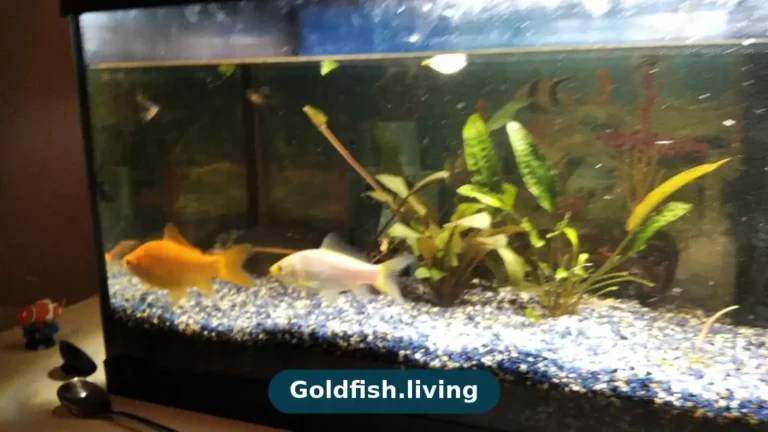
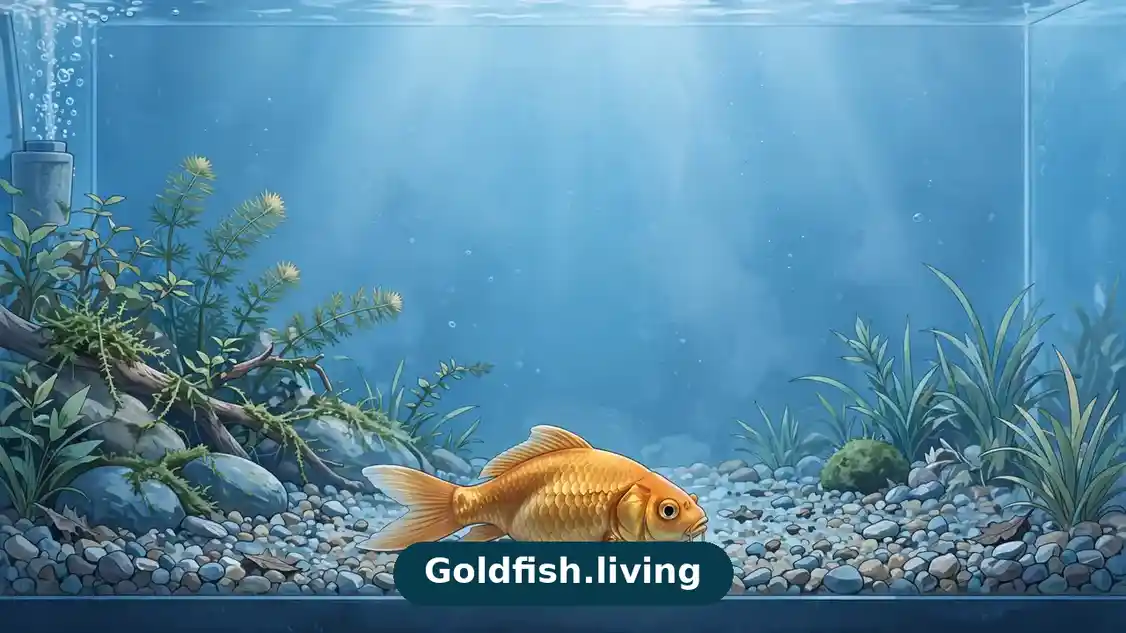
Goldfish Laying on Bottom of Tank: Causes and Fixes
A goldfish parked on the gravel, motionless, is a worrying sight in a fish that used to meet you at the glass. Bottom-sitting has a long list of possible causes, from ordinary sleep to a tank quietly poisoning its occupant. The behaviour alone tells you almost nothing; the posture and the timing tell you nearly everything.
So this guide starts with a check you can do in thirty seconds, before any test kit comes out. Then it follows the causes in the order they actually occur: water, oxygen, buoyancy, temperature, tankmates, age.
The posture check: sleeping fish versus sick fish
Goldfish rest near the bottom, and they have no eyelids, so a sleeping fish looks eerily like a parked one. What separates rest from trouble is how the fish holds itself and how it answers you.
What normal rest looks like
A resting goldfish sits upright, belly down, fins relaxed rather than clamped tight. Breathing is slow and regular. It picks a quiet corner, usually once the lights are out, and it perks up quickly when gently disturbed, swimming off level and steady.
Rest happens in stretches of minutes to an hour, mostly at night or during calm periods. A fish that sits at night and is active, hungry and normally coloured by day is sleeping, not sick, and needs nothing from you but darkness.
Posture that should worry you
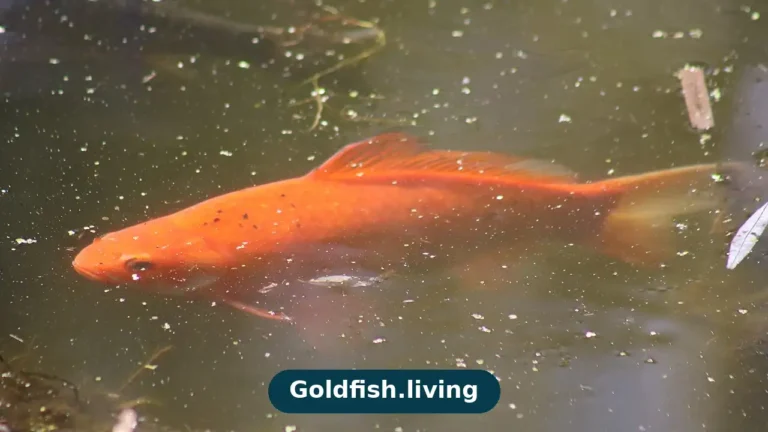
A sick fish often lies tilted, rolled partly onto one side, or propped at an odd angle against decor. Breathing looks rapid or laboured. It ignores food, ignores your approach, and stays put when the other fish start moving.
Daytime is the other half of the signal. Bottom-sitting that happens under lights, at feeding time, day after day, has left the territory of rest. Note the posture, the time and whether the fish ate, and keep going down this page.
Water first, because it is guilty most often
When a goldfish sits on the bottom through the day, poor water is the prime suspect. Ammonia and nitrite drain a fish’s energy directly; a poisoned fish conserves what little it has by sitting still. This is the most common explanation for persistent bottom-sitting, and luckily the easiest to confirm or clear.
Test ammonia, nitrite, nitrate and pH with a liquid kit, now, not after the next meal. In a healthy cycled tank, ammonia and nitrite read zero. If either shows anything above zero, you have found the problem, and the fish needs clean water, not medication. Change 30 to 40 percent with dechlorinated water matched to the tank temperature, and repeat smaller changes daily until the readings hold at zero.
Then find the trigger so it does not recur: an uncycled new tank, a filter rinsed under the tap or left off, overfeeding, overstocking, or something dead and rotting out of sight. Keep the target numbers from our goldfish water parameters guide pinned near the tank until testing becomes habit.
Hold food while the readings are at their worst. Every meal, eaten or not, becomes ammonia in water that already holds too much, and a fasting fish produces far less waste for the filter to process. Resume small feedings once ammonia and nitrite hold at zero again.
The oxygen angle nobody checks
A fish short on oxygen often sits low, where holding position costs the least energy, or parks near the filter output where the water runs richest. Warm, still, crowded tanks are the usual setting. Rapid gill movement is the companion sign that gives it away.
Oxygen sags most often in summer heat, in tanks with no surface agitation, and right after medication courses that suppress aeration. Every extra fish draws from the same limited supply, so a tank that was fine with three fish can fail with five.
Fix the air before anything fancy: angle the filter outlet at the surface, add an air stone, or drop the water level slightly so the outflow splashes. These mechanical changes raise dissolved oxygen within minutes. Clean water that is not moving is still only half a fix, because gas exchange happens at the surface or not at all.
Sinking, not sitting: the swim bladder branch
Watch how the fish leaves the bottom, or tries to. A lethargic fish sits because it chooses stillness. A swim bladder fish struggles: it kicks upward, tips, and sinks back like a stone, or rests because rising costs more than it has.
Constipation pressing on the swim bladder is the most common version, especially in round-bodied fancy goldfish fed heavily on dry food. A swollen belly, stringy droppings or a recent gorge on pellets point that way. Our swim bladder disease guide walks through the fast-and-pea routine step by step.
If the fish cannot right itself at all, or lies fully on its side for hours, treat that as urgent rather than digestive. Test the water immediately and skip ahead to the red flags below.
Cold rooms, old fish and cornered fish
Three causes share the same still posture and none of them is a disease. Cold water slows a goldfish to a crawl: below about 50°F (10°C), sitting still for long stretches is simply what the metabolism allows. Sudden temperature swings are worse than steady cold, so match every water change to tank temperature and keep the tank away from draughty windows.
Bullying produces a different kind of stillness. A harassed fish hides low and quiet to avoid attention, often in one corner or behind decor, darting off when the aggressor passes. Watch the tank from across the room for ten minutes; new arrivals are frequent targets while the pecking order settles. Fish added to a brand-new tank also sit for the first day or two while they adjust, which should clear within 48 hours.
Age is the third. Goldfish can live 10 to 15 years or more, and old fish rest longer, swim less vigorously and spend real time on the bottom while still eating and responding. That is a life stage, not a symptom: keep the water easy to reach, the flow gentle and the food soft, and let the fish set its own pace.
Red flags that mean a vet, not another water change
Before the red flags, one middle category: illness with a name you can match. White spots like salt grains suggest ich, ragged or darkening fins suggest fin rot, and persistent rubbing against decor suggests parasites or skin irritation. Each has its own home treatment path, and all of them work better in clean water, which is why the testing still comes first.
Some bottom-sitting, though, arrives with evidence that home care cannot answer. Raised, pineconing scales, body ulcers, severe bloating or bloody streaks all belong in that category. So does a fish that shows no improvement after a week of clean water and sensible care.
The Merck Veterinary Manual’s aquarium fish section underlines why: many fish diseases look alike from outside the glass and separate only under professional examination. A vet can test, look and prescribe; a shelf of guesswork bottles cannot.
Before you call, gather your notes: posture, appetite, water readings, recent changes. The RSPCA’s fish care guidance lists the same warning signs from the welfare side, and matching your fish against them makes the conversation with the vet far more useful. The PetMD fish care library is a good reference for what healthy, normal behaviour looks like when you are deciding whether you are even seeing a problem.
Questions about bottom-sitting
My goldfish sits on the bottom but eats fine. Should I worry?
Probably not yet. A fish that rises eagerly for food, swims normally afterwards and sits mainly during quiet hours is resting or ageing, not declining. Worry when the sitting spreads into active hours, the appetite fades, or the posture tilts. Keep brief notes for a few days and the trend will tell you which way it is going.
Why is the fish lying on its side instead of upright?
Side-lying is a step beyond sitting and usually means swim bladder trouble, severe weakness or advanced illness. The fish has lost the ability to hold itself level, which resting fish never do. Test the water at once, then treat it as a same-day problem rather than a wait-and-see one.
Does a water change help, whatever the cause?
In most cases, yes. A partial change of 25 to 30 percent with dechlorinated, temperature-matched water helps ammonia, oxygen and general stress at once, and done properly it does not harm a fish whose problem lies elsewhere. It is the safest first move in fish keeping, which is why it appears in nearly every guide on this site, including our goldfish ich treatment guide where clean water supports recovery.
How long is too long for a fish to stay on the bottom?
Overnight rest that clears by morning needs nothing. A full day of motionless sitting with refused food and fast breathing needs action the same day. Duration plus company, the symptoms travelling with the stillness, is the measure, not duration alone.
Can overfeeding really park a goldfish on the gravel?
Yes. Overfed goldfish, fancies especially, develop digestive pressure that leaves them sluggish and bottom-bound for hours after meals. Review portions, add vegetable matter a few times a week, and consider one fast day weekly. If the pattern follows feeding time closely, the menu is your culprit.
If you only do one thing tonight
Do this: test the water, and change a third of it with matched, dechlorinated water while the kit develops. That single pair of actions rules in or out the most common cause of bottom-sitting, improves oxygen as a side effect, and harms nothing if the cause turns out to be age, cold or a bully.
Everything after that is reading. Posture in the morning, appetite at the next feed, gill speed when the tank is quiet. A goldfish on the bottom is a question, and tonight you have already asked the most important part of it.