Ranchu Goldfish Care Guide: Tank, Feeding & Health
Every goldfish swims by rowing with its tail and steadying itself with the fin along its back. Every goldfish, that is, except the ranchu, which was bred to have no dorsal fin at all.
That missing fin is why a ranchu waddles more than it swims, pitching and rolling its way across the tank in a style somewhere between determined and drunk. It is also why ranchu care is mostly one subject, swimming, and how every choice you make either helps a weak swimmer or quietly exhausts it.
Ranchus were refined in Japan in the late 1800s from Chinese lionhead stock, and they still carry the nickname king of goldfish. Kingship has not made them hardy. It has made them specific.
What a missing fin actually costs
The dorsal fin is a stabiliser. Without it, a ranchu cannot hold a straight line cheaply, so it spends energy on balance that other goldfish spend on growth and immunity.
The body underneath makes the job harder. A ranchu is short, deep, and egg shaped, with a sharply arched back and internal organs compressed into a small space, which is why digestion and buoyancy fail in this breed before almost anything else does.
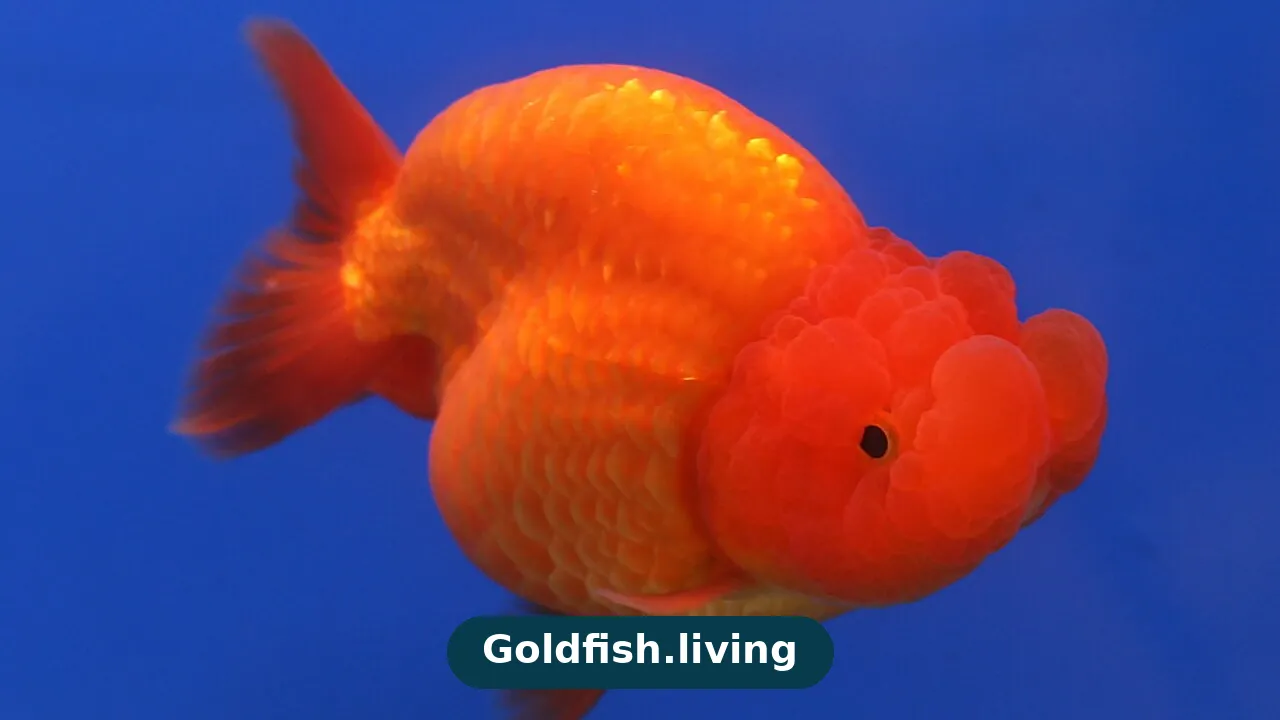
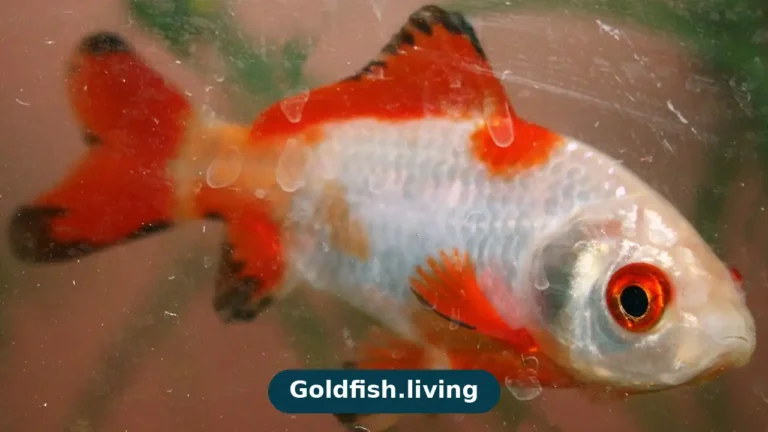
The head carries a wen, the same fleshy growth found on orandas, only spread more evenly over the whole head. A mature ranchu reaches 5 to 8 inches in body length, in colours that include red, white, red and white, calico, black, and chocolate.
None of this makes ranchus fragile in a dramatic way. It makes them tiring to be, which is why the tank has to do the work the fin would have done.
Shoppers often meet the ranchu standing next to its ancestor, the lionhead, and the two do get confused. Ranchus show a more dramatic back curve, a broader and squarer head, and a shorter tail set at a sharper downward angle, while lionheads look a touch longer and gentler in profile. Care for the two is effectively identical, so everything in this guide applies to lionheads as well.
Shallow, wide, and slow
One ranchu needs at least 20 gallons, 30 or more is better, and each additional fish adds about 10 gallons. The shape of those gallons matters more than the number on the box.
Pick a long, wide tank over a tall one, because a weak swimmer uses floor space, not height. Depth of roughly 12 to 15 inches is comfortable for adults, and even a standard 18 inch tank works if the flow is kind, while very deep tanks make ranchus labour up and down all day.
Current is the invisible workload. Use a filter rated above the tank size, then tame it: a spray bar turned to the glass, a baffled hang on back, or a large sponge filter, the ranchu classic, which filters biologically while barely moving the water.
Keep the surface gently stirred so oxygen dissolves well, especially in warm rooms where water holds less of it. Volume and footprint rules for fancy goldfish generally are set out in the site’s tank size guide, and ranchus sit at the demanding end of them.
Surfaces follow the same mercy rule as everything else here. Smooth sand or a bare bottom, rounded stones, soft decor, and nothing the fish can wedge itself against or scrape its head on while rooting around, which ranchus do constantly.
A wide tank earns its keep at the surface as well as the floor. Gas exchange happens at the top of the water, and a broad surface lets a slow fish live in well oxygenated water without needing strong flow to stir it.
Water changed like a ritual
Ranchus are the first fish in any tank to complain about water, and they complain in a specific order: clamped fins, sitting on the bottom, colour going dull. By the time a hardier breed looks unwell, a ranchu has been uncomfortable for days.
The numbers to hold are the standard goldfish range, 65 to 75 degrees Fahrenheit and pH 6.5 to 7.5, with ammonia and nitrite at zero at all times. Ranchus are unusually sensitive to nitrate, so keep it under 20 parts per million, as the goldfish water parameters hub sets out.
That means weekly water changes of 25 to 35 percent, done gently and done on schedule. Match the new water to the old within a degree or two, dechlorinate every drop, and pour it in slowly rather than dumping it, because a sudden change is itself a stress event for this breed.
The RSPCA’s fish care guidance covers the welfare basics behind this routine. With ranchus the weekly change is not maintenance you can postpone; it is the treatment that prevents most treatments.
Put the change on the calendar if that is what it takes to protect the streak. Ranchus do not respond to good intentions or occasional heroic efforts; they respond to an unbroken run of ordinary weeks.
The video below shows the ranchu swimming style clearly, including how much body roll that missing fin causes.
Portions a cramped belly can handle
Most ranchu buoyancy trouble is made in the food container, not the tank. A compressed gut plus a big dry meal equals a fish floating nose up an hour later, and the fix starts with what the food does in water.
Sinking pellets made for fancy goldfish are close to non negotiable here. Surface feeding pushes gulped air into a digestive system with no spare room, so soak dry pellets for a minute before they go in, or use gel food, which is soft, moist, and easy for a ranchu to process.
Adults do well on two small meals a day, each finished within about two minutes. Ranchus under a year old can have three smaller meals to support growth, and one fast day a week rests the whole system.
Blanched vegetables two or three times a week, shelled peas, spinach, zucchini, duckweed if you grow it, keep the gut moving. Frozen daphnia once a week works as a gentle digestive aid as well as a treat.
Read the fish after meals rather than the clock. Floating, sinking tail first, or struggling to hold level means the last meal was too big or too dry, so shrink portions and raise the vegetable share before trying anything else, and never try to fix a floating ranchu with a bigger meal later.
If buoyancy problems keep returning on a careful diet, the Merck Veterinary Manual’s aquarium fish section explains the infections and organ problems that sit behind stubborn cases. A fish that cannot right itself for days, or stops eating, needs an aquatic veterinarian rather than another pea.
When the waddle goes wrong
Sooner or later most ranchu keepers watch their fish float at the surface, sink to the gravel, or swim at a stubborn tilt. In this breed the cause is usually digestive: too much dry food, too large a meal, or simple constipation pressing against the swim bladder.
The first response is a fast of 24 to 48 hours, then a single blanched, shelled pea. Mild cases settle within a day or two of that routine, and the fish returns to its normal, effortful waddle.
Recurring episodes are information, not bad luck. They mean the permanent diet needs changing: smaller meals, soaked or gel food as the staple, more vegetable days, and no return to big dry portions.
Quarantine protects the whole picture. New fish spend two to four weeks in a separate tank before joining a ranchu, because an imported infection lands hardest on the fish with the least energy to spare.
The wen, in one short section
Ranchus carry a wen too, and it needs the same weekly glance as an oranda’s: even growth, no redness, no white patches, no debris stuck in the folds. A gentle water change rinses most debris away without you touching the fish.
The full wen routine, including what infection looks like and why trimming is strictly a vet procedure, is covered in the oranda care guide, whose crown grows bigger but behaves the same way.
Company at ranchu pace
Ranchus belong with other slow fancy goldfish: fantails, orandas, and black moors, which swim and feed at a compatible speed. A ranchu only tank is perfectly respectable and the easiest version of this breed to manage.
Never mix them with fast single tails like comets or shubunkins. The speed gap means the ranchu eats least and stresses most, and no feeding trick fully cancels that out.
Ponds are possible in mild climates but rarely kind, since weak swimmers handle predators and temperature swings badly. The wider compatibility picture is in our guide to which fish can live with goldfish.
Ranchu questions, honestly answered
Are ranchus hard to keep?
They are moderate, not hard. The whole job is stable water, gentle flow, and measured feeding, none of which is complicated and all of which has to happen every week. They forgive neglect less readily than slim bodied goldfish, which is a different thing from being difficult.
Why does my ranchu have no fin on its back?
Because breeders selected for exactly that. The missing dorsal fin creates the smooth arched back the breed is judged on, and it is a standard feature, not an injury or a defect. It does leave the fish less stable in the water, which is why current stays gentle.
How long do ranchus live?
Ten to 15 years with good care, and sometimes longer. Lifespan tracks water quality and tank size more than anything else, and ranchus kept in small unfiltered tanks rarely reach five years.
Can a ranchu live in a pond?
It can survive one in a mild climate, but it is not built for pond life. Poor swimming makes it vulnerable, and it handles cold snaps and warm spells worse than slim bodied fish. An indoor tank is the safer default.
Why do keepers feed ranchus gel food?
Because it arrives soft and wet instead of dry and expanding. In a gut with no spare room, that difference decides whether the meal passes through or presses on the swim bladder. Soaked sinking pellets solve the same problem almost as well.
Boring weeks are the goal
Ranchu keeping succeeds when nothing happens. Same water, same temperature, same small meals, same quiet current, week after week, while the fish grows slowly and waddles around its shallow world.
A ranchu that greets feeding time upright, level, and enthusiastic is a ranchu whose keeper got all of it right, week after unremarkable week.
Keepers who enjoy a routine tend to love this breed, and the routine is genuinely the care. If you want a second opinion on the fundamentals, PetMD’s goldfish care guidance is a sensible place to cross check your setup.

One Comment