Why Do Goldfish Chase Each Other? Spawning, Play & Bullying Explained
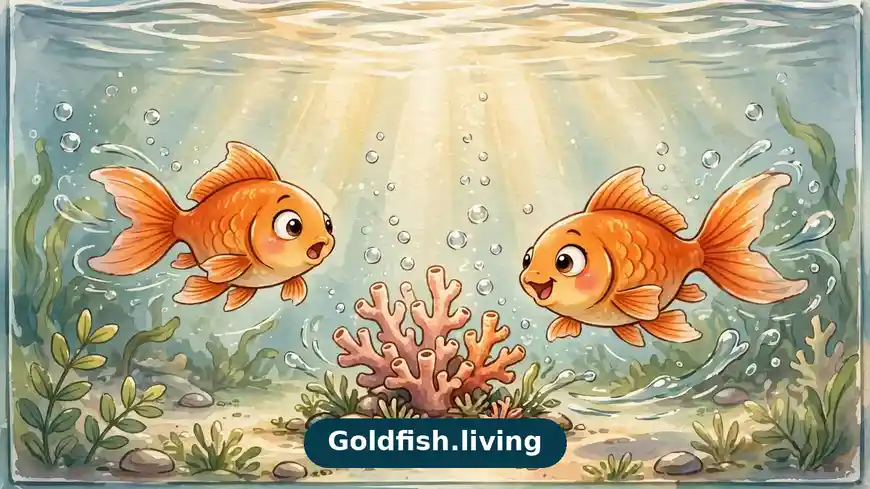
Peaceful goldfish are not supposed to look like torpedoes. Yet one ordinary morning the tank turns into a racetrack: one fish glued to the tail of another, lap after lap, corner after corner.
Nearly every chase has a legible cause, and the causes ask for opposite responses. A spawning chase needs you to do almost nothing, while a bullying chase needs you to act. The keeper’s real job is telling them apart before choosing.
Read the chase before you reach for the net
Goldfish do not play the way dogs play, so every chase is communication of some kind: courtship, rank, hunger, or stress. Even experienced keepers argue about where normal ends and bullying begins, which is why the details matter more than the speed.
Watch for a few days if the fish allow it. Note when the chasing happens, whether the chased fish eats and rests normally, and whether fins and scales come through it untouched. Those three observations sort almost every chase on this page.
The spring chase is courtship
If the chasing peaks in spring and one fish keeps pressing against the side of the other, you are most likely watching breeding behavior. Males court females by pursuing them relentlessly, sometimes for hours, until the female releases her eggs.
The triggers are seasonal: warming water, lengthening daylight, and very often a partial water change, which mimics spring rain closely enough to flip the switch. That is why so many keepers report chasing that starts the morning after routine maintenance.
A courting male swims alongside the female, nudging and bumping her belly and sides, steering her toward plants or soft decor. She eventually scatters sticky eggs over the plants while he releases milt to fertilize them, and then both fish, being goldfish, usually try to eat the eggs they just produced.
Tubercles settle most arguments
The fastest way to confirm a spawning chase is to look at the chaser. Males in breeding condition grow small white bumps called tubercles on their gill covers and sometimes along the front edges of their pectoral fins.
Do not mistake tubercles for white spot disease. The disease spreads across the whole body, while tubercles cluster on the gills and fin edges of an otherwise healthy, energetic fish. The chased fish gives the second clue: females carrying eggs look rounder and fuller through the belly.
Chaser with tubercles, chased fish round in the belly, spring on the calendar: the diagnosis is courtship. Our guide to telling male goldfish from females walks through the full list of differences, in breeding season and out of it.
What to do while a spawning chase runs
Usually, nothing. A spawning chase looks rough, the female may crash into corners and come away with frayed fins, but most females recover after a day or two of rest once the eggs are down.
Give her somewhere to recover in the meantime. Dense plants or soft decor let her rest out of the male’s sight, and a fish that can disappear stops being chased in practice, whatever the male intends.
Intervene only when the pattern breaks: the chase runs for days without pause, or the female stops eating. Then a tank divider, or a few days for her in a separate container, gives her a proper rest. Never park her in a small bowl, which trades harassment for bad water.
Rank is the second language of chasing
Goldfish are social, and social animals sort out a pecking order. The biggest or boldest fish claims the best resting spot and the first run at food, and short chases are how that order gets enforced.
Hierarchy chasing looks different from courtship: brief, directional darts. The dominant fish lunges, the other moves off, and it is over in seconds. It flares when a new fish arrives or the group is rearranged, then usually settles within a few days.
New fish get the roughest welcome. A newcomer smells different, and the residents chase it to inspect the intruder and assign it a place. Watch introductions closely for the first few days and keep a spare container ready in case the welcome turns serious.
The thirty-second food fight
Some chasing exists only at mealtimes. A faster fish body-checks a slower one away from the falling food, and slim-bodied single-tails are specialists at it, which is why the RSPCA advises against keeping them with slow fancy varieties that end up missing meals.
If the chase starts and stops with the food, it is competition, not a personality problem. Spread food across the surface, or feed a second spot at the far end of the tank, and the slower fish gets its share.
Portion discipline helps too. Our guide on how often to feed goldfish covers amounts that satisfy the fish without turning every feeding into a contest over surplus.
When stress is doing the chasing
A stressed goldfish is a grumpier goldfish. Cramped quarters, rising ammonia, or a tank that never finished cycling can push ordinary bickering into real aggression, and the victim pays twice, once in stress and once in the disease that stress invites.
PetMD’s goldfish care guidance makes the same connection, noting that overcrowded aquariums lead to stress and disease. So before blaming a fish’s character, test the water and count the gallons, because character problems in goldfish usually turn out to be housing problems.
The line where chasing becomes bullying
Here is the working test: a chase is a problem when the chased fish cannot escape it, eat through it, or rest after it. Everything short of that line is goldfish being goldfish.
On the safe side of the line, chases stop on their own within minutes, both fish eat normally, fins stay intact, and the pair rest near each other later like nothing happened. Spawning chases with tubercles on show belong on this side too.
Across the line, the picture changes: one fish pinned in a corner and barely moving between rounds, torn fins, missing scales, constant hiding, a fish that has stopped eating. Torn fins are specifically listed by PetMD as a reason to call a vet, so do not wave them off as cosmetic damage.
Fixes, in the order to try them
Space comes first because it fixes the most causes at once. A pair of goldfish is comfortable starting at 30 to 40 gallons, with more room per extra fish, and our goldfish tank size guide explains the reasoning behind the numbers. Cramped fish chase more, stress more, and get sick more.
Next, break the sightlines. Plants, driftwood and rockwork give the chased fish somewhere to vanish, and a chaser that loses sight of its target usually loses interest. Arrange the decor so no straight line of sight runs from one end of the tank to the other, and the same cover cures the bare-box boredom that fuels pointless pestering.
Separation is the last resort, not the first. A divider works for a spawning rest or a short cooling-off period, while entrenched bullying honestly calls for a bigger tank or rehoming the aggressor. When in doubt, separate first and ask questions later, because a weekend behind a divider harms nobody and a weekend of cornering can kill.
Questions about goldfish chasing each other
Why is one goldfish chasing the other nonstop?
In spring, nonstop chasing is usually spawning, with a male pursuing a female until she releases her eggs. Outside the season it points to dominance, crowding, or stress. Check tank size and water quality first, then watch whether the chased fish still eats and rests normally.
How can I tell mating from fighting?
Mating involves a male wearing white tubercles on his gills and a round-bellied female, and it ends once the eggs are laid. Fighting shows torn fins, relentless cornering, and a victim that hides and stops eating. Mating resolves itself, while fighting escalates until someone is hurt.
Will the male hurt the female during a spawning chase?
Usually she ends up tired rather than injured, though rough spawning can fray fins and wear her down. Dense plants give her somewhere to rest out of sight. If the chase runs for several days or she stops eating, separate the pair for a few days.
Should I separate goldfish that chase each other?
Only when it crosses into bullying: torn fins, constant hiding, or a fish off its food. Spawning chases and brief dominance displays are normal life in a goldfish tank. When you do separate, use a divider or a second tank with proper water, never a bowl.
Why did the chasing start right after my water change?
Fresh water and a small temperature shift imitate spring rain, which is a classic spawning trigger. A partial water change can switch males straight into courtship mode. It is normal, and it usually settles within a day or two.
Most chases end on their own
Chasing is how goldfish talk, and most of the time the message is romance or rank. Learn the tubercles, watch the fins, and keep the tank big enough for a fish to walk away from an argument.
Your job is mostly observation, with separation kept in reserve. The moment one fish cannot escape, eat, or rest, watching stops being enough, and that is the moment to reach for the divider.