Common Goldfish Care: Space, Speed and Honest Sizes
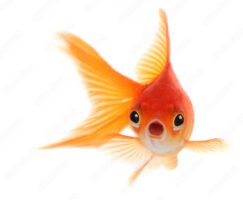
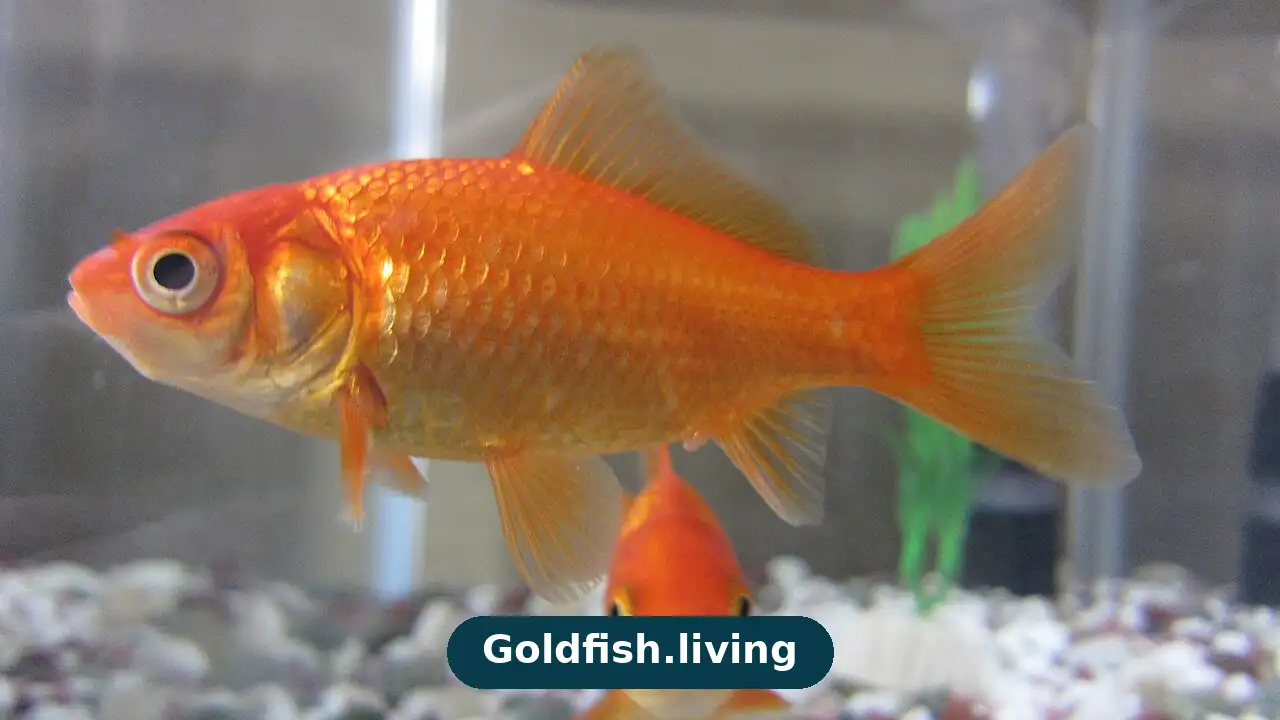
Every other goldfish variety on the market descends from this one. The common goldfish is the original fish: slim body, single tail, no head growth, no telescope eyes, nothing bred in that it has to work around.
That simplicity is exactly why it is the most under-housed fish in the hobby. It is sold small and cheap, and it grows into a foot-long pond athlete in a tank bought for the two-inch juvenile.
A pond fish wearing a small price tag
A common goldfish is built like its wild carp ancestors: long, torpedo-shaped, with a single forked tail made for covering distance. It does not cruise so much as patrol, end to end, all day.
In a pond, that body makes sense. Given room, a common will reach 10 to 12 inches within a few years, and large pond fish pass 14 inches.
The shop tank full of one-inch commons is not a picture of the species. It is a picture of the species at six weeks old.
The weekly rhythm that keeps a common healthy
Common goldfish care compresses well into a weekly routine. One substantial water change, one filter check, and a minute of watching the fish eat will catch nearly every problem while it is still cheap to fix.
Watch for the quiet signs: a fish that hangs at the surface at dawn, fins held a little tighter than usual, or food left uneaten for the first time. Commons are stoic, and by the time one looks obviously ill, the problem is usually advanced.
Test the water monthly once the tank is mature, and after any change: new fish, new filter media, a heat wave. The pattern of your readings matters more than any single number, because a drift caught early is a water change, while a drift caught late is a sick fish.
Keep a simple log if your memory is human. Dates of water changes, test results, and anything unusual take seconds to note and turn guesswork into evidence when something goes wrong.
60 to 75 F: a wider range than the hub, and why
The water parameters hub gives 65 to 75 F as the indoor goldfish range, and the 60 to 75 F range in this post is wider than that on purpose. A common is a hardy pond fish that tolerates a cool room and a seasonal swing, while a fancy in the same water would slow down and stop eating.
Treat 60 F as the floor the fish can tolerate, not as a target to aim for. The fish feeds best and grows steadiest in the middle of the range, and our water temperature guide sets out what changes at each end of it.
A heater is rarely needed for a common indoors, and it earns its place only where the room swings hard between day and night. If the tank sits in a cold room, check the temperature at dawn, when the water is at its coldest, and not at midday when the room has warmed up.
Growth: the two-inch lie
A common goldfish does most of its growing early. In warm, clean, spacious water a juvenile can put on several inches in its first year, reaching five or six inches before its first birthday.
Growth then continues more slowly for years. A common is not fully grown at two or three, and a well-kept fish keeps adding length and heft toward its full 10 to 12 inches and beyond.
This is why the small tank fails so quietly. The fish does not stop growing because the tank is small; it grows deformed and stunted because the water cannot stay clean, and the damage is done long before the keeper notices the fish looks wrong.
The old claim that goldfish grow to the size of their tank gets the mechanism backwards. They grow to the size their water quality permits, and in a small tank that permission runs out early, at the cost of the fish’s organs and lifespan.
If you are starting with a juvenile in a modest tank, plan the upgrade before you need it. The honest moment to buy the big tank is when the fish passes four inches, not when it is already cramped.
None of this should put a beginner off the fish itself. A common in the right water is arguably the lowest-maintenance pet fish available: no heater, no special light, no delicate anatomy, just space, filtration, and a keeper who shows up every week.
Decor, plants, and a fish that rearranges furniture
Commons are diggers and tasters. They sift substrate mouthful by mouthful, uproot weakly planted greenery, and test anything soft enough to bite.
Keep decor smooth and heavy enough to stay put, and expect gravel to be redistributed. Fine sand or large, smooth stones survive better than small sharp gravel, which a big common can pick up and, occasionally, get lodged in its mouth.
Live plants are not impossible, but choose tough, fast-growing species and accept some losses. Many keepers simply use sturdy artificial plants and spend the effort on water quality instead, which the fish appreciates more.
The honest tank numbers
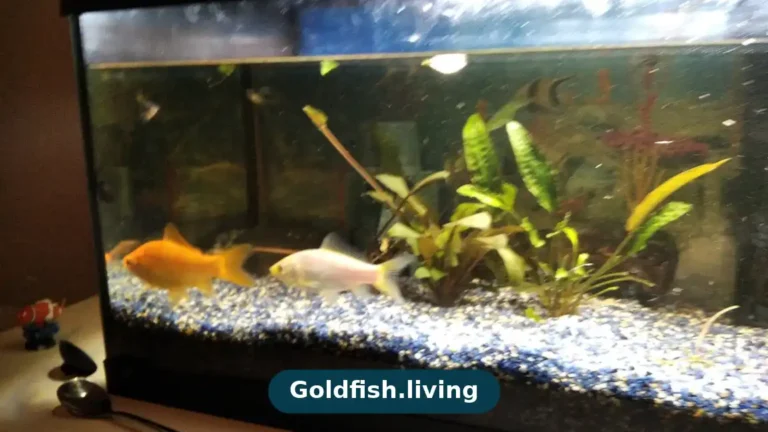
For one adult common goldfish, plan on at least 75 gallons, and a tank four feet long as the bare minimum. Add roughly 40 to 50 gallons for each additional fish, or accept that the real answer is a pond.
Those numbers sound dramatic next to the starter kits in pet shops, but they follow directly from the fish’s adult size and waste output. Our full goldfish tank size guide shows the maths for every variety, fancies included.
Length matters as much as volume. A tall, narrow tank with the same gallon count gives a common nowhere to swim, and a fish that cannot swim its circuits is a fish pacing a cell.
Water for a fish that never stops eating
Commons are hardy about temperature, comfortable from about 60 to 75°F, and they shrug off seasonal swings that would trouble a fancy. They still need the same chemistry basics as every goldfish: zero ammonia, zero nitrite, and nitrates kept low.
Filtration should be oversized, rated well above the tank’s volume, because commons produce waste like carp, not like tetras. A filter that is merely adequate in month one is underwater by month six, when the fish has doubled.
Weekly partial water changes of a third to a half keep nitrate in check and are the single habit that separates thriving commons from surviving ones. The full target list lives in our goldfish water parameters guide.
Meals for a grazing fish
In the wild this fish grazes all day: algae, insect larvae, plant matter, whatever the bottom offers. A good home diet copies the pattern rather than the menu, small amounts offered once or twice daily and finished within two minutes.
A quality pellet or flake as the staple, with peas, leafy greens, and occasional bloodworms or daphnia in rotation, covers it. Commons have straightforward digestion compared with the fancy varieties, so constipation and floating problems are rarer here.
The danger is not the wrong food so much as too much of it. An ever-hungry common will eat itself into dirty water long before it eats itself sick, so the filter pays for every generous handful.
Variety is easy to add without cost. A cube of frozen daphnia, a few blanched peas with the skins slipped off, a strip of courgette weighted down overnight: all of it is eaten, and all of it keeps the gut moving.
In a pond, commons largely feed themselves between spring and autumn on algae, larvae, and whatever falls in. Your role shrinks to a daily handful and the judgement to stop when the water cools.
Why commons outlive the fancies
Nothing in a common goldfish’s body fights its owner. The spine is straight, the swim bladder sits where evolution put it, the eyes work, and the gut is a simple tube rather than a compressed knot.
That is why the lifespan numbers differ so sharply by variety. Commons routinely live 10 to 15 years in a tank and 15 to 25 in a pond, figures the goldfish lifespan guide breaks down by variety and setup.
Most commons that die young do not die of disease. They die of housing: stunted by a small tank, poisoned slowly by its water, years before their bodies were finished.
Common or comet: telling the two single-tails apart
Commons and comets are the two single-tails most keepers confuse, and the difference is in the tail and the pace. A comet carries a longer, flowing tail and swims faster, while a common is stockier, with a shorter tail and a steadier cruising speed.
Both need the same big water, and neither belongs in a fancy tank, since a fast single-tail will outswim a fancy at every feeding. Our comet goldfish care guide sets out the comet side of that comparison in full, including the growth speed that sets the upgrade clock.
If you bought a fish labelled as a common and it grows a tail longer than its body within a year, you bought a comet. The care does not change, but the tank does, because a comet that fast needs length to swim in, not just volume to live in.
Company, and who to keep away
Commons are social and visibly calmer in twos and threes, which is another argument for the pond or the very large tank rather than a lone fish in a small one. They are peaceful with anything too big to eat and too slow to matter.
Never mix them with fancy goldfish. A common reaches the food first, every time, and slow fancies like orandas and black moors go hungry in a tank they share with single-tails.
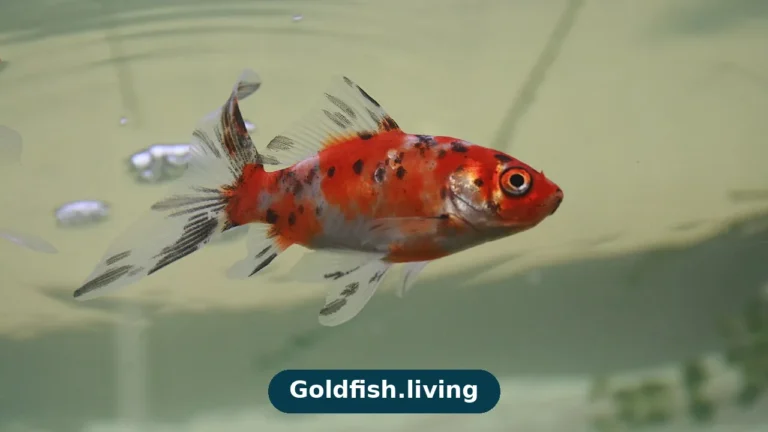
The same logic applies within the single-tail family: commons, comets, and shubunkins together are a harmonious group, similar in pace, appetite, and adult size. A pond or very large tank of mixed single-tails is one of the easiest communities in fish keeping to run well.
Tropical fish are not tank mates either, whatever the shop says. The temperature ranges barely overlap, and a grown common regards small fish as part of the grazing.
One more practical note: commons are strong, and a startled adult can knock lids, splash water, and upend light decor. A secure lid and sturdy fittings are part of housing a fish that will one day weigh as much as a bag of sugar.
When a common needs a vet
Commons are the hardiest goldfish you can buy, but hardy is not invulnerable. Ulcers, persistent white spots, a fish isolating itself, or any swelling of the body are reasons to consult an aquatic vet rather than reach for a random shelf remedy.
The Merck Veterinary Manual’s aquarium fish section gives a plain overview of the diseases ornamental fish actually get. Most of them trace back to water quality, so test before you treat.
The long life is the commitment, not the bonus
A common that lives twenty years or more is not a surprise, it is the normal outcome of clean water and enough space. That length of life is the real commitment behind this fish, and it should be counted before the fish is bought, not after it outgrows its first tank.
Plan for the adult from the start, a fish ten to fourteen inches long in a tank or pond built for that size. Our guide to how big goldfish get sets out the growth timeline by variety, so you can check whether your tank still fits the fish in it.
A keeper who plans for twenty years buys the big tank once, and a keeper who plans for one year buys a small tank three times. The fish does not care which path you take, but it lives with the result, and so do you.
Questions about common goldfish
How big do common goldfish actually get?
Expect 10 to 12 inches in a large tank and up to 14 inches or more in a pond. The two-inch fish in the shop is a juvenile, and most of that growth happens in the first two to three years.
Can I keep a common goldfish in a 20 gallon tank?
Only as a very temporary nursery for a tiny juvenile, measured in months. An adult needs at least 75 gallons, and keeping a common in 20 gallons long-term stunts it and shortens its life.
Do common goldfish need a heater?
Rarely. They are comfortable across roughly 60 to 75°F and handle cool rooms well. A heater is only a stability tool in homes where the temperature swings hard between day and night.
Are common goldfish good beginner fish?
They are the hardiest goldfish there is, but only a beginner with a big tank or a pond should start with one. The fish is easy. The housing commitment is not.
Can common goldfish live outside all year?
In a pond deep enough not to freeze solid, yes, in most climates. They slow down under the ice, stop feeding in the cold, and wake up in spring. Depth is what makes it safe.
House it like the fish it becomes
The whole of common goldfish care fits in one sentence: buy the home for the adult, not the juvenile. A big tank or a pond, strong filtration, plain food in modest amounts, and weekly water changes.
Do that, and the cheapest fish in the shop becomes a pet measured in decades. Our guide to keeping goldfish in outdoor ponds covers the pond route in full, and the RSPCA’s fish advice makes the same case from the welfare side.



One Comment