How to Cycle a Goldfish Tank: The Complete Fishless Guide
The most common way a goldfish’s life goes wrong happens before the fish ever comes home. The tank gets bought, filled, and stocked on the same afternoon, and a week later the water is cloudy, the fish is gasping, and everyone is confused.
Nothing mysterious happened. The tank was never cycled, which means the bacteria that make fish waste safe were never given the weeks they need to grow.
Cycling is that growing period, done deliberately, with an ammonia source and a test kit instead of a fish. It is invisible and it tests your patience. It is also the single most valuable thing you will ever do for a goldfish, because a finished cycle quietly prevents nearly every beginner disaster that follows.
What you are actually growing
Fish release ammonia constantly, through their gills and their waste, and ammonia is toxic at very low concentrations. In a pond or river, bacteria handle it as fast as it appears. In a new glass box, those bacteria do not exist yet, so the keeper has to farm them.
The farming has two stages. Ammonia-oxidising bacteria move in first and convert ammonia into nitrite, which is also toxic.
Nitrite-oxidising bacteria follow and convert nitrite into nitrate, which is far less harmful and leaves the tank through water changes and plant growth. A cycled tank is simply a tank where both colonies are established and working at the speed the fish produce waste.
Notice where the bacteria live: on surfaces, not in the water. Filter media, gravel, and decorations are their real estate, which is why a mature filter is worth more than the tank it hangs on.
It is also why the whole process cannot be rushed by changing water or polishing the glass. The full set of readings a finished cycle should deliver is listed in our goldfish water parameters reference.
Why goldfish punish a shortcut hardest
Every fish needs a cycled tank, but goldfish expose impatience faster than most. They are heavy waste producers for their size, so ammonia in an uncycled goldfish tank climbs to dangerous levels in days rather than weeks.
A smaller, lighter fish might survive a sloppy start. A goldfish often does not, and surviving is not the same as escaping harm: weeks in toxic water can burn gills and damage organs in ways that shorten a life meant to last well over a decade.
The RSPCA’s fish care guidance recommends fishless cycling for exactly this reason, treating it as basic welfare rather than advanced technique. The encouraging part is that cycling is a one-time job.
Establish the colonies, maintain the filter sensibly, and the system runs itself for years. A few patient weeks at the start buy stability for the whole life of the tank.
The kit list, and nothing beyond it
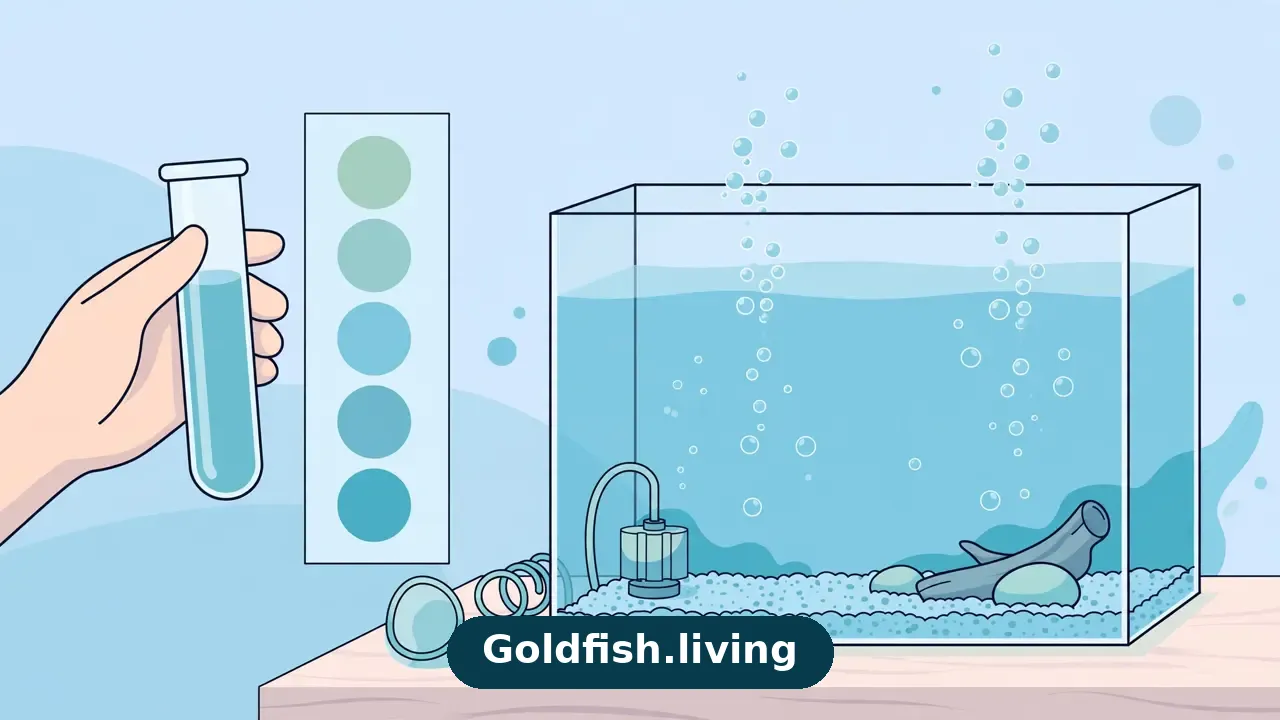
You need a liquid test kit covering ammonia, nitrite, and nitrate. Strips are cheaper and noticeably less accurate, and cycling decisions turn on small differences in readings. The liquid kit earns its price in the first month alone.
You need a dechlorinator. Tap water carries chlorine or chloramine, which kill the very bacteria you are farming, so every drop of water entering the tank gets treated first, no exceptions, starting with the initial fill.
You need an ammonia source. Pure bottled ammonia with no scents, dyes, or surfactants is the most controllable option: shake the bottle, and if it foams, put it back. Fish food or a raw shrimp will also decay and release ammonia, though on their own schedule and with less predictable dosing.
Finally, the tank itself must be fully set up and running: filter on, substrate in, water treated. Bacteria grow faster in warmth, so many keepers cycle at around 75 to 78°F and cool the tank gradually to goldfish temperatures before stocking. Our guide to the best filter for a goldfish tank covers the media choices the colony will live on.
The five steps, in the order they happen
Step 1: Dose ammonia to 2 to 4 ppm
Add ammonia a little at a time, testing as you go, until the kit reads 2 to 4 parts per million. Write down exactly how much it took to get there, because you will repeat that dose many times.
Resist overshooting: extremely high ammonia can stall the cycle by inhibiting the bacteria you are trying to feed. The target range feeds the colony without overwhelming it.
Step 2: Test daily while nothing seems to happen
For the first week or two, the readings barely move. Test ammonia daily and top it back to your target whenever it drops.
Cloudy water during this phase is common and usually harmless: a bloom of free-floating bacteria feeding on organic matter, which clears as the real colonies establish on surfaces. Leave it alone unless ammonia runs far off the chart.
Step 3: The nitrite spike
One day ammonia starts falling on its own and nitrite appears. The first colony is working.
Keep dosing ammonia to feed it, add nitrite to your daily tests, and expect nitrite to climb high for a while. With no fish in the tank, that spike is progress, not a problem, and it cannot be hurried by water changes.
Step 4: Nitrite falls, nitrate rises
After another week or two, the second colony establishes: nitrite drops and nitrate begins climbing. Keep testing both and keep the ammonia doses coming so neither colony starves.
This is the phase where most beginners stop testing and declare victory early. A half-built cycle is not a cycle, and stocking now restarts the danger with fish inside it.
Step 5: The 24-hour proof
The tank is cycled when one test passes: dose ammonia to 2 ppm, and within 24 hours both ammonia and nitrite read zero while nitrate is present. That processing speed is the only proof that matters.
Nitrate alone proves nothing, since it appears long before the colonies can handle a real fish load. Once the proof passes, do a large water change of 50 to 70 percent to bring nitrate down, settle the temperature for goldfish, and stock within a day or two, before an unfed colony starts dying back.
The video below follows the same fishless process, which can help if the sequence of spikes and falls is easier to watch than to read.
How long to budget, honestly
Plan on three to six weeks from a standing start. Warmer water, seeded media, and bottled bacteria can pull it toward the short end; cold water and very low pH drag it out. Anyone promising you a finished cycle in 48 hours is selling something.
If the fish are already bought and waiting in a bag or a cramped temporary tub, that pressure is understandable, and it is still not a reason to skip steps. Buy the fish after the cycle, not before, is the rule that prevents the whole situation. In the meantime, tracking your readings in a notebook or app makes the invisible colony visible as a chart, and the testing habit it builds carries straight into the water testing schedule you will follow for the life of the tank.
Shortcuts, graded
Seeded filter media is the best shortcut in the hobby, full stop. A sponge, a bag of ceramic rings, or even a handful of gravel from a healthy, established tank arrives carrying a mature colony, and a cycle built on it can finish in days.
Local clubs and shops are often generous with the stuff. Ask.
Bottled bacteria sit a tier below: genuinely helpful for some keepers, variable by brand and freshness, and best treated as a supplement to a proper fishless cycle rather than a replacement for one. Any product claiming you can add a full stock of goldfish the same day deserves deep skepticism, because the claim contradicts how colonies actually grow. The Merck Veterinary Manual’s aquarium fish section describes the same waste-processing biology from the veterinary side, and it contains no 48-hour version either.
Ways a finished cycle gets wrecked
Replacing all the filter media at once throws away the colony you spent weeks growing. Rinsing media in untreated tap water does the same thing chemically, through chlorine. Both mistakes are common, both are heartbreaking, and both vanish once you remember the bacteria live on the media, not in the water column.
Stocking too fast is the third classic. A colony is sized to the ammonia load it was raised on, so add goldfish gradually: one or two, then a week or two of clean tests before the next. That pacing matters doubly in smaller tanks, so check your volume against our goldfish tank size guide before the fish list grows.
Medication is the quiet fourth. Antibiotics do not distinguish between the bacteria infecting a fish and the bacteria running the filter, so during any treatment, test ammonia and nitrite daily and keep change water ready. A small hospital tank for sick fish protects the patient and the cycle at the same time.
Questions that come up mid-cycle
Can I just cycle with the goldfish already in?
You can, and people do, but understand what it costs the fish: weeks of exposure to ammonia and nitrite that burn gills and can cause lasting damage even when the fish survives. Fishless cycling exists so that no animal has to be the ammonia source. If fish are already in, the fallback is daily testing and water changes whenever either reading climbs, until the colonies catch up.
Do I keep dosing ammonia right up until the fish arrive?
Yes. The colonies need a constant food supply, so dose daily until the day before stocking. A cycled tank left unfed for several days loses much of its colony, and you end up cycling again, this time with fish in the water. If stocking gets delayed, keep feeding the tank, not the calendar.
Why has my cycle stalled at week four?
Work through the usual suspects in order: water too cold for bacterial growth, pH low enough to slow the colonies, chlorine getting past an under-dosed conditioner, ammonia dosed so high it inhibits the bacteria, or an expired test kit reporting fiction. Fix one variable, then give it several days of tests before judging.
Can live plants cycle the tank for me?
Plants absorb ammonia directly and genuinely help, but in a goldfish tank they cannot carry the load alone. Goldfish produce too much waste, and they eat too many plants. Cycle with bacteria first, then add sturdy plants as a bonus, not a foundation.
Do water changes during cycling ruin it?
No. The bacteria live on surfaces, so ordinary changes do not set you back, and a large change is the right call if ammonia or nitrite climbs high enough to stall growth. What ruins cycles is neglect of the readings. Test, dose, and let the colonies work.
When the 24-hour proof finally passes, resist the urge to celebrate by filling the tank. Stock the first one or two fish, watch the tests stay at zero for a week, and let the colony grow into its real job at the pace the fish set. The patience that built the cycle is the same patience that keeps it, and it is much easier the second time, because now it comes with fish to look at.