Goldfish Ich Treatment: White Spot Disease Guide
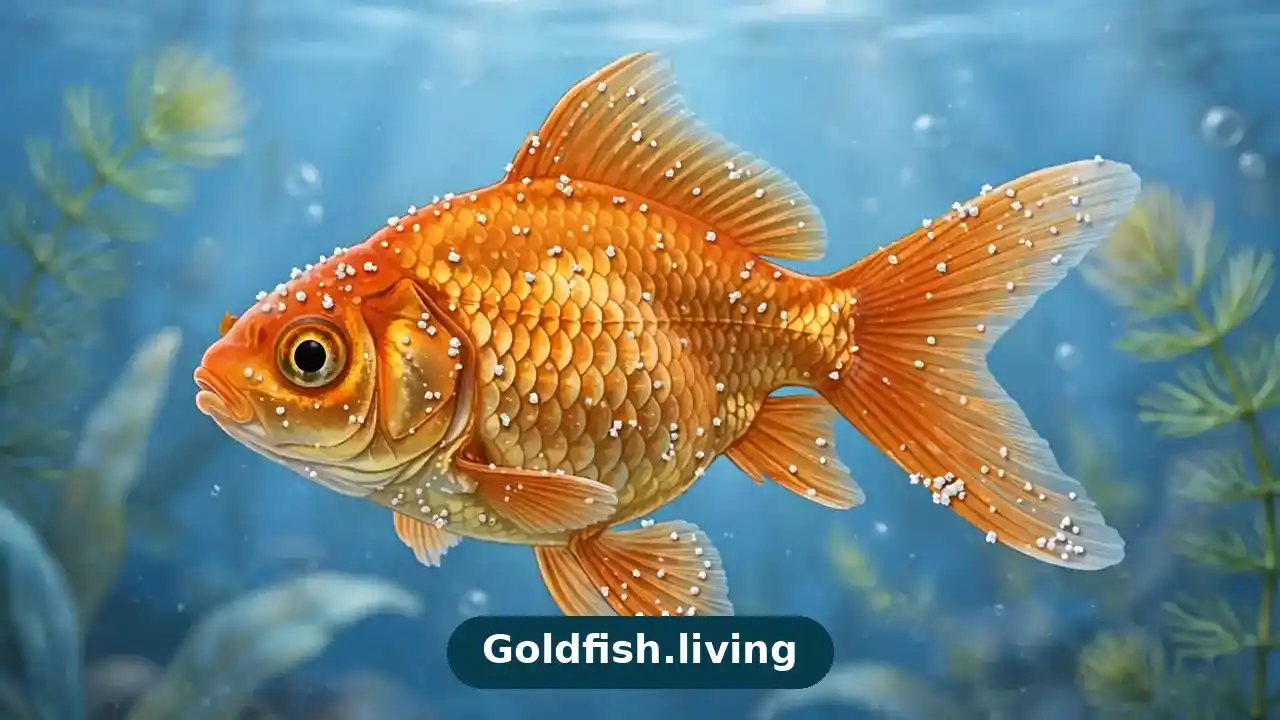
Few things ruin an evening of watching the tank faster than tiny white dots scattered across a goldfish, like grains of salt stuck to the fins. Once you see them, you cannot unsee them. That is ich, short for Ichthyophthirius multifiliis, the most common parasitic disease in home aquariums.
The good news is real: ich is also one of the most treatable fish diseases there is. It kills fish mainly when it is ignored for a few days or treated for too short a time. Both mistakes are easy to avoid once you understand what the spots actually are.
What Those White Spots Actually Are
Ich is a single-celled ciliated parasite. It is not a fungus and not a bacterium, which matters because the treatments differ. Each parasite burrows into the fish’s skin and gills, feeds on tissue and fluids, and shows up as one white spot.
Nearly every freshwater fish can carry it, and goldfish are no exception. It arrives on new fish, on plants, and even in the water from a shop bag. Healthy fish in good water often keep small numbers in check; stress is what lets the population explode.
The Life Cycle Runs the Whole Treatment
The spots you see are the feeding stage, called trophonts, buried under the skin where no medication can reach them. Treating the visible dots directly is impossible, and every sound treatment plan starts from that fact.
When mature, each trophont drops off the fish, settles on gravel or decor, and forms a cyst. Inside, it divides into hundreds of free-swimming juveniles called theronts, which burst out hunting for a host. Only the theronts can be killed by treatment.
At typical goldfish temperatures the full cycle takes roughly a week to ten days. Warmer water compresses it into a few days. That is why treatment runs for days after the spots vanish: you are waiting out the cysts still sitting in the gravel.
Not Every White Mark Is Ich
True ich spots are small, round, slightly raised, and scattered like salt, anywhere on the body and fins. Fungal infections look like fluffy cotton-wool tufts instead. An irritated slime coat looks like a milky film rather than distinct dots.
Breeding tubercles fool many beginners each spring. These small white bumps appear only on the gill covers and the front edges of the pectoral fins of males, in neat rows, during breeding season.
Random scatter plus spots on the body means ich; tidy rows on a male in spring usually do not. The RSPCA’s fish health guidance describes how white spot compares with the other common look-alikes.
Behaviour often arrives before the spots. Infected fish flick or rub against gravel and decor, clamp their fins, breathe fast, lose interest in food, or hover in one place. Flicking plus one or two dots is enough to start.
The First Hour: Test, Change, Aerate
The moment you confirm ich, test the water. Ammonia and nitrite should read zero and nitrate low. Poor water weakens the immune response and makes every disease worse, so fix water problems alongside the parasite treatment, not after it.
Do a partial water change of 25 to 30 percent with dechlorinated water matched to the tank temperature. Vacuum the gravel gently as you go, because fallen cysts sit in the substrate waiting to release the next wave.
Add an air stone or increase surface agitation. Warmer water and medication both reduce dissolved oxygen, and a fish with parasites in its gills needs all the oxygen it can get. Our water parameters guide lists the targets to hold during treatment.
Warm Water, Within Goldfish Limits
Raising the temperature speeds the parasite through its vulnerable stage, so your treatment meets more theronts sooner. It also modestly supports the fish’s immune response.
For goldfish, aim for the mid 70s Fahrenheit, raised slowly over a day or two. Goldfish are cool-water fish, so do not push toward tropical temperatures; the mid 70s is warm enough.
Hold it steady for at least a week after the last spot disappears, and watch oxygen closely as the water warms. Our goldfish water temperature guide covers safe ranges and how to move between them.
Salt Helps, With Limits
Aquarium salt is a long-standing support treatment for ich. It irritates the free-swimming parasites, supports the slime coat that is the fish’s first line of defence, and reduces osmotic stress on damaged skin.
Use only aquarium salt, never table salt or marine mix, and add it gradually over several hours. Follow the product label for concentration. Salt does not evaporate, so replace only the amount removed with water changes, never the full tank dose each time.
Many live plants dislike salt, and some tank mates are sensitive to it, which is why planted or mixed tanks sometimes need a hospital tank for treatment. Our post on aquarium salt for goldfish covers dosing and removal in full.
Medication, and the Full Course
For moderate to severe outbreaks, use a product labelled for white spot or ich. Common active ingredients include malachite green, formalin, and copper-based compounds, all aimed at the free-swimming stage.
In April 2025, the U.S. FDA announced the first legally marketed drug specifically for ich in ornamental fish, a sign of how seriously this parasite is taken.
Follow the label exactly, including the dosing intervals across one to two weeks. Stopping early because the spots are gone is the most common reason ich treatments fail.
The visible fish may be clean while cysts in the gravel are still counting down. Remove activated carbon from the filter first, because carbon absorbs medication before it can work.
Heat and salt alone can clear mild, early infections in otherwise healthy fish, and that route is gentler on fish and filter bacteria. Be honest about severity, though. Spreading spots, gasping, or several heavily dotted fish call for proper medication, not hope.
Treat the Tank, Not Just the Fish
Treat every fish in the tank, spotted or not. By the time dots show on one fish, free-swimming parasites have already reached the rest; they are simply at an earlier stage. Moving the sick fish out and leaving the main tank untreated guarantees reinfection.
Disinfect nets, siphons, and anything else shared between tanks. The cyst stage hitchhikes on wet equipment, which is how ich jumps between aquariums in the same room. The Merck Veterinary Manual’s aquarium fish section details the life cycle and confirms that quarantine of new arrivals is the single most effective prevention.
One useful exception: a tank with no fish in it breaks the cycle by itself. Without hosts, the parasites die out within a couple of weeks at warm temperatures. That is a quarantine trick, not a treatment for a stocked display tank.
Feeding and Quiet While They Recover
Sick fish often eat less, but keep offering small meals of their normal food and remove anything uneaten. Strength matters during a two-week treatment. Our guide to what goldfish eat covers gentle options for fish with sore mouths.
Dim the lights slightly and keep the tank calm. Stress suppresses the immune system, and a quiet tank lets fish spend energy on recovery instead. Do not rearrange decor or add tank mates until treatment is fully finished.
Keep testing every couple of days. Some medications suppress the beneficial filter bacteria, and an ammonia spike layered on top of ich is a miserable combination. If ammonia appears, change water and redose medication for the replaced volume, per the label.
When to Call an Aquatic Vet
Most ich cases resolve at home, but some cross the line. Contact an aquatic veterinarian if the spots keep spreading after several days of correct treatment, if a fish is gasping constantly, or if a fish stops eating entirely.
Young fish, fish that were already weak, and tanks where fish start dying need professional help rather than a second bottle of medication. A vet can confirm the diagnosis under a microscope, because a few rarer conditions mimic ich and do not respond to ich drugs. The AVMA’s pet owner resources can help locate exotic and aquatic practitioners.
Questions About Ich
How long does ich treatment take?
Plan on 10 to 14 days at goldfish temperatures, and continue for at least a week after the last visible spot disappears. Medication only kills the free-swimming stage, so treatment has to outlast several full life cycles. Warmer water shortens the timeline because the cycle completes faster.
Can ich clear up on its own?
Mild cases in healthy fish sometimes resolve with heat and salt alone. Left truly untreated, though, ich has a high death rate, and a case that looks mild on day one can be severe by day five. If you are unsure, medicate rather than gamble.
Will ich spread to my other fish?
Yes, it is highly contagious between fish, and severe gill damage can kill quickly, especially in young or stressed fish. Treat the whole tank at the first confirmed sign instead of waiting to see who shows spots next.
Can people catch ich from fish?
No. Ichthyophthirius multifiliis infects fish only and cannot live on or in people. You can work in the tank during treatment safely; wash your hands afterwards, as with any aquarium job.
Why did ich come back after treatment?
Recurrence almost always means one of three things: treatment stopped too early, an unquarantined fish or plant reintroduced the parasite, or chronic stress keeps weakening the fish. Check those three honestly before blaming the medication.
Do Not Stop at the Last Spot
The keepers who lose fish to ich are usually the ones who waited a few days to see whether the spots would fade on their own. They rarely do, and each day of delay means hundreds more parasites in the water.
Start the day you confirm it, treat the whole tank, and keep going a full week past the last spot. Then change one habit for good: quarantine every new fish for two to four weeks before it joins the display. That single routine turns ich from a recurring emergency into a problem you solved once.