Do Goldfish Need an Air Pump? When Yes, When No
Walk into any pet shop and the wall of bubbling tanks makes an air pump look like the first thing a goldfish needs. Bubble curtains everywhere, packaging promising happier, healthier fish. It is fair to wonder whether skipping one is a mistake.
It usually is not. Goldfish do not need an air pump the way they need a filter and clean water. They need dissolved oxygen, and a pump is only one of several ways to keep it supplied, so whether yours is necessary depends on your filter, your tank size, and how many fish are breathing in it.
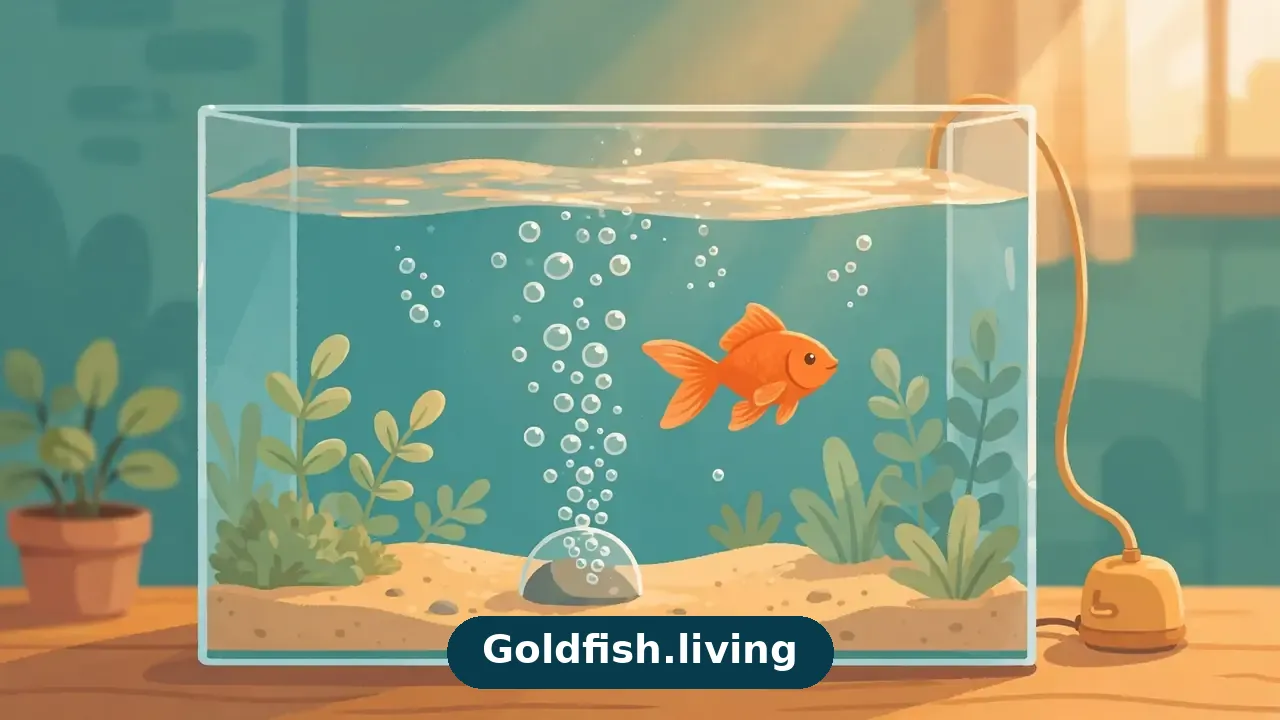
The bubbles are not what the fish breathe
Goldfish breathe like every other fish: water flows over the gills and dissolved oxygen passes into the blood. They are not sipping air from the bubbles, and the bubbles add very little oxygen on their way up, because gas moves slowly between air and water.
What bubbles do well is move water and roughen the surface. Gas exchange happens at the surface itself, where oxygen dissolves in and carbon dioxide escapes. A still, glassy surface barely breathes, while a rippled one breathes well.
So an air pump is mostly a surface-agitation machine with a side job of looking pretty. Judge any tank, pumped or not, by how much its surface moves. That one observation answers most of this article.
Tanks that honestly do not need one
If your filter ripples the surface, you very likely need nothing else. Hang-on-back filters pour water back with enough force to agitate the surface on their own, and canister filters with a spray bar do the same job quietly.
Light stocking in a generous tank lowers the demand side too. One small goldfish in a 30 gallon tank with a decent filter will almost certainly sit in well-oxygenated water, and goldfish tanks run cool, which helps, because cold water holds more oxygen than warm.
Aquarium Co-Op states it plainly: an aquarium does not necessarily need an air pump, because filter-driven surface agitation is what drives gas exchange. The exception is the sponge filter, which is air-driven by design and needs a pump to work at all.
Judge the setup by the fish rather than the equipment list. If the fish cruise the whole tank, feed eagerly, and never gather at the surface, oxygen is not that tank’s problem. Surface-gathering, gulping, and hovering at the outflow are the tank telling you the opposite.
When the pump stops being optional
Warm weather is the strongest case. As water warms it holds less oxygen while the fish’s metabolism speeds up and demands more, so the tank that cruised through January can run short in July. A pump added for July can go back in the drawer in October, because nothing about aeration has to be permanent.
Crowded or undersized tanks are the second case. Goldfish grow fast and produce heavy waste, so a tank that was comfortably stocked this spring can be crowded by next spring. Extra aeration buys a safety margin while you arrange a bigger home.
Power cuts are the third case. A battery-powered air pump keeps water moving when the filter is dead, and in storm-prone areas keepers treat one as cheap insurance kept in a drawer rather than a full-time fixture.
Gasping is a symptom before it is a shopping list
Watch the fish first. Goldfish hanging at the surface, gulping or piping at the waterline, are showing the classic sign of low dissolved oxygen, and rapid gill movement or hovering near the filter outflow points the same way. Our guide to goldfish gasping at the surface walks through the emergency order of operations.
But rule out the impostors before buying anything. Poor water quality mimics oxygen trouble almost exactly, and lethargy has a dozen causes besides air. Test ammonia and nitrite against the safe levels in our goldfish water parameters guide, and if the water tests clean while the fish still gasp, aeration is the next thing to add.
The order matters. Aerating a tank whose real problem is ammonia can briefly comfort the fish while the poison keeps burning its gills, so the test kit comes before the shopping trip.
A pump moves air; a filter cleans water
Beginners tangle these two jobs constantly. A filter traps debris and hosts the bacteria that convert ammonia into far less toxic compounds. An air pump does neither, because it removes no waste and houses no meaningful bacteria colony.
One device can do both jobs: a sponge filter uses pump air to pull water through a sponge, filtering and aerating at once, which is why sponge filters anchor so many breeding and hospital setups. Our guide to the best filter for a goldfish tank compares sponge, hang-on-back and canister options properly.
The hierarchy is simple. Filtration is non-negotiable, and an air pump is backup and insurance. Never let a bubbling ornament persuade you a tank is fine without real filtration, because bubbles do not process ammonia.
The bowl is the worst case in the shop
Bowls deserve their own warning. Very little surface area against the water volume, usually no filter, and no room for equipment is exactly the recipe oxygen problems are made from.
The RSPCA notes that decorative bowls have such low surface area that too little oxygen gets absorbed into the water. If a goldfish is in a bowl today, a small air stone genuinely helps, but it is a bandage on a bigger problem, and a real tank fixes the oxygen issue along with a dozen others.
More surface movement, no new hardware
Aim the filter return at the surface until it ripples visibly. A spray bar, or a hang-on-back running with the water level slightly below the lip, churns the surface well, and more movement means more gas exchange with no pump involved.
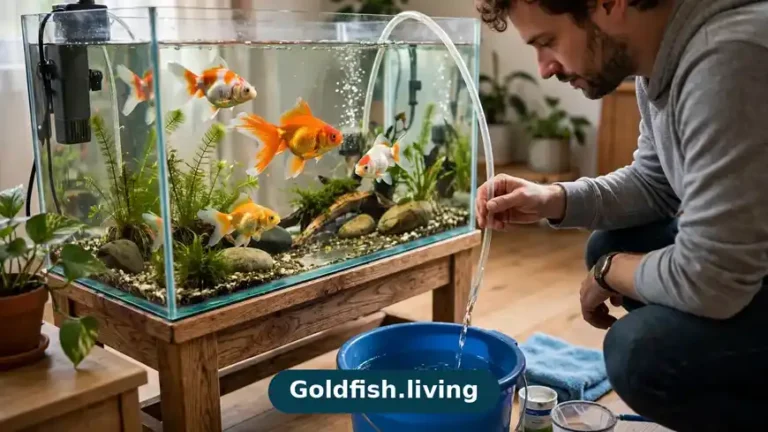
Ordinary maintenance helps quietly. Partial water changes bring in fresh, oxygenated water and remove the waste that consumes oxygen as it breaks down, so a steady change routine keeps levels stable without guesswork.
Live plants add oxygen by day through photosynthesis and consume some at night, which makes them a supplement rather than a system. A lidded tank should keep a small gap for air circulation, and the most underrated oxygen fix of all is fewer fish, since every addition raises both oxygen demand and waste.
If you buy one, run it like this
Size the pump to the tank using the maker’s rating, and beware overshooting. A pump that is too strong turns the water into a jacuzzi that exhausts fancy goldfish, so choose an adjustable model or fit an inline air valve and dial the flow down to a gentle stream.
Fit the check valve, the small part beginners skip and experienced keepers never do. It sits in the airline and stops water siphoning back into the pump during a power cut, which matters whenever the pump sits below the waterline.
For noise, rest the pump on foam or a folded towel instead of a hard stand, and keep the air stone or sponge clean, since a clogged device makes the pump work harder and louder. Then run it around the clock, because oxygen demand does not stop when you sleep and plants switch from producing oxygen to consuming it in the dark. Fix night noise with padding and placement, not by switching the pump off.
Questions about air pumps and goldfish
Can goldfish live without an air pump?
Yes, provided something else agitates the surface, usually the filter. Plenty of healthy goldfish tanks run for years with no pump at all. The pump is a tool for specific situations, not a requirement for every tank.
Do air stones put oxygen straight into the water?
Barely. Bubbles add very little oxygen as they rise through the water. Their real work is stirring the water and roughening the surface, which is where oxygen actually enters, so surface movement matters far more than bubble count.
Should the pump run at night?
Yes, around the clock. Oxygen demand continues while you sleep, and live plants switch from producing oxygen to consuming it in the dark. Keep it running and solve noise with placement, padding, and a clean air stone.
Can too many bubbles stress a goldfish?
They can, especially fancy varieties with long fins and round bodies. Violent current makes swimming hard work and tires them out. Turn the flow down with an air valve until the fish swim comfortably while the surface still ripples.
Will an air pump help in a power outage?
A plug-in pump will not, since it needs the same electricity as everything else. Battery-powered pumps exist for exactly this situation, and some switch to battery automatically when the power fails. They are inexpensive insurance where storms cut power often.
Watch the surface, not the bubble count
A tank can look like a hot tub and still run low on oxygen, and a quiet tank with a rippling surface can be perfectly supplied. The surface tells the truth, while the bubbles are mostly decoration.
Keep the filter strong, the water cool and clean, and the surface moving, and most goldfish will never miss a pump. Add one for heat waves, crowded tanks, and outage insurance, and you have the whole subject covered.

One Comment