Best Food for Goldfish: Pellets vs Flakes
Every goldfish keeper eventually stands in the shop aisle holding two bags, pellets in one hand and flakes in the other, both of them promising a complete diet. Both claims are half true.
The honest verdict, before the detail: a good sinking pellet belongs at the center of the diet, and flakes earn a supporting role. The reasons have less to do with the label than with what each food does in the first minute after it hits the water.
Start with what the fish needs
Goldfish are omnivores with a plant-heavy lean, grazers that in the wild work through algae, duckweed, insect larvae and tiny crustaceans all day. With no true stomach, food passes through them quickly, so digestibility matters more than the headline protein number.
Read ingredient lists accordingly: fish meal, spirulina, krill or wheat germ near the top, vague fillers and artificial color at the bottom of the list or absent altogether. A staple around 30 percent protein suits most adults, enough for growth and color without overloading the water. Young fish do well on slightly richer food fed more often, as our guide to what goldfish eat lays out.
Flakes: cheap, light, and gone in minutes
Flakes earned their place honestly. They are cheap, sold everywhere, and easy to crumble between your fingers to a size that fry and small juveniles can manage. As one voice in a rotation they add variety in texture and taste, which keeps fish interested at feeding time.
The trouble starts at the surface. Flakes are mostly air and surface area, so they begin dissolving on contact and shed nutrients into the water from the first minute. What the fish miss becomes pollution, and portion control turns guessy, because a pinch of flake is hard to measure the same way twice.
That lightness cuts the other way as well. A fish needs a larger volume of flake to take in the same nutrition a denser pellet delivers in a few bites, so flake feeding tends to mean more food in the water for the same fish, with more of it escaping uneaten.
Where flakes quietly cost you
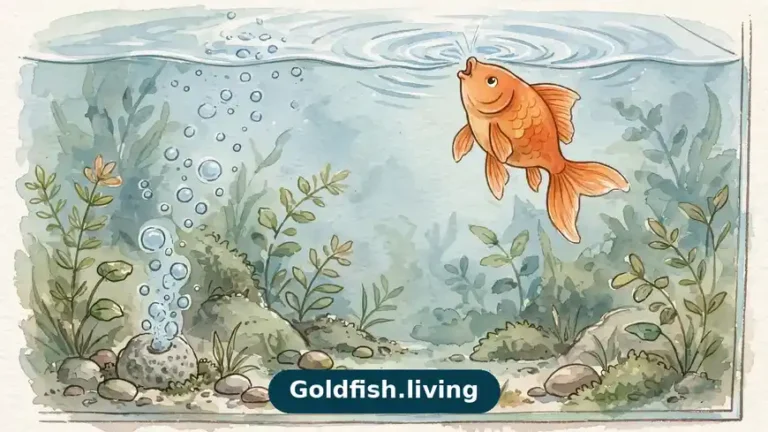
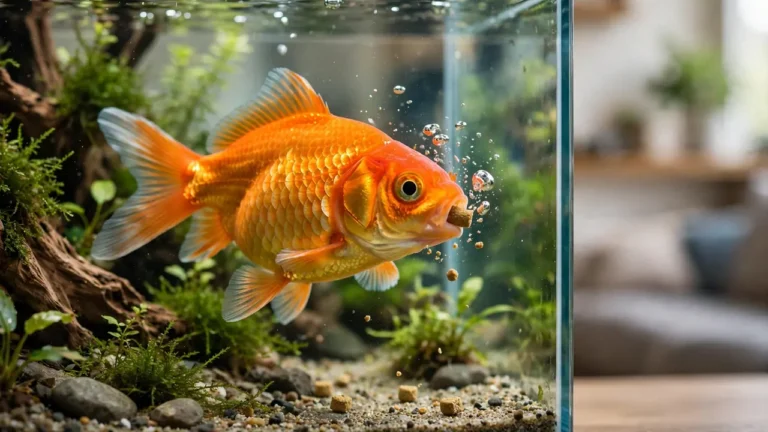
The bigger cost is behavioral. Fish feeding at the surface gulp air along with every bite, and swallowed air collects in a digestive tract that fancy goldfish, with their compressed bodies, can least afford to have disturbed.
Repeated air gulping is one of the quiet routes into the buoyancy trouble covered by our goldfish swim bladder guide. PetMD’s goldfish care guide flags the same pattern, noting that goldfish fed at the surface too much can develop buoyancy issues. The food is not toxic; the address it is eaten at is the problem.
There is a water bill attached as well. Every flake that dissolves uneaten is food the filter has to process, which shows up as ammonia arriving sooner and water changes coming around faster. The same food ends up costing twice: once at the shelf, and once at the test kit.
Pellets: more food in every bite
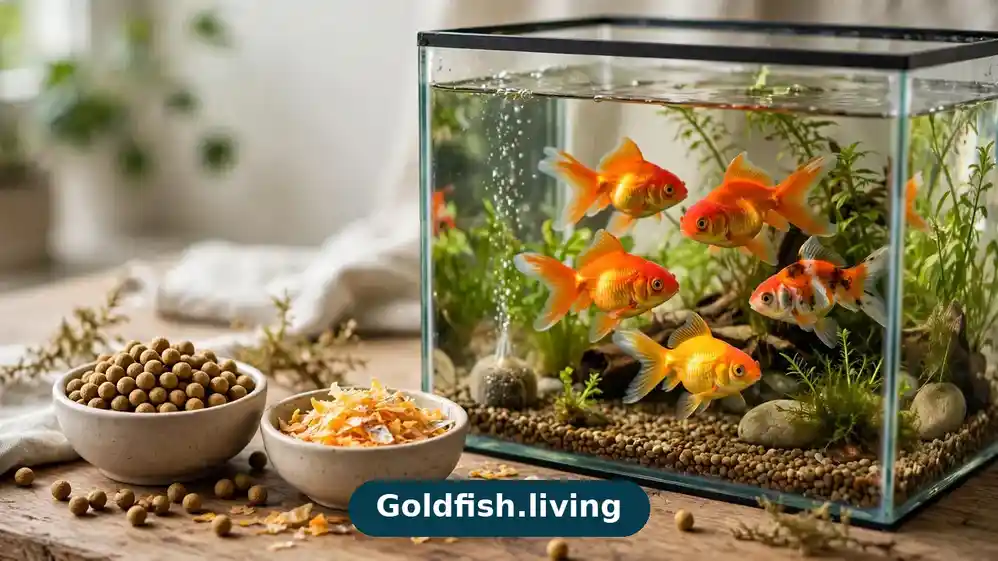
A pellet is compressed, so each bite carries more nutrition and far less air. Pellets also break down slowly and hold together in the water instead of dissolving, which keeps the tank cleaner between feedings and makes leftovers easy to see and net out.
Density makes portions honest, too. A counted spoon of pellets today is the same ration tomorrow, while a pinch of flake depends on the fingers. For a fish whose whole health turns on not being overfed, that repeatability is worth more than most label claims.
Modern goldfish pellets come in floating, slow-sinking and fast-sinking versions. For goldfish, and above all for round-bodied fancies, the sinking end of that range is where you want to shop.
Watch the two foods side by side in a real tank in the video below, and notice where the fish end up feeding.
Sinking beats floating for goldfish
When food sinks, fish feed at mid-water or graze the bottom, the way they are built to feed. Nobody gulps at the ceiling, and that one change of dining level prevents a surprising share of floaty, tilted evenings in fancy tanks.
Floating pellets are not banned from the shelf. Soaked briefly, many of them lose their buoyancy and drift down slowly, which turns them into an acceptable substitute. Served dry, straight onto the surface, they simply recreate the flake problem in pellet form.
Size it to the mouth
Match the pellet to the mouth it has to fit: slightly smaller than the mouth is the target. Oversized pellets get spat out, worried at, and abandoned to rot on the substrate.
For fry and small juveniles, start with crushed flake or powdered fry food and graduate to a mini pellet as their mouths grow. When the shelf offers two sizes and you cannot decide, buy the small one. Big goldfish manage small pellets happily; the reverse is not true.
The two-minute soak
Dry pellets swell as they absorb water, and they will do it inside the fish if they do not do it in the tank first. In sensitive fancies, that expansion in the gut is enough to cause bloating and a floaty evening.
The fix costs two to three minutes: soak the ration in a little tank water before feeding. It is the cheapest insurance in the whole feeding routine, and it makes floating pellets behave better into the bargain.
Portions matter more than the brand
Feed what the fish finish in two to three minutes, once or twice a day for adults, and net out anything left when that window closes. Fish under a year old run faster metabolisms and do better on two or three small meals, while cold pond fish in winter may need only a wheat germ food every few days.
Overfeeding is the mistake that punishes twice: the fish ends up constipated and the water turns toxic on the leftovers. It is also the easiest mistake to make with either food, because goldfish beg with real conviction. The two to three minute window exists to overrule the begging.
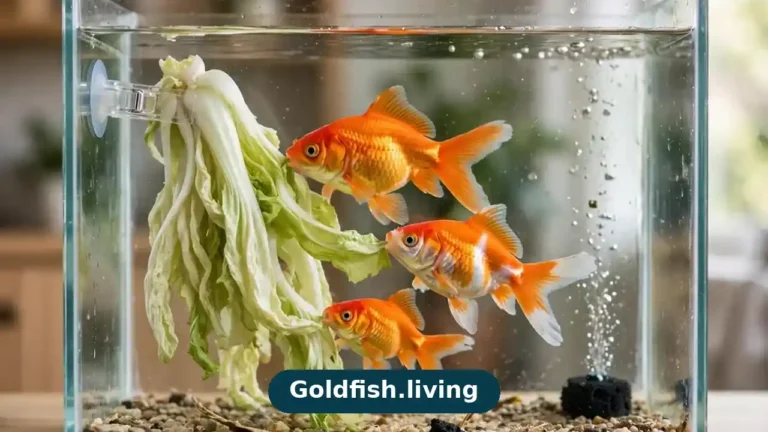
The staple, whatever it is, should not travel alone either. Blanched peas, romaine, zucchini and a weekly protein treat supply the fiber and micronutrients dry food cannot match, as our guide to vegetables goldfish can eat details. The RSPCA’s goldfish guidance pairs the dry staple with fresh extras in the same way, rather than treating the bag as the whole diet.
Questions about pellets and flakes
So which one wins, pellets or flakes?
Pellets, as the daily staple. They pack more nutrition per bite, foul the water less, and in sinking form keep fish off the surface and away from gulped air. Flakes still earn a place in the rotation, especially for small juveniles.
Floating or sinking pellets for fancy goldfish?
Sinking, every time the choice exists. Fancies feed more safely at mid-water, and their compressed bodies tolerate swallowed air worst of all. If only floating pellets are on hand, soak them until they start to sink.
Do pellets really need soaking?
For fancy varieties, yes, make it a habit. Two to three minutes in tank water lets the pellet swell on the spoon instead of in the gut. Slim-bodied commons are more forgiving, but the habit costs nothing.
Can goldfish live on flakes alone?
They can survive on flakes alone, which is a lower bar than thriving. A flake-only diet tends to run low in fiber, dirties the water faster and trains surface feeding. Fish on a pellet staple with vegetables and treats show the difference within a few months.
How much is one feeding, in plain terms?
What disappears in two to three minutes, and no more. A goldfish’s stomach is roughly the size of its eye, so think smaller than instinct suggests. If ammonia keeps appearing in your test results, the food scoop is the first suspect.
Build the week around the pellet
The practical shape of it: sinking pellets, soaked, on most days; a pea day and fresh vegetables through the week; flakes kept for juveniles and the occasional change of texture. Nothing exotic, and between them the three cover every weakness each food has on its own.
If your fish currently eat only flakes, nothing here demands a hard stop. Finish the bag in the supporting role, buy the sinking pellet next, and let the staple change quietly underneath a routine that already works.

4 Comments